
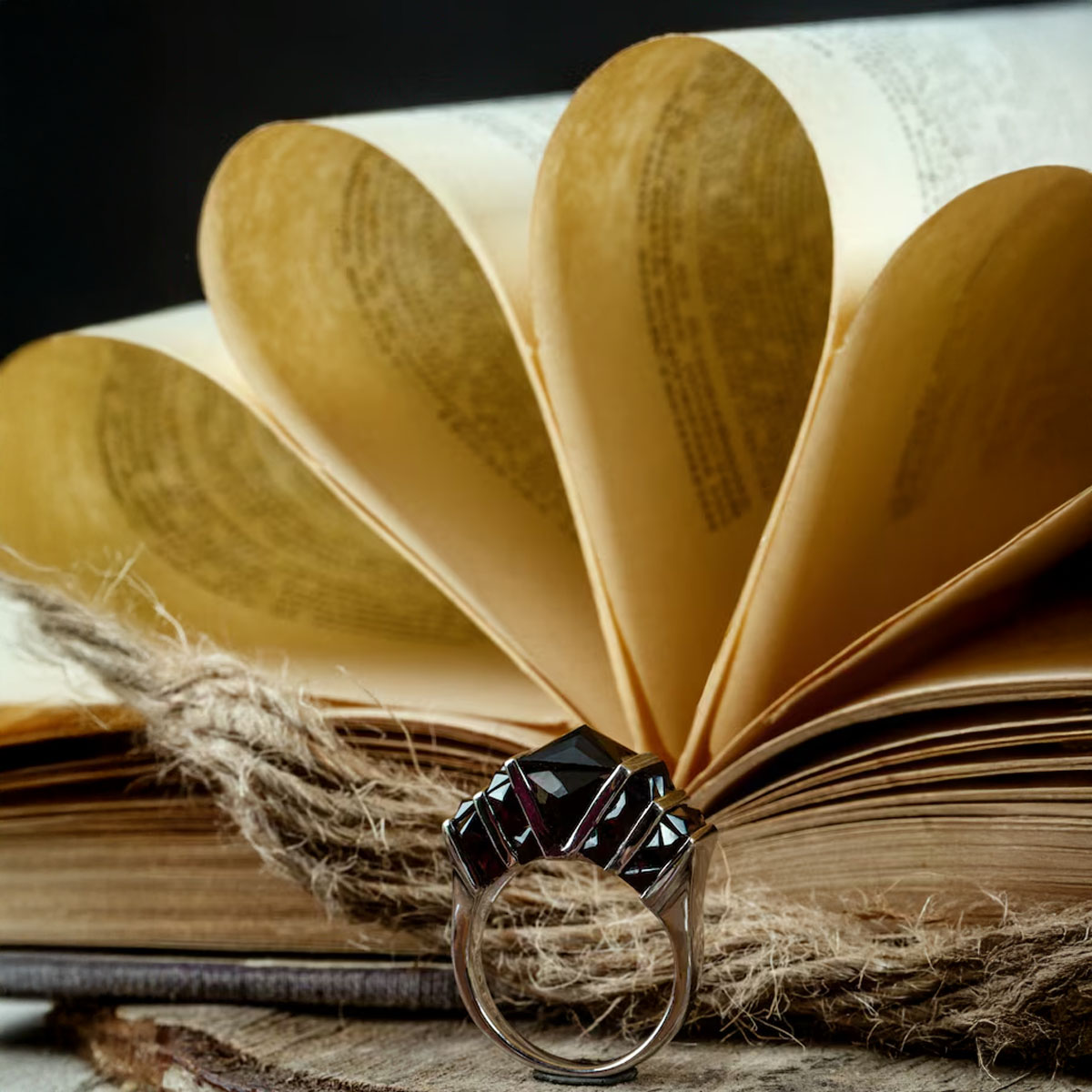
In a marketplace ruled by short‑lived trends and automated production lines, choosing an engagement ring is anything but trivial. Couples search for a symbol that mirrors their story and will stand the test of decades. The vintage engagement ring answers that brief with uncommon clarity. Buying one is not merely a transaction; it is an act of patronage for historic artistry, a handshake with the past, and the start of a new chapter that will be worn every day. This piece examines why a vintage ring serves as wearable art, a declaration of ethical intent, a deliberate financial choice, and, ultimately, the seed of a future heirloom.
Understanding the vocabulary of pre‑owned jewellery turns a casual shopper into an informed custodian. Terms are often muddled in conversation, yet age categories have precise meanings that shape value and expectation.
Antique jewellery is formally defined as being over 100 years old. That covers Georgian, Victorian, Edwardian and early Art Deco creations. Within the trade, pieces past 80 years frequently carry the antique label, a nuance widely accepted by specialists.
Vintage jewellery spans roughly 20 to 100 years. It captures late Art Deco, Retro exuberance and the striking looks of the 1960s, 70s and 80s. Some writers set the bar at 50 years, yet 20 is the stricter, more common threshold. All antique pieces are, by definition, vintage; not every vintage jewel is old enough to be antique.
Estate jewellery is the catch‑all: anything previously owned, whether a Victorian ring or something bought in 2019.
Historic styles are so desirable that contemporary makers often produce vintage‑style or reproduction rings. There is nothing inherently wrong with them, but clarity matters. Honest dealers label these designs “Edwardian style” or “Art Deco inspired” so buyers who want true period workmanship are not misled. Genuine age carries the patina, craftsmanship and narrative that reproductions cannot replicate.
Jewellery mirrors the culture that produced it. Selecting an era is not a surface decision, it is a choice of philosophy and mood. The airy romance of Edwardian platinum, the geometric swagger of Art Deco rings, and the sculptural power of Retro gold each express their moment in history.
Also known as La Belle Époque on the continent, this was an age of grace and optimism. Rings were light, feminine and exquisitely airy, frequently likened to sugar filigree.
Materials and techniques: The oxy‑acetylene torch unlocked platinum for fine jewellery. Platinum’s strength in thin gauges let jewellers create openwork that looks fragile yet endures daily wear. The signature became “white on white” pairings of platinum with diamonds or pearls. Two hallmark techniques dominate: filigree (fine threads of metal shaped into intricate patterns) and milgrain (rows of microscopic beads edging a design).
Motifs and gemstones: Bows, garlands, ribbons, flowers and vines cover the period’s pieces. Diamonds in Old European, Old Mine and Rose cuts sparkle softly. Sapphires and emeralds often appear as accents.
Post‑war energy and Jazz Age bravura swept away Edwardian softness. Art Deco is bold, modern and unapologetically glamorous.
Materials and techniques: Platinum remained in play, joined by the newcomer white gold. Designers favoured architectural lines: symmetry, crisp geometry and linear precision. Calibré‑cut coloured stones, painstakingly shaped to fit exact spaces like a mosaic, are a signature.
Motifs and gemstones: Triangles, octagons, squares and stepped halos reign. The Emerald cut and square Asscher cut diamonds rose to fame for their mirror‑like flashes. Colour contrasts became daring, with diamonds offset by deep blue sapphires, vibrant emeralds and inky onyx.
The Second World War and its aftermath reshaped both materials and taste.
Materials and designs: Wartime restrictions diverted platinum to military use, so yellow and rose gold regained prominence. Retro rings are three-dimensional statements, featuring oversized bows, scrolls, and ribbons. Prosperity in the 1950s brought platinum and white gold back along with streamlined elegance. The era cemented the diamond solitaire as a staple of engagement tradition. The 1960s and 70s celebrated individuality: Marquise and Pear cuts gained popularity, as did clusters and bohemian mixes featuring turquoise or opal.
| Era | Defining philosophy | Popular metals | Characteristic gemstones & cuts | Signature motifs & techniques |
| Edwardian (c. 1901-1915) | Lightness, elegance, romance, femininity, nature and 18th‑century grace | Platinum, yellow gold | Diamonds (Old European, Old Mine, Rose cut), pearls, sapphires | Filigree, milgrain, bows, garlands, lace‑like openwork |
| Art Deco (c. 1920-1935) | Modernity, glamour, progress, architecture and industry | Platinum, white gold | Diamonds (Emerald and Asscher cuts), sapphires, emeralds, rubies, onyx | Geometric shapes, symmetry, bold colour contrasts, calibré‑cut stones |
| Mid‑Century (c. 1940-1970) | Bold expression, post‑war optimism, streamlined modernism | Yellow and rose gold (1940s), platinum and white gold (1950s onward) | Diamonds (solitaire, Marquise, Pear cuts), coloured gemstones | Sculptural forms (bows, scrolls), cluster settings, clean lines |
Strip away the dates and techniques and a deeper truth appears. A vintage ring resonates because it holds memory as well as metal. In an age of pixels and passing moments, the heft of history on your finger offers authenticity and comfort.
Described aptly as a “precious treasure passed down through generations,” a vintage ring bridges the past. It can carry the blessing of those who came before, transforming a proposal into a continuation rather than a beginning. Even when a ring is not from one’s own family, the notion that it has already witnessed vows, celebrations and everyday life gives it emotional gravity.
No two hand‑made vintage rings are identical. Before mass manufacture, each piece took shape under a single craftsperson’s eye. Subtle asymmetries, tiny quirks and faint tool marks signal human involvement. Antique diamonds were cut to suit the individual crystal, so every Old Mine or Old European stone interacts with light in its own way. Couples who prize individuality often speak of a moment of serendipity, as if the ring chose them.
Historic motifs speak a private language. Hearts and knots promise steadfast love. Florals and foliage, common in Victorian and Edwardian pieces, whisper of growth and fresh starts. The serpent, embraced by Queen Victoria, stands for eternity and wisdom.
Gemstones add another layer. Diamonds signify enduring strength and love. Sapphires convey loyalty and sincerity. Rubies burn with passion. Emeralds, with their lush green, reflect hope and renewal.
When a vintage ring comes into new hands, the narrative continues. Remodelling respects what came before while accommodating present taste or practicality. A family diamond might move to a sturdier band, stones from several heirlooms can unite in one meaningful design, and worn shanks can be rebuilt. The aim is not to overwrite history but to let it breathe in a new context.
The feel of a vintage engagement ring is rooted in how it was made. Materials and methods differed sharply from today’s computer‑driven processes, giving older pieces a presence that is easy to sense and hard to replicate.
Before the 1940s most engagement rings were entirely hand fabricated. An artisan might spend weeks piercing metal, engraving and setting stones by touch. Perfection was not numerical, it was perceptual.
Visual signs: Slight asymmetry, minute tool marks and irregular bead sizes in milgrain are not defects. They are the jeweller’s fingerprints.
Tactile signs: Run a fingertip across a vintage ring, and you will feel the textures: raised milgrain beads, delicate filigree edges, and the weight of old platinum. A modern cast piece, by contrast, is often uniformly smooth.
Modern cutting aims for calculated brilliance under bright LEDs. Antique cuts chased character under candlelight. The result is a gentler, more romantic play of light.
The choice of metal signals both era and intent.
Platinum revolutionised design around 1900, enabling the filigree lightness of Edwardian rings. Its strength in fine structures made previously impossible patterns practical.
18ct gold remained a constant for warmth and sentiment, dominant in Victorian work and reborn in the bold profiles of the 1940s Retro period. In Britain, 15ct gold dates back to between 1854 and 1932. High-quality alloys provide vintage rings with satisfying weight and longevity.
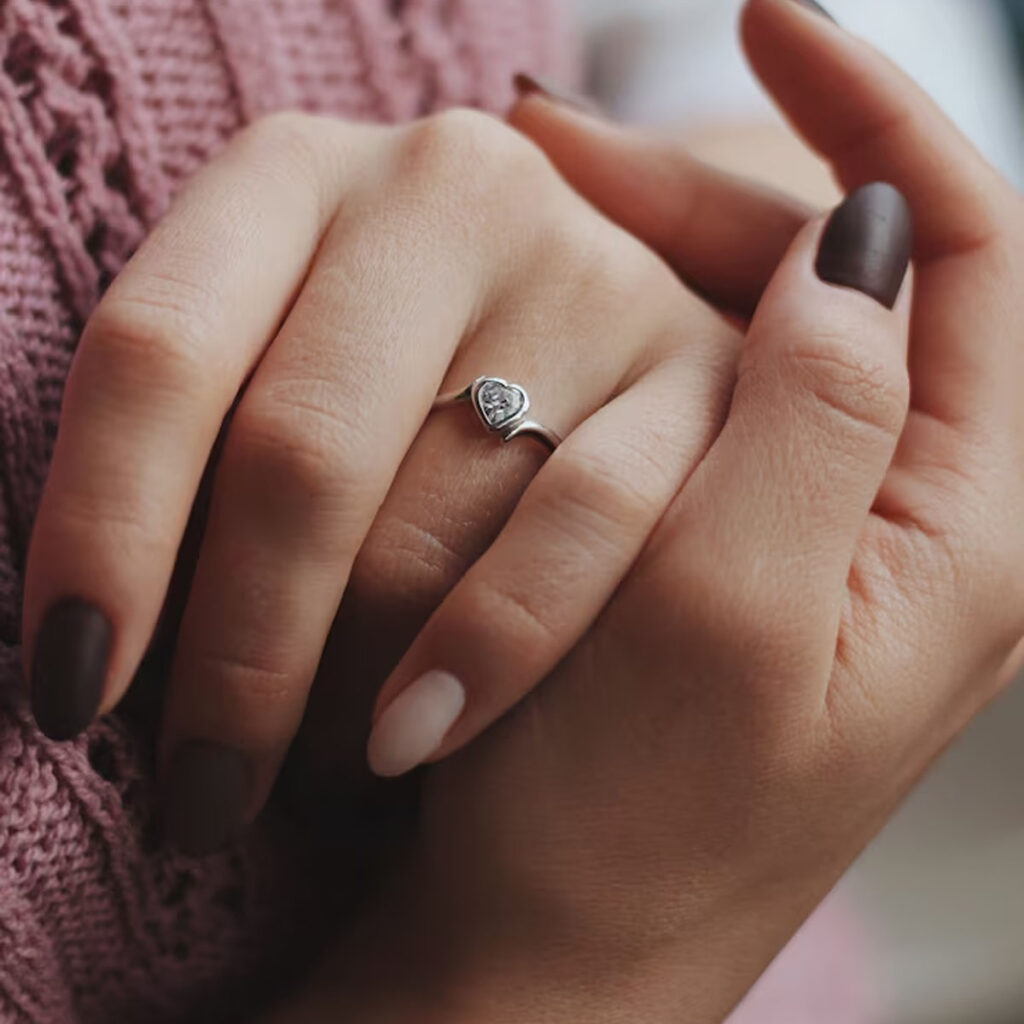
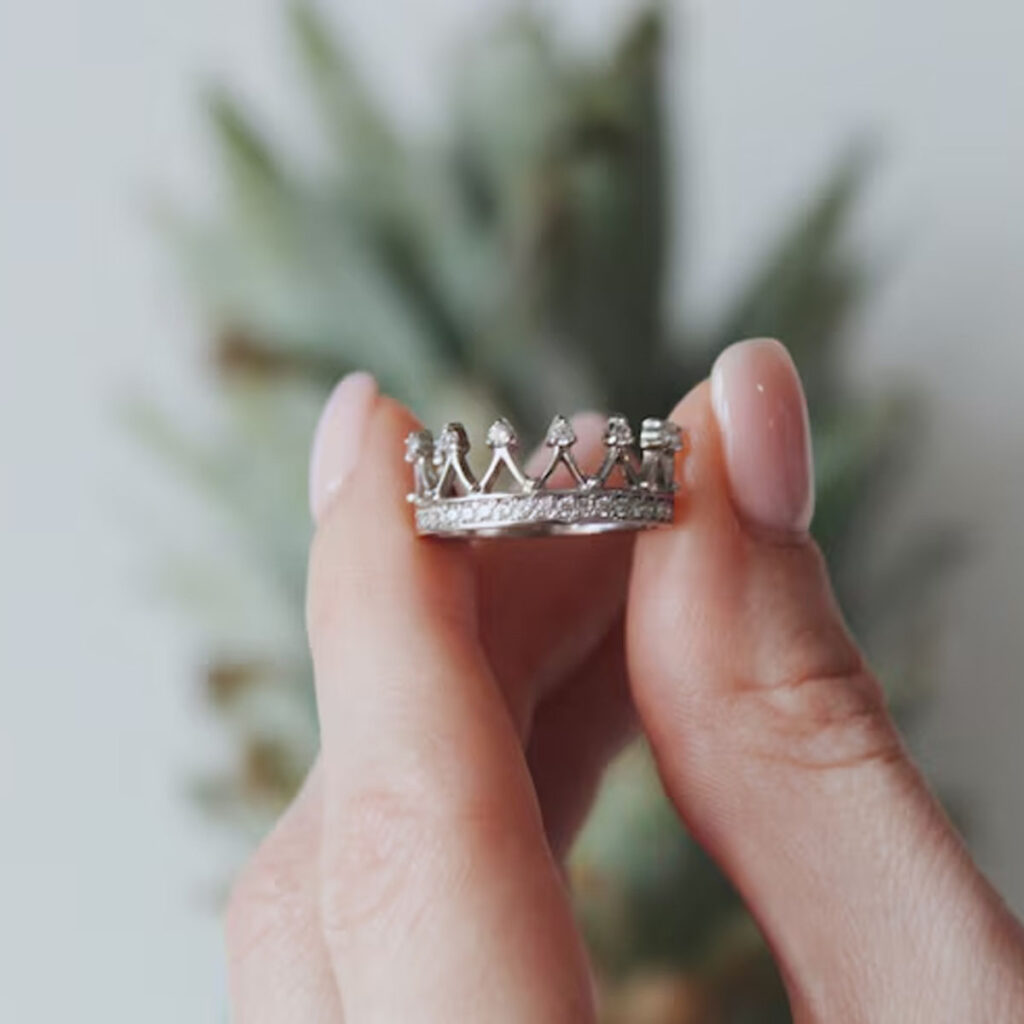
Vintage engagement rings are investments in more than one sense. Financial performance and emotional dividends reinforce each other.
A new ring often loses 20-40% of its price the moment it leaves a retailer. A vintage piece has already absorbed that drop. Its value is pegged to intrinsic qualities: rarity, craftsmanship, story. Demand is rising among younger buyers who want pieces that are unique, sustainable and historically important, while supply is finite. That imbalance favours stability and gradual appreciation. Still, the daily return is the pleasure of wearing it, with financial growth as a bonus over years, not weeks.
Four pillars define investment strength:
Rarity: Early or short-lived eras, such as the Georgian period, signed works by houses like Cartier or Boucheron, unusual stones, or singular designs all elevate scarcity.
Provenance: Paperwork matters. Receipts, appraisals, signatures and hallmarks authenticate and enrich the story, boosting desirability.
Condition: Original, well‑preserved pieces with secure settings and intact stones outrank those repaired badly or altered heavily. Regular professional care preserves this value.
Craftsmanship and materials: Hand-finishing and high-purity metals and gems form the foundation. Without quality components, no story can hold value.
Beyond price lies “emotional durability” the way an object accumulates sentiment. A vintage ring is already partway there, “destined to become a cherished keepsake”. Over time it will embody memories, relationships and milestones, turning into an “artifact of personal history”. That intangible worth grows with each generation, far outpacing any spreadsheet.
Serious purchases now sit under an environmental and ethical lens. Vintage jewellery provides the cleanest answer: it already exists.
Choosing a vintage ring means no fresh mining. Mining drives deforestation, habitat loss, soil erosion, and water contamination, and it consumes significant amounts of energy. Producing a single new gold ring can create about 20 tons of mine waste.
Fun fact: Reusing an existing ring sidesteps the need for new extraction entirely, making vintage the original circular luxury.
Buying pre-existing pieces supports a circular economy, conserves resources, and reduces carbon output while delivering the same sparkle.
“Ethically sourced” gems trace chains of custody, but opacity still exists. Many vintage pieces predate modern conflicts tied to diamonds. Purchasing them does not add demand that could perpetuate exploitation or child labour. In essence, the vintage route offers a ring “with a clear conscience”, its legacy rooted in artistry rather than adversity.
Romance thrives on knowledge. The path to finding the right vintage engagement ring is smoother with a framework that ensures durability, quality checks, and ongoing care.
An engagement ring is worn daily, so lifestyle should guide selection.
Stone durability: On the Mohs scale, diamonds rate 10, while rubies and sapphires rate 9, making them excellent choices for everyday wear. Opals, pearls and even emeralds (7.5-8 yet often brittle due to inclusions) need gentler handling.
Setting security: Bezels encircle stones in metal, offering maximum protection. Classic prongs are elegant but expose edges, so more or thicker prongs increase safety.
Metal choice: Platinum resists scratches and deformation. In gold, 14ct alloys are harder than 18ct thanks to a higher proportion of strengthening metals.
Look past beauty to structure.
Condition: Expect honest signs of age, but watch for loose stones, thinned shanks, cracked or heavily worn settings and poor repairs.
Certification and appraisal: Request any necessary documents. Independent gemological appraisals and lab certificates (for example, from the GIA) confirm authenticity and support insurance claims.
Resizing potential: Patterns, engravings or stones circling the band can make resizing risky or impossible. Always confirm before you commit.
Hallmarks on UK pieces unlock date and quality. A traditional full mark includes:
| Mark type | Visual example (description) | Meaning and significance |
| Sponsor’s mark | Initials (for example “SGJ”) inside a shaped shield | Identifies the maker or submitting company |
| Fineness mark | Number such as 375, 750, 925, 950 inside a shaped shield | Confirms precious metal purity per thousand parts |
| Assay office mark | Symbol such as Leopard’s Head, Anchor, Castle, Rose | Shows which UK office tested and marked the item |
| Date letter | A single letter in a set font and shield | Optional but lets you pinpoint the hallmark year |
Longevity depends on both care and construction.
Gentle cleaning: Using mild grease-cutting soap, lukewarm water, and an ultra-soft toothbrush is the safest approach. Avoid harsh chemicals, abrasives and most commercial dips. Ultrasonic cleaners can damage delicate settings or certain stones; leave that judgment to a professional.
Safe storage: Keep the ring in a soft pouch or fabric‑lined box, separated from other pieces to prevent scratches.
Mindful wear: Remove it for activities such as sports, gardening, heavy lifting, cleaning, cooking, or sleeping to avoid knocks and chemicals.
Professional check‑ups: Have a jeweller inspect it at least annually for loose stones, worn prongs or emerging issues. Early intervention protects both sentiment and value.
A specialist dealer is more than a salesperson. They are historians, engineers, and long-term caretakers. They assess authenticity, condition and suitability for your lifestyle, then provide sizing, repairs and cleaning over the years. Building that relationship ensures your ring is cherished and protected for a lifetime.
Among the styles collectors watch closely, toi et moi rings and vintage cuts have led the recent revival.
Before any secondhand purchase, run through the pre-owned engagement ring checks that protect you at the counter.
Choosing a vintage engagement ring is a statement of individuality and principle. It rejects disposable fashion in favour of craft, history and substance. The ring on your hand becomes an investment in skill, a fragment of design history and a personal story ready for its next pages. It is also a sustainable and ethical choice that creates no new environmental scar. Above all, it is a symbol of commitment as distinctive, characterful and enduring as the love it represents, much like planting a tree whose shade you may never fully need but whose presence will bless those who follow. As the saying goes, “What is well kept is well loved.”