Palladium is a naturally white precious metal belonging to the Platinum Group Metals (PGMs); the same family as platinum, rhodium and iridium. It was discovered in 1803 by the English chemist William Hyde Wollaston and named after the asteroid Pallas, itself named after the Greek goddess Pallas Athena.
Although palladium has been used in jewellery since the 1930s (it was widely adopted during World War II when platinum was reserved for military use), it only received its official UK hallmark in 2009 under an amendment to the Hallmarking Act 1973. Since then it has grown steadily in popularity, particularly for wedding bands, thanks to its bright white colour, light weight and excellent durability.
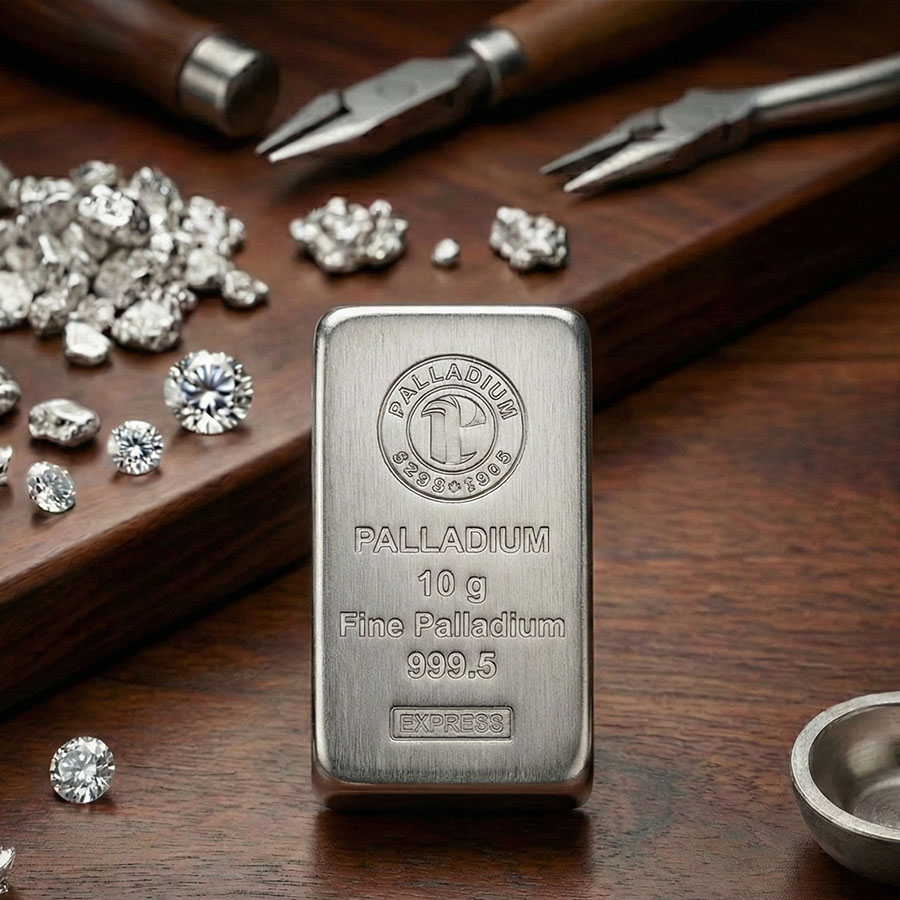
Palladium is naturally white all the way through; unlike white gold, it never needs rhodium replating and will never turn yellow. It’s roughly 40% lighter than platinum (density 12.0 vs 21.4 g/cm³), making it noticeably more comfortable if you prefer a lighter ring. It’s also slightly harder than platinum on the Mohs scale (4.75 vs 4.25), and the standard 950 alloy (95% palladium, 5% ruthenium) is completely nickel-free and hypoallergenic.
When scratched, palladium metal is displaced rather than lost; the same behaviour as platinum. Over time this creates a soft, matte patina that many wearers love. A jeweller can restore the mirror polish in minutes whenever you like.
Palladium 950 | Platinum 950 | 18ct White Gold | |
Colour | Naturally bright white | Naturally white (slightly cooler) | Rhodium-plated (needs redipping every 1–2 years) |
Hardness (Mohs) | 4.75 | 4.25 | 2.75–3.0 |
Weight on finger | Light | Heavy | Medium |
Purity | 95% | 95% | 75% gold |
Hypoallergenic | Yes (nickel-free) | Yes | Often contains nickel |
Replating needed | Never | Never | Yes, periodically |
Patina over time | Yes — matte finish | Yes — matte finish | No — plating wears off |
💡 Insider tip: If you love platinum’s white colour but prefer a lighter ring, palladium gives you the same permanent finish at a fraction of the weight. If you enjoy a substantial, weighty feel, platinum is your metal. Both are excellent lifetime choices; the decision comes down to how you want it to feel on your hand. |
Every palladium piece sold in the UK must carry a hallmark showing the sponsor’s mark, the fineness mark (950 or 500, displayed inside three connected ovals, distinct from platinum’s pentagon shape), and the Assay Office mark (London, Birmingham, Sheffield or Edinburgh). You may also see the voluntary head of Pallas Athena, confirming at a glance that the metal is palladium. Always look for 950 for engagement and wedding rings, it’s the standard for quality palladium jewellery.
Palladium is one of the lowest-maintenance metals in jewellery. It won’t tarnish, won’t discolour, and doesn’t need replating. A gentle wash with warm water and mild soap is all it takes. One practical note: palladium is harder to resize than gold, so getting the size right first time matters. We always recommend a professional fitting.
Palladium is naturally bright white all the way through, so it won’t turn yellow and doesn’t need rhodium replating. With white gold, that “bright white” look is typically the rhodium layer, which needs topping up over time.
It feels noticeably lighter. Palladium’s density is about 12.0 g/cm³ versus platinum at 21.4 g/cm³, so a similar ring can weigh roughly 40% less. If you’re not used to jewellery, that comfort difference is immediate.
Yes, 950 palladium (the standard quality alloy) is 95% palladium + 5% ruthenium and is nickel-free (also free of cobalt and other common allergens), which makes it a strong choice for sensitive skin.
In the UK, palladium jewellery must carry a compulsory hallmark (legal requirement since 2009). Look for the 950 fineness mark shown inside the palladium shape of three connected ovals, alongside the sponsor’s mark and an Assay Office mark.
Palladium is hard-wearing and develops a natural soft, satin-like patina over time; it can be re-polished quickly if you prefer a mirror finish. The key “watch-out” is resizing: palladium is harder to resize than gold and not every jeweller has the right equipment, so getting the size right at purchase matters more.