
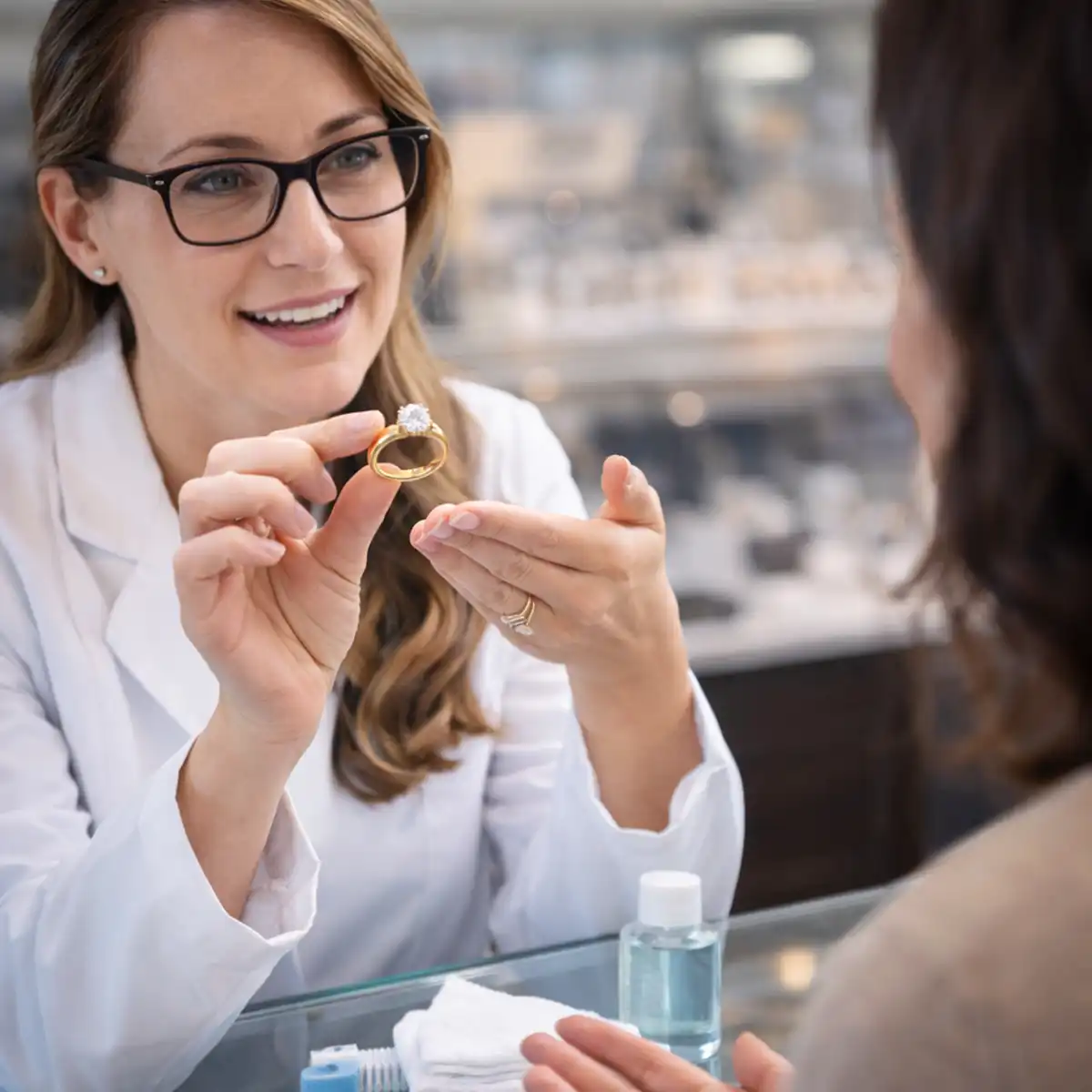
Here is the thing about engagement ring aftercare that most people do not hear at the point of purchase: the ring you took home is not maintenance-free. It is not fragile, and it does not require complicated attention. But a fine ring worn every day accumulates soap, hand cream, and tiny particles of debris in places you cannot see, and it is subject to the kind of gradual wear that, left entirely unattended for years, shows up in ways you wish you had addressed earlier.
None of this should worry you. All of it is manageable. At Smith & Green Jewellers at 9 Hatton Garden EC1N, aftercare is a standard part of the client relationship rather than an afterthought. The staff are there for annual check-ins as well as the original purchase. What follows is everything you need to know to keep your ring in the condition it deserves to be in.
There are 3 habits that protect a fine ring without any effort once they become routine. Remove the ring before applying hand cream, sunscreen, or perfume. All of these leave residues that dull the surface of metal and accumulate under set stones. Take the ring off before swimming in chlorinated water or the sea. Chlorine attacks gold alloys, particularly rose gold, which has a higher copper content, and salt water accelerates surface wear and dulls polish. And remove the ring before any activity that puts it at risk of impact: sports, heavy gardening, construction or renovation work.
These are not precious restrictions on normal life. They are 10-second habits that prevent the kind of gradual, cumulative damage that only becomes visible when the ring is placed next to a photograph from the week you bought it.
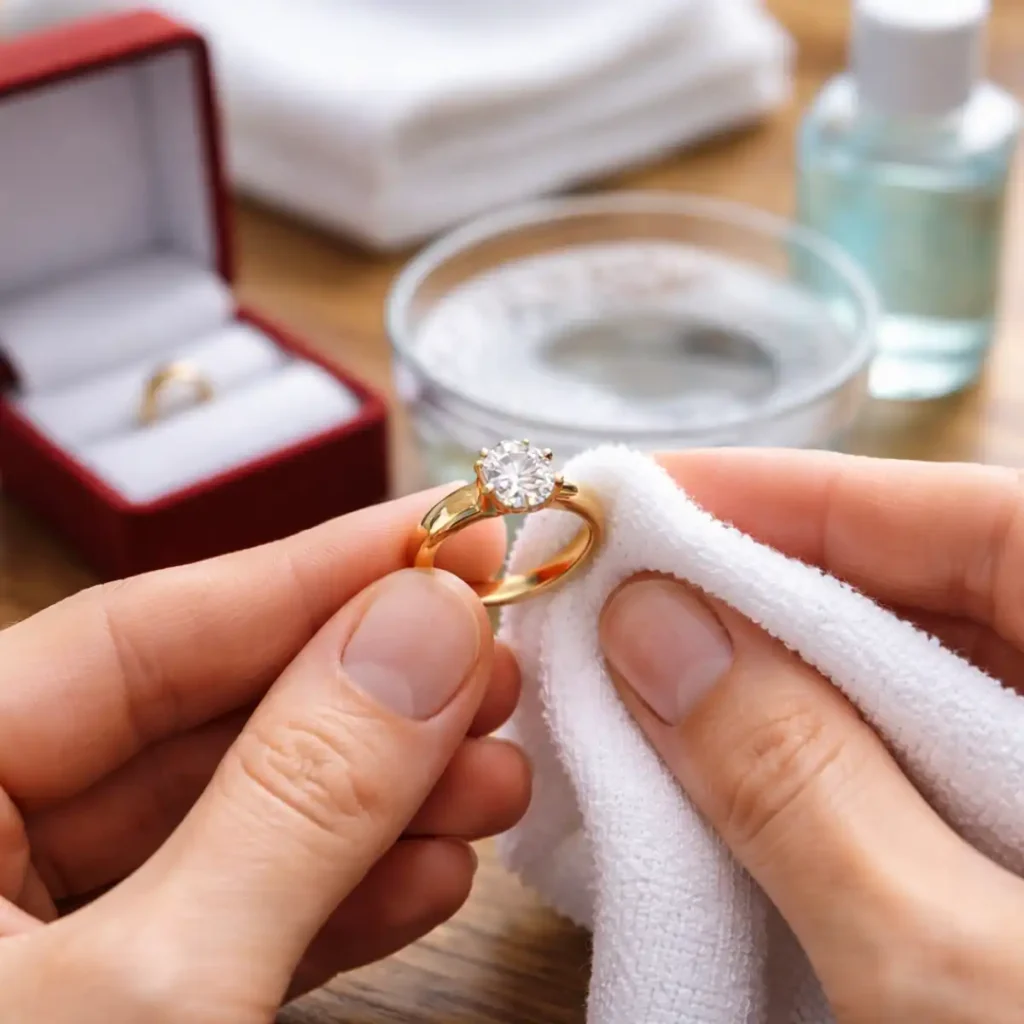
A fine ring can be cleaned at home effectively and safely with warm water, a small amount of washing-up liquid, and a very soft toothbrush. Soak the ring for a few minutes, work the brush gently around and underneath the setting to dislodge accumulated debris, and rinse thoroughly under warm running water. Pat dry with a soft, lint-free cloth.
This process works well for diamonds, sapphires, rubies, and most coloured gemstones in secure settings. It is safe for 18ct yellow gold, 950 platinum, 18ct white gold, and rose gold.
Do not use this method on rings with porous or treated gemstones such as opal, turquoise, or some emeralds, where water or cleaning agents can affect the stone. Do not use ultrasonic cleaners at home on rings with pavé settings, where the vibration can loosen small stones. A professional ultrasonic cleaning at a jeweller who will check the stone’s security before and after the process is safer. Do not use toothpaste, which is mildly abrasive and can scratch metal surfaces.
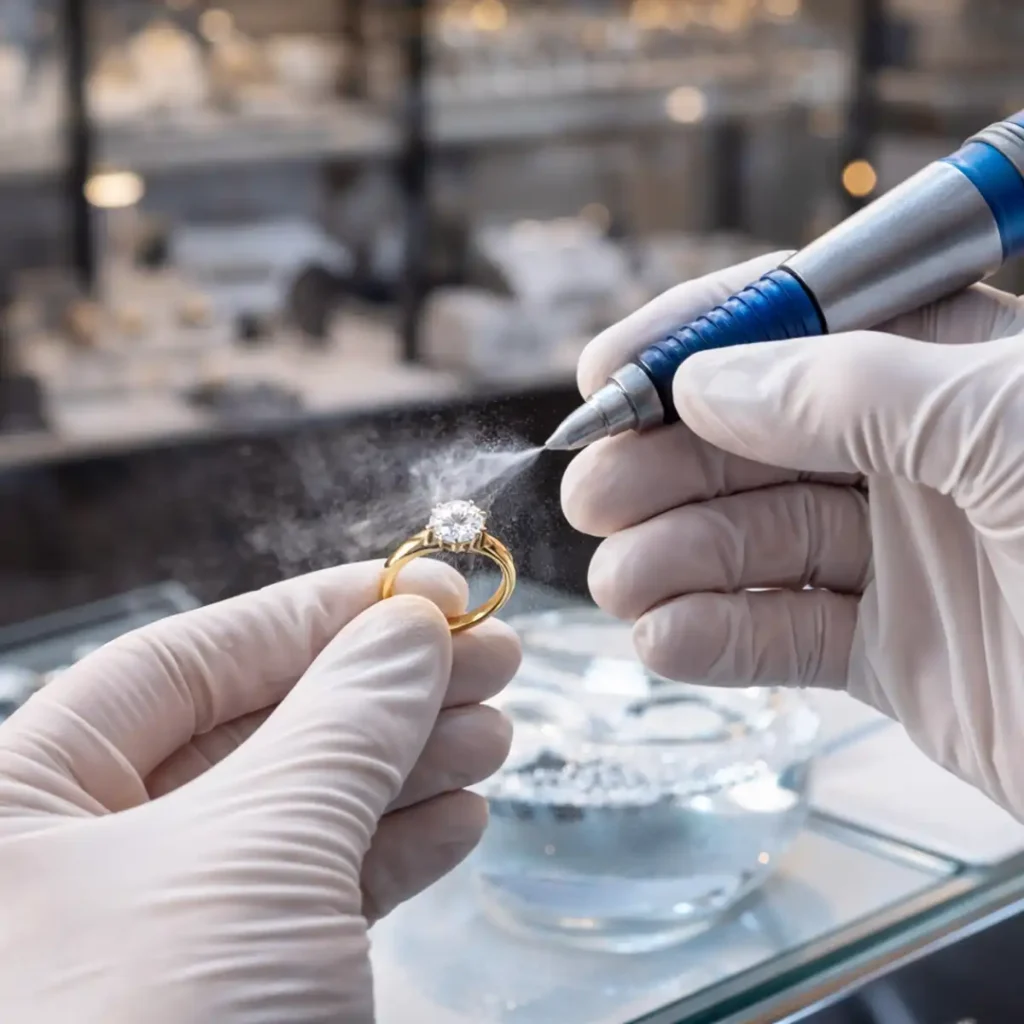
The honest answer is once a year, at a minimum. Professional servicing for an engagement ring includes a physical inspection of every prong or bezel element by a trained jeweller, an ultrasonic or steam clean to remove debris from places a toothbrush cannot reach, a re-polish of the metal surfaces if required, and a check of any set stones for movement.
The prong inspection is the most important element of that list. Prongs bend over time through impact and daily wear. A prong that has shifted even slightly from its original position, reducing the area of contact with the stone’s girdle, is an early indicator of a stone security problem. A bent prong caught at the annual inspection is a 10-minute repair. A stone lost from a fatigued prong is a more complicated situation requiring a grading report to source an accurate replacement.
The time between the purchase and the first professional check should be 12 months at the outside. For rings with pavé shoulders or a halo setting, where small stones in bead or prong settings are subject to more contact than a solitaire, a 6-month first check is a more conservative and sensible interval.
Engagement ring aftercare for white gold rings involves one maintenance procedure that platinum rings do not: rhodium replating. The rhodium surface treatment applied to 18ct white gold during manufacture provides the crisp white finish that makes white gold visually indistinguishable from platinum. That surface wears through use, and the timeline depends on the wearer’s skin chemistry, how much physical contact the ring receives, and how frequently it is exposed to chemicals.
For most wearers, the rhodium begins to show warmth or uneven tone after 12 to 24 months. The re-plating procedure is straightforward: the ring is polished, any surface scratches are removed, and a fresh layer of rhodium is applied via electroplating, restoring the original white finish. The procedure takes a few hours and is inexpensive relative to the ring’s value.
There is no harm in letting the rhodium wear before replating. Some wearers prefer the slightly warm tone that appears as the plating thins, finding that it brings out the ring’s character. Others want the crisp white maintained consistently. Either approach is fine. The point is knowing that the change is happening, understanding why, and knowing that it is easily corrected rather than experiencing it as damage.
Fingers change size over the course of a lifetime, and a ring that fitted at 25 may not fit at 35 or 55. Temperature, weight changes, pregnancy, and simply the changes that come with age all affect ring fit. A ring that is too tight creates circulation discomfort and makes removal difficult. A ring that is too loose sits rotated on the finger and is at risk of slipping off.
Resizing a plain or simple shank ring is a standard jeweller’s task, achievable in both directions within a range of approximately 2 to 3 sizes without compromising the ring’s structural integrity. Resizing a ring with pavé shoulders or a channel-set band is more technically demanding and should only be undertaken by a skilled bench jeweller. The added complexity does not mean it cannot be done, only that it should be done carefully and by someone who has done it before.
Rings in 950 platinum require more skilled resizing work than gold rings because platinum’s hardness demands specialist tools and techniques. The result, when done well, is as clean as the original.
Fun fact: Rhodium, the metal used to plate white gold rings, is one of the rarest elements on Earth and is a member of the platinum group metals. It is harder than platinum itself and is used in such small quantities per ring plating that the amount applied to a single ring weighs less than a grain of rice.
The best engagement ring aftercare outcome is the result of a continuing relationship with the jeweller who made or sold the ring. They know the specific ring: how it was set, where the tolerances are, what the metal and stone combination requires. An annual check at Smith & Green Jewellers at 9 Hatton Garden is not a sales visit. It is a short appointment where a professional confirms that the ring is secure, clean, and in the condition it should be in.
Smith & Green offers complimentary ring polishing and cleaning as part of their ongoing service, and their annual stone security checks are part of the relationship they maintain with clients long after the original purchase. Accessible from Farringdon station along Greville Street, the appointment takes considerably less time than the ring deserves not to have.
Bring the grading report and insurance valuation paperwork with the ring at least every few years, or whenever there has been a significant change in the precious metals market. Keeping the insurance valuation current ensures that in the event of a loss or damage claim, the replacement is accurate rather than approximate.