
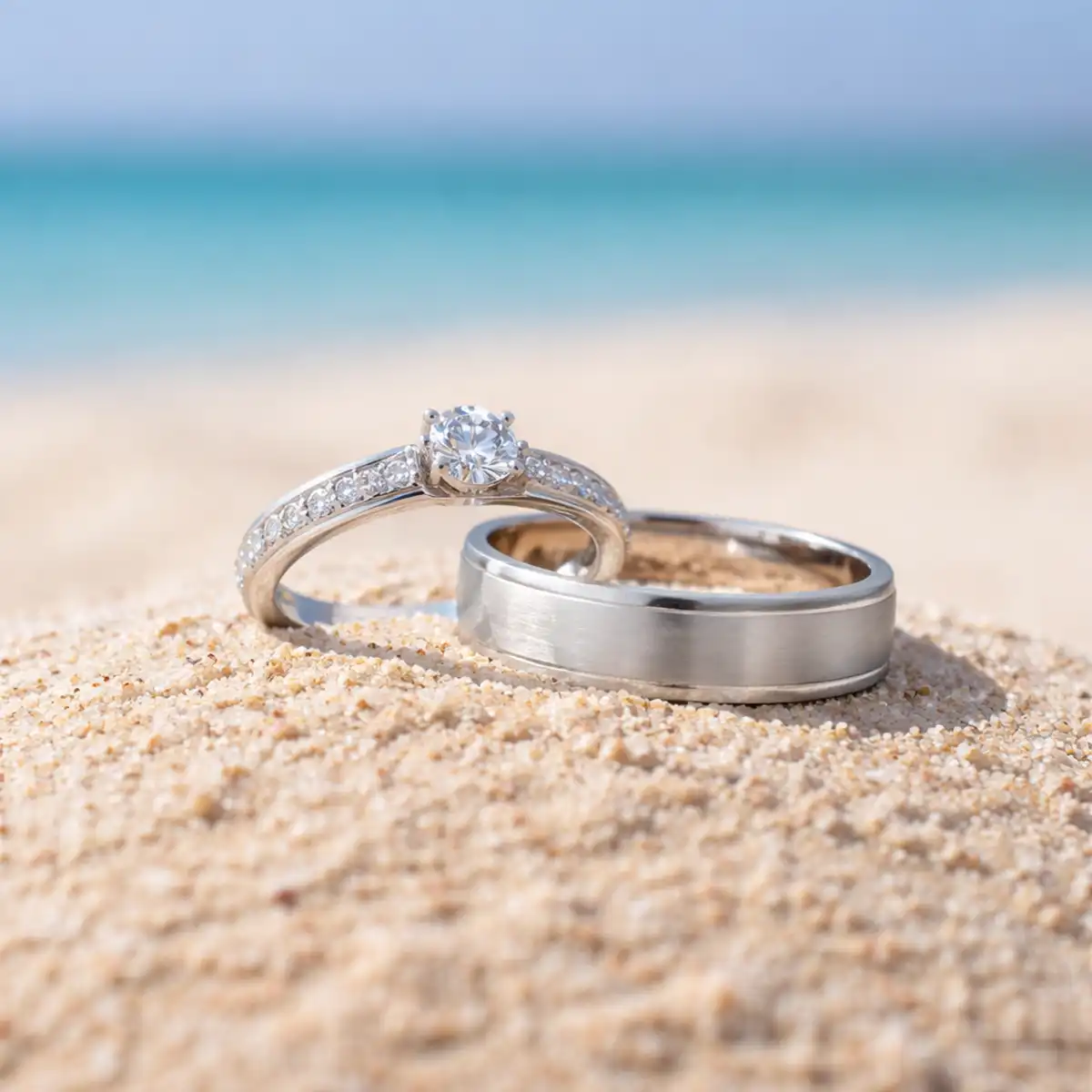
The question of matching a wedding band to an engagement ring is asked by more people than you might expect, and later than they should be asking it. Engagement ring purchased, proposal accepted, wedding date set, and then someone realises the wedding band has not been thought about at all. The good news is that it is a solvable problem at almost any stage. The better news is that thinking about it early produces a significantly better result with considerably less stress.
At Smith & Green Jewellers, 9 Hatton Garden EC1N, wedding band commissions regularly come from clients who purchased their engagement ring at the business and are now returning for the second ring. The conversation is informed, specific, and practical. Here is what it covers.
The engagement ring is the fixed variable. The wedding band has to fit around, beside, or flush against it. This means the engagement ring’s physical profile determines what wedding band options are structurally available, and understanding that profile before choosing a band is not optional.
An engagement ring with a flat bottom to the shank can accommodate a straight-sided wedding band sitting flush against it with no gap. An engagement ring with a curved or tapered shank, a halo head that sits wide, or pavé shoulders that extend down the band profile will create a gap between a straight wedding band and the engagement ring. That gap may be small enough to accept or large enough to be distracting.
The most reliable solution for engagement rings with complex profiles is a fitted or shaped wedding band: a band whose top edge is curved or angled specifically to follow the base of the engagement ring’s profile. A fitted band sits flush, eliminates the gap, and presents the two rings together as a visually coherent pair. It also requires a commission rather than a ready-made purchase, because the fit must be made to the specific engagement ring.
The metal choice for the wedding band carries a practical as well as an aesthetic dimension. Metals of different hardness wear against each other when worn as a stacked pair, and the softer metal will show the effects of that contact over time.
950 platinum and 18ct white gold worn as adjacent rings will cause the white gold to show fine scratching at the contact point more quickly than if both rings were the same metal. This is not catastrophic, and it happens slowly, but it is worth knowing before deciding to mix metals deliberately for aesthetic reasons.
18ct yellow gold and 950 platinum as a deliberately contrasting pair is a choice that some buyers make for visual reasons, and provided the wearer is aware that the gold will show some contact wear over the years, it is an entirely valid one.
The simplest rule is: match the metal to the engagement ring’s metal. This eliminates the wear incompatibility question entirely. If the engagement ring is 950 platinum, the wedding band in 950 platinum will wear alongside it without relative deterioration. If the engagement ring is 18ct rose gold, an 18ct rose gold band matches both visually and in terms of hardness compatibility.
Where the engagement ring contains 2 metals, for example, a 950-platinum head with 18ct yellow gold shoulders, the wedding band metal choice can align with either one, depending on which the wearer prefers visually.
Matching a wedding band to an engagement ring is also a question of visual proportion. A narrow wedding band alongside a wide-profiled engagement ring with a large centre stone is usually the correct pairing: the band recedes visually and allows the engagement ring to remain the dominant piece. A band that is too wide in proportion to the engagement ring can create a cluttered appearance that neither the ring nor the wearer benefits from.
For most engagement rings in the mid to upper range, a wedding band width of 2 mm to 3.5 mm is proportionally appropriate and looks clean when worn as a pair. Bands over 4 mm begin to compete visually with all but the simplest and largest engagement ring designs.
Band profile matters too. A flat court profile, which is flat on the outside and curved on the inside, gives a traditional appearance and is comfortable for long-term wear. A full court profile, curved on both faces, is the most comfortable profile for narrow bands and suits buyers who are new to wearing rings. A knife-edge profile, which meets at a ridge on the top surface, is contemporary and slim-looking but can feel uncomfortable for some wearers over time.
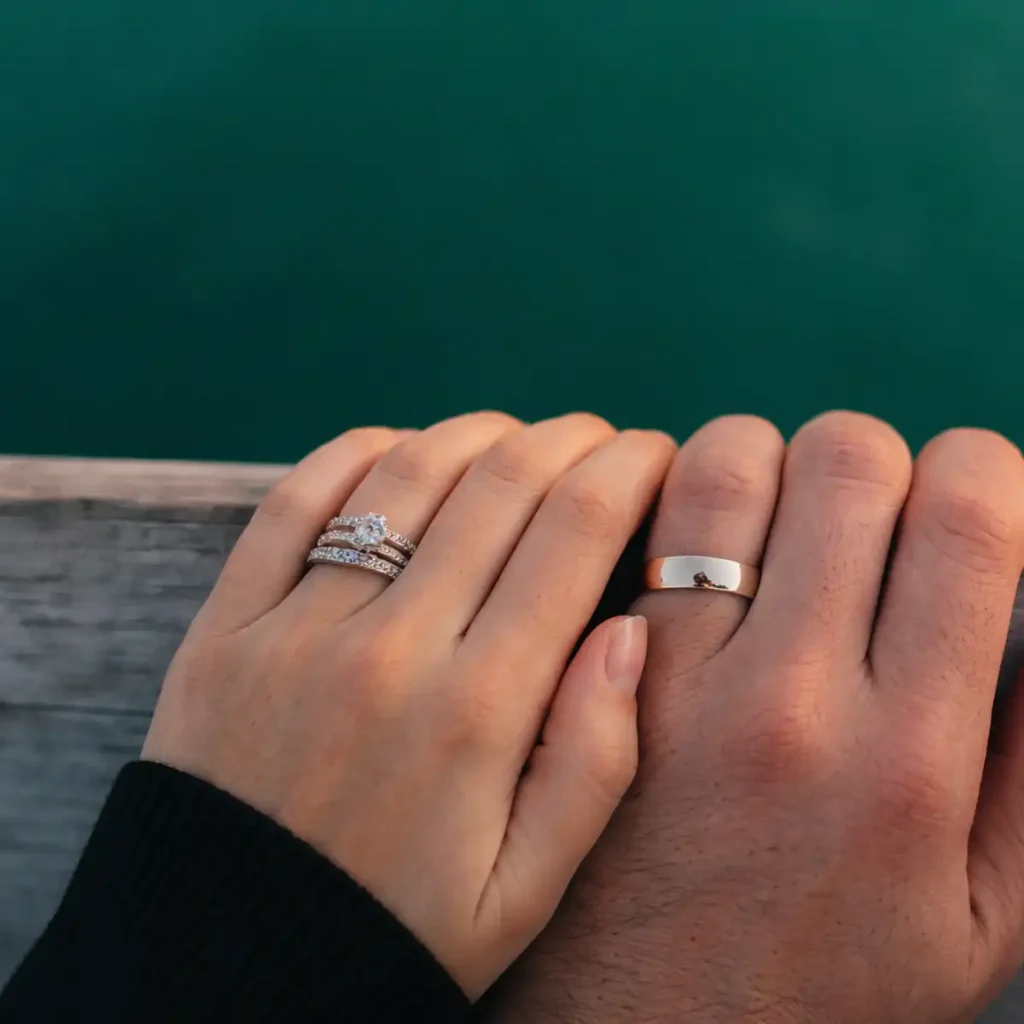
A plain metal wedding band requires minimal maintenance over its life. It can be re-polished when it shows wear, and the surface is easily restored. It cannot lose a stone. It does not require annual stone security checks. For buyers who want a wedding band that looks after itself, a plain metal band is the correct choice.
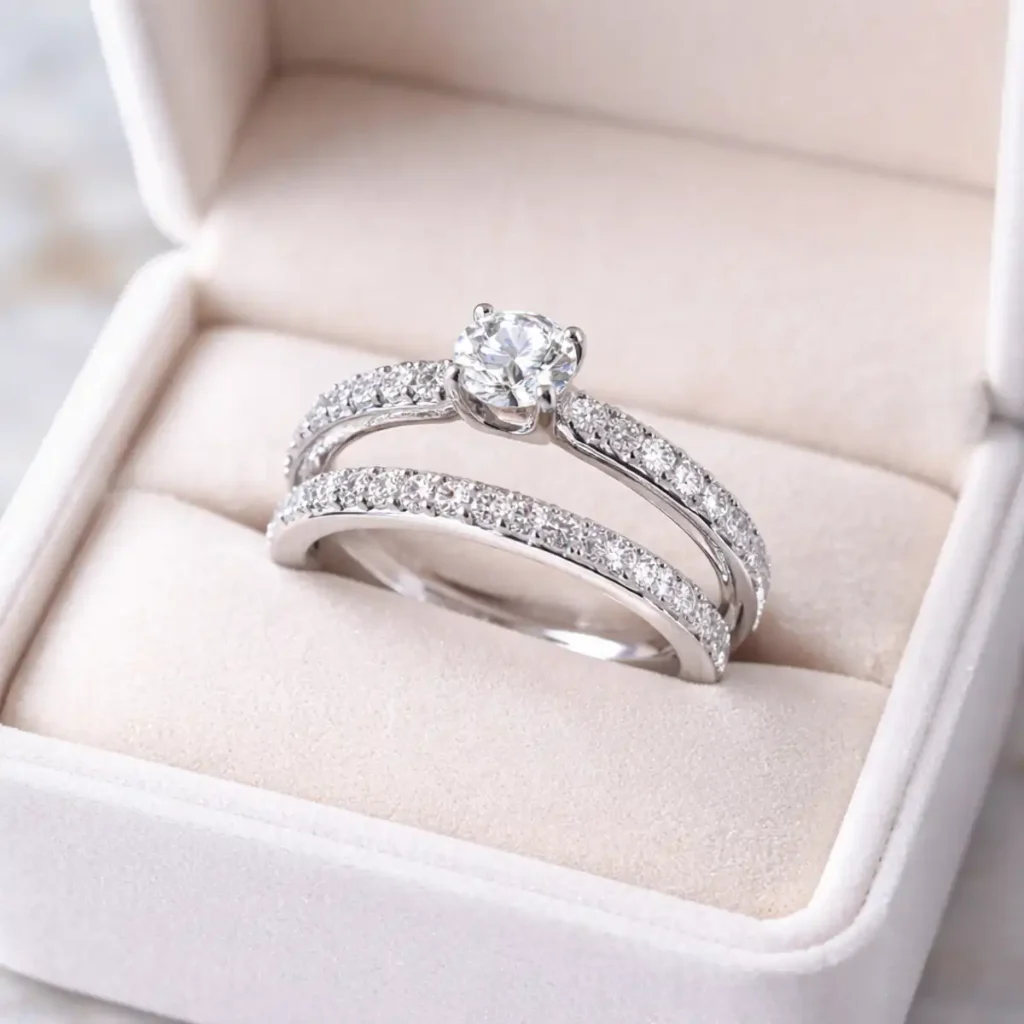
A set wedding band, with diamonds in a pavé, channel, or half-set arrangement, introduces the same maintenance considerations as a set engagement ring. Stones need checking, beads can loosen, and professional cleaning removes the debris that accumulates under set stones during daily wear. For buyers who are prepared to bring both rings in for servicing together on an annual basis, a set wedding band alongside a pavé or halo engagement ring produces a unified, diamond-rich aesthetic that many couples find worth the maintenance commitment.
Channel-set and rubover (full bezel) set wedding bands generally require less maintenance than pavé bands because they have no exposed prong points. They are also more comfortable to wear as a stacked pair because the smooth surface does not catch or create friction against the skin.
A bespoke fitted wedding band requires time. The making process involves the same stages as any bespoke ring commission: design drawing, metal fabrication, setting work if applicable, and hallmarking at a UK assay office. Allow a minimum of 6 to 8 weeks from commission to collection, and add time if the commission falls in peak periods.
The practical guidance is to begin the wedding band conversation at least 3 months before the wedding date. This gives enough time for the consultation, the commission, any adjustments, and the hallmarking process without any pressure on the timeline. A fitted band that has to be remade because the first attempt did not fit correctly is a problem that adequate lead time prevents.
Do not leave the wedding band until the month of the wedding. At Smith & Green Jewellers in Hatton Garden EC1N, the wedding band consultation can happen at the same appointment as the engagement ring purchase for couples buying together, or as a return visit once the engagement ring has been worn for a few weeks and the wearer knows how it sits on the finger and what a fitted band would need to follow.
Fun fact: The tradition of wearing the wedding ring on the fourth finger of the left hand, the so-called “ring finger,” derives from the ancient Roman concept of the vena amoris, the supposed vein of love running directly from that finger to the heart, a notion that has been anatomically disproved but has shown no signs of losing cultural traction in any wedding tradition worldwide.
A well-matched wedding band and engagement ring combination is not an accident of taste. It is the result of 3 deliberate decisions: the right metal, the right width, and the right profile to sit against the specific engagement ring being paired. Making those decisions with accurate information and adequate lead time produces a result that will look right for the life of both rings.
At Smith & Green Jewellers, Hatton Garden EC1N 8AH, wedding band commissions are handled with the same specificity as engagement ring commissions. The consultation begins with the engagement ring itself, works through the pairing decisions above, and produces a wedding band that fits both the engagement ring and the wearer as precisely as the original piece.