Every diamond is unique, but comparing them used to be guesswork. In the 1940s the Gemological Institute of America (GIA) created a universal framework around four measurable qualities: Cut, Colour, Clarity and Carat Weight. These “Four Cs” give you a reliable way to understand what you’re paying for and how one diamond compares to another.
The key thing to remember is that the Four Cs work together. A high colour grade means little if the cut is poor; a flawless stone will look lifeless without good proportions. This guide explains each C in the order that matters most to your diamond’s beauty.
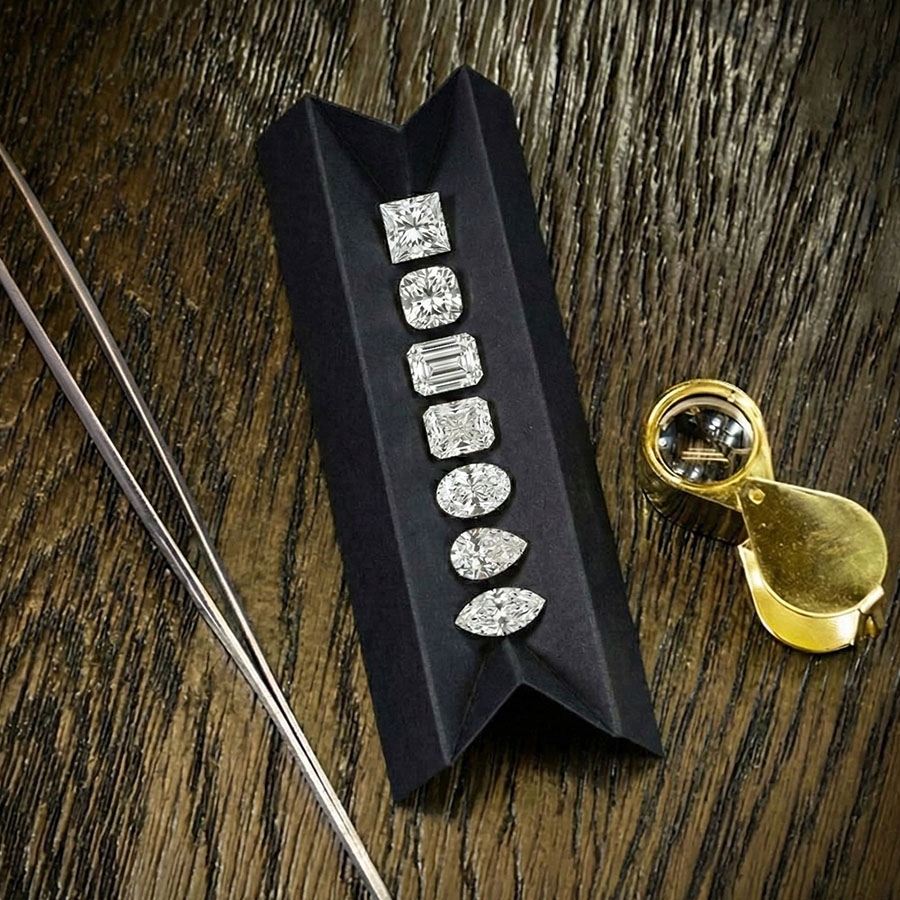
Cut doesn’t mean shape. It describes how well a diamond’s facets interact with light. A round brilliant has 57 or 58 tiny flat surfaces arranged at precise angles. When those angles are right, light bounces between facets and returns to your eye as three things you can actually see:
Brilliance: the white light reflected back to you.
Fire: the rainbow flashes caused by light splitting into its spectral colours.
Scintillation: the sparkle and pattern of light and dark areas when the diamond moves.
The GIA grades cut on a five-point scale (Excellent, Very Good, Good, Fair, Poor) after evaluating brightness, fire, scintillation, proportions, symmetry and polish. This grade currently applies only to round brilliant diamonds; fancy shapes receive polish and symmetry grades but not an overall cut grade.
When a diamond is cut too deep, light escapes through the sides and the centre looks dark. When it’s too shallow, light passes straight through the bottom and the stone looks washed out. Only well-balanced proportions give you the full display of brilliance and fire.
💡 Insider tip: Never sacrifice cut to get a bigger diamond. A 0.90 ct with Excellent cut will look brighter and often larger than a 1.00 ct with a Good cut and cost less. |
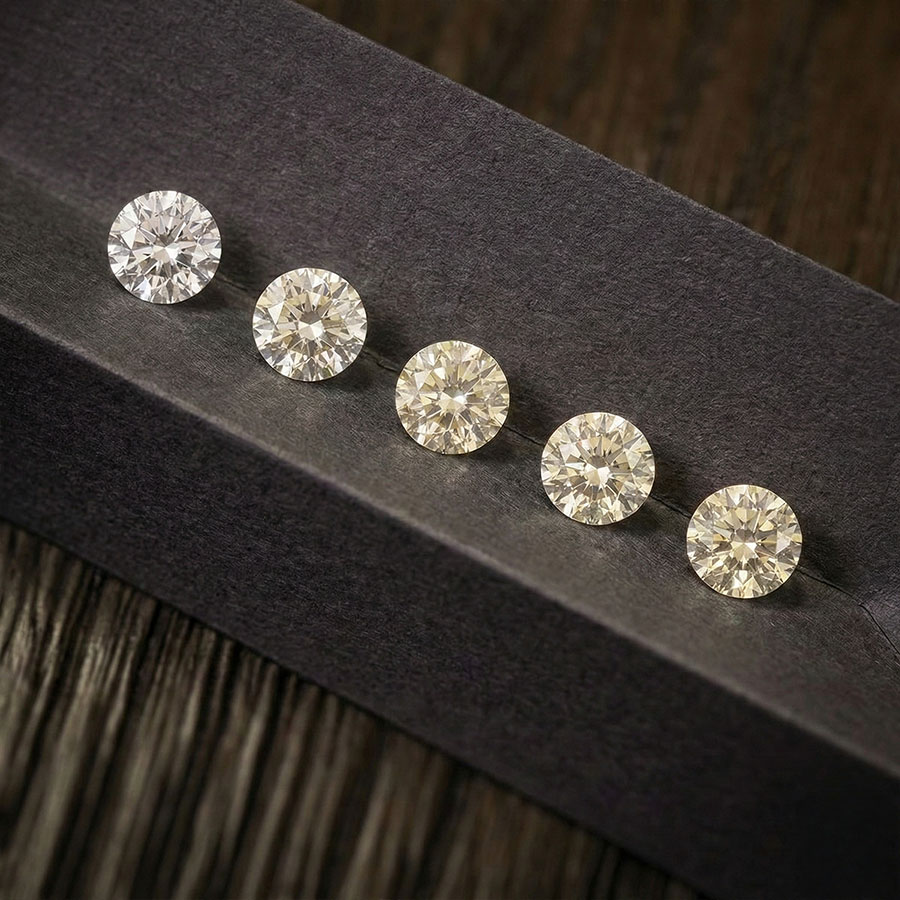
Diamond “colour” actually means the absence of colour. Most diamonds contain trace nitrogen that gives a faint yellow tint. The less colour, the higher the grade and the greater the rarity.
The GIA grades colour from D (colourless) to Z (light yellow or brown), assessed face-down against master comparison stones under controlled lighting.
Grade | Category | What You’ll See |
D – F | Colourless | No discernible colour. Rare and premium-priced. |
G – J | Near Colourless | Virtually colourless once set. Exceptional value. |
K – M | Faint | Slight warmth visible in larger stones. Beautiful in yellow or rose gold. |
N – Z | Light | Progressively noticeable tint. Less common in fine jewellery. |
💡 Insider tip: For white gold or platinum, G–I is the sweet spot — colourless to the eye at a fraction of D–F pricing. In yellow or rose gold, J–K looks equally beautiful because the warm metal complements any slight warmth in the stone. |
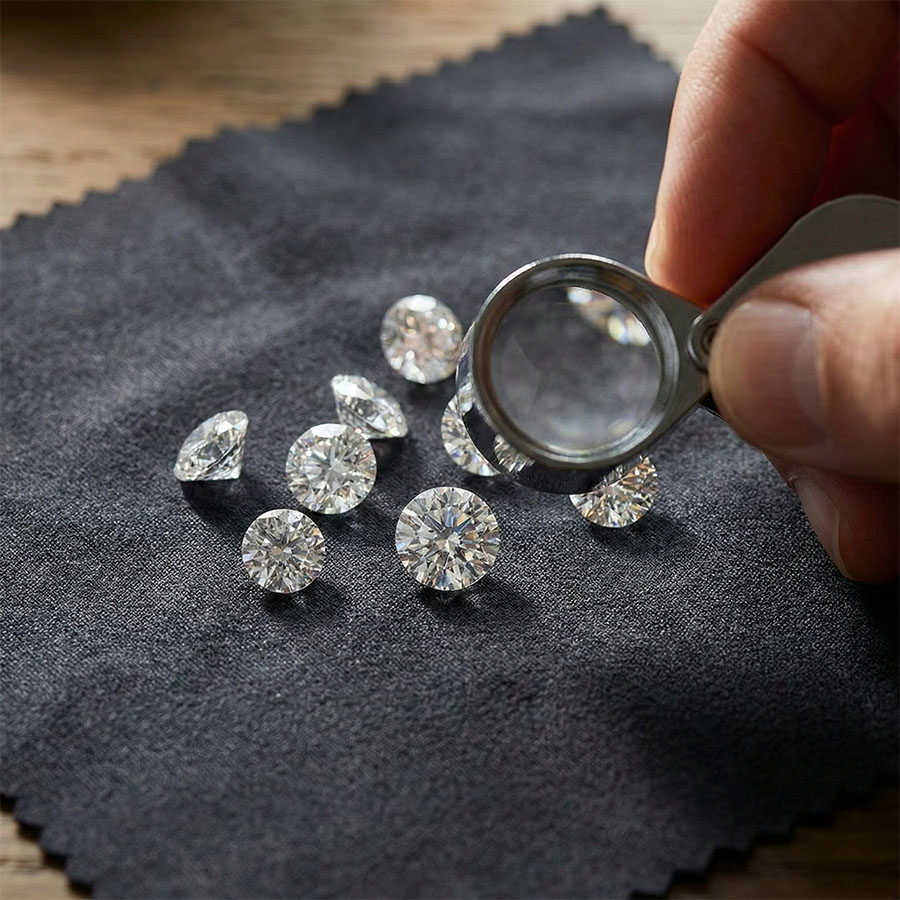
Diamonds formed billions of years ago under extreme heat and pressure, so nearly all contain tiny internal marks called inclusions and surface marks called blemishes. Clarity measures how visible these are under 10× magnification.
The GIA Clarity Scale has 11 grades across six categories:
| Grade | Meaning | Visible Without Magnification? |
| FL / IF | Flawless / Internally Flawless | No. Exceptionally rare. |
| VVS1 / VVS2 | Very, Very Slightly Included | No. Difficult even for a trained grader to find. |
| VS1 / VS2 | Very Slightly Included | No. Minor inclusions visible under 10×. |
| SI1 / SI2 | Slightly Included | Usually no (SI1); sometimes (SI2) in larger stones. |
| I1 / I2 / I3 | Included | Yes. Can affect brilliance and durability. |
A diamond is “eye-clean” when you can’t see inclusions without a loupe. For brilliant cuts (round, oval, cushion), VS2 or SI1 is typically eye-clean. For step cuts (emerald, Asscher) whose open facets show more, aim for VS1 or higher. Remember: clarity matters more as carat weight increases, because bigger facets magnify what’s inside.
| 💡 Insider tip: Clarity is where you can save the most without any visible compromise. A VS2 looks identical to a Flawless diamond to anyone not holding a loupe. Redirect those savings toward a better cut or larger stone — changes people actually notice. |
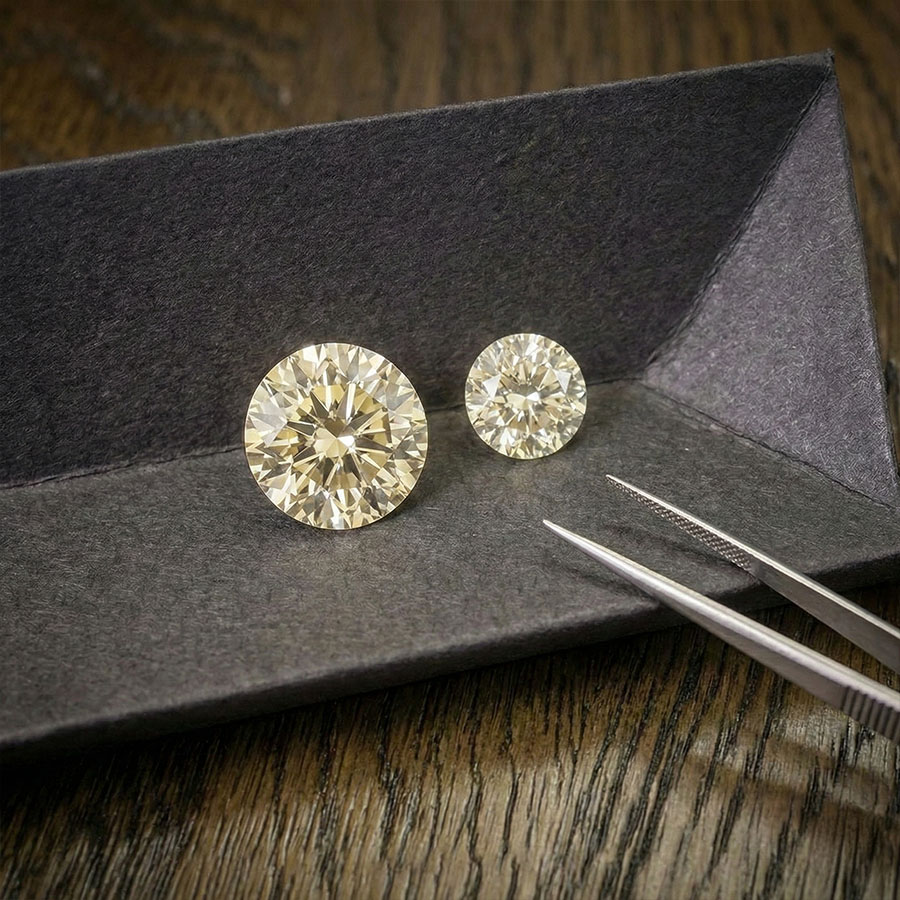
One carat equals 0.200 grams and is divided into 100 “points.” A 0.50 ct stone is a “fifty-pointer.” The word comes from carob seeds, once used as counterweights on balance scales.
Crucially, carat measures weight, not visual size. Two 1.00 ct diamonds can look different face-up depending on how they’re cut. A well-proportioned stone spreads its weight across a larger surface; a deep cut hides weight in the pavilion, making the diamond appear smaller from above.
Diamond prices jump sharply at popular thresholds: 0.50, 0.75, 1.00, 1.50 and 2.00 ct. A 1.00 ct diamond can cost 20–40% more per carat than a 0.95 ct with identical grades, despite looking virtually the same on the finger.
💡 Insider tip: Buying just below a threshold — say 0.90–0.99 ct instead of 1.00 ct — is one of the smartest moves in diamond buying. The visual difference is negligible; the price difference is real. |
About a third of diamonds emit a blue glow under ultraviolet light. This is graded from None to Very Strong. In warmer colours (I–M), medium blue fluorescence can actually make a diamond appear whiter. In higher colour grades, strong fluorescence occasionally causes a hazy look. Fluorescent diamonds are typically priced 5–15% lower, which can be excellent value if the stone looks crisp in daylight, indoor light and spotlights. Always check in person.
A grading report from an independent laboratory — particularly the GIA, the global benchmark — turns opinions into verifiable facts. Other respected labs include AGS, IGI and HRD. When comparing diamonds, make sure both reports come from the same lab, as grading standards vary.