
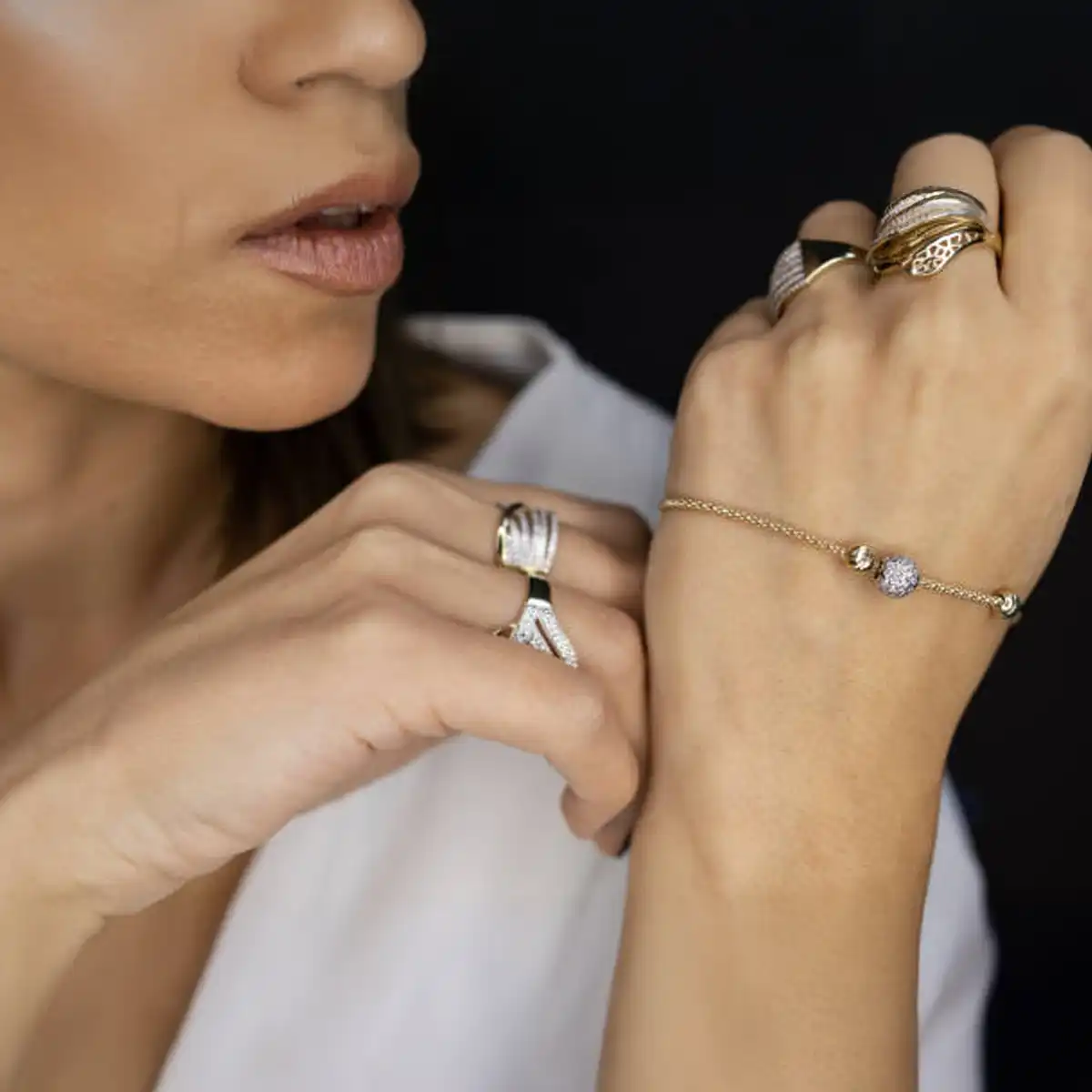
Commissioning a bespoke engagement ring or fine piece in Hatton Garden gives you complete control over design, materials, and budget while providing access to some of the most experienced jewellers in the country. Instead of compromising on a ready-made style, you work directly with specialists who shape every detail around your taste, lifestyle and spending limits. For many clients, the final cost is comparable to an off-the-shelf piece, yet the result feels far more personal and enduring.
Bespoke jewellery is ideal when you want a ring or bracelet that genuinely reflects the wearer, rather than a design chosen because it happened to be in stock. You decide on metal, stone shape, gemstone type, setting style, band profile and engraving, and an expert team translates that into a practical, comfortable design suitable for everyday wear.
Crucially, choosing a Hatton Garden jeweller does not automatically mean paying a premium. Independent workshops often price bespoke items in line with their ready-made collections, with your budget going into precious metals, gemstones, and skilled labour rather than high-street branding. The main trade-off compared with buying from a display tray is time: most commissions take several weeks and cannot be returned simply because you change your mind. If you are comfortable planning ahead and engaging with the process, bespoke offers exceptional emotional and material value.
Bespoke pricing is governed by what you commission, not by a flat “custom” surcharge. The jeweller will work backwards from your budget, suggesting design and stone options that make sense for you.
For a bespoke diamond engagement ring, entry-level budgets often start around £1,000 to £3,000 for a simple solitaire in 9ct or 18ct gold with a modest natural or lab-grown diamond. Many couples commissioning in Hatton Garden sit in the £3,000 to £7,000 bracket, which allows for a larger or higher-spec centre stone, a halo or side diamonds, and a refined setting in platinum or 18ct gold. Above about £7,000, designs begin to include significant carat weights, rare stones or intricate detailing, and it is not unusual for one-of-a-kind rings with important GIA-certified diamonds to reach five figures.
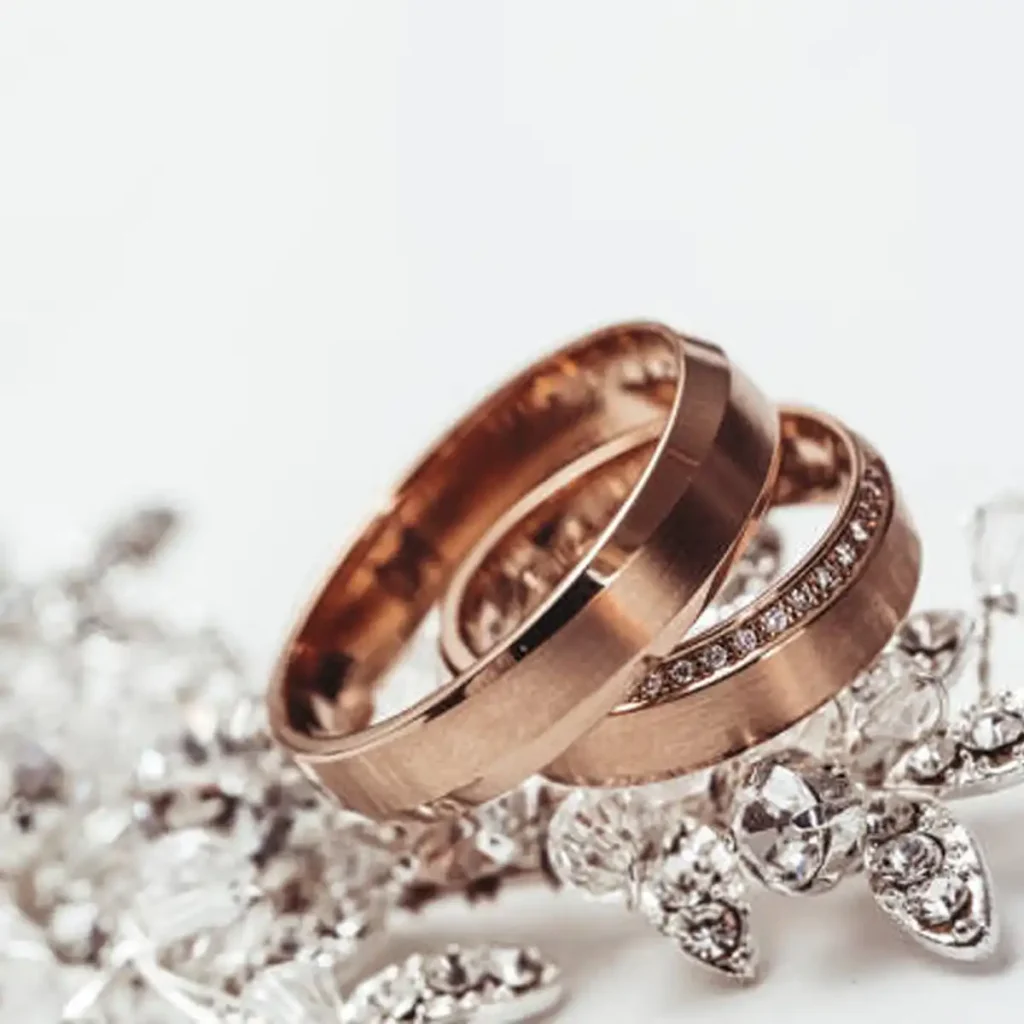
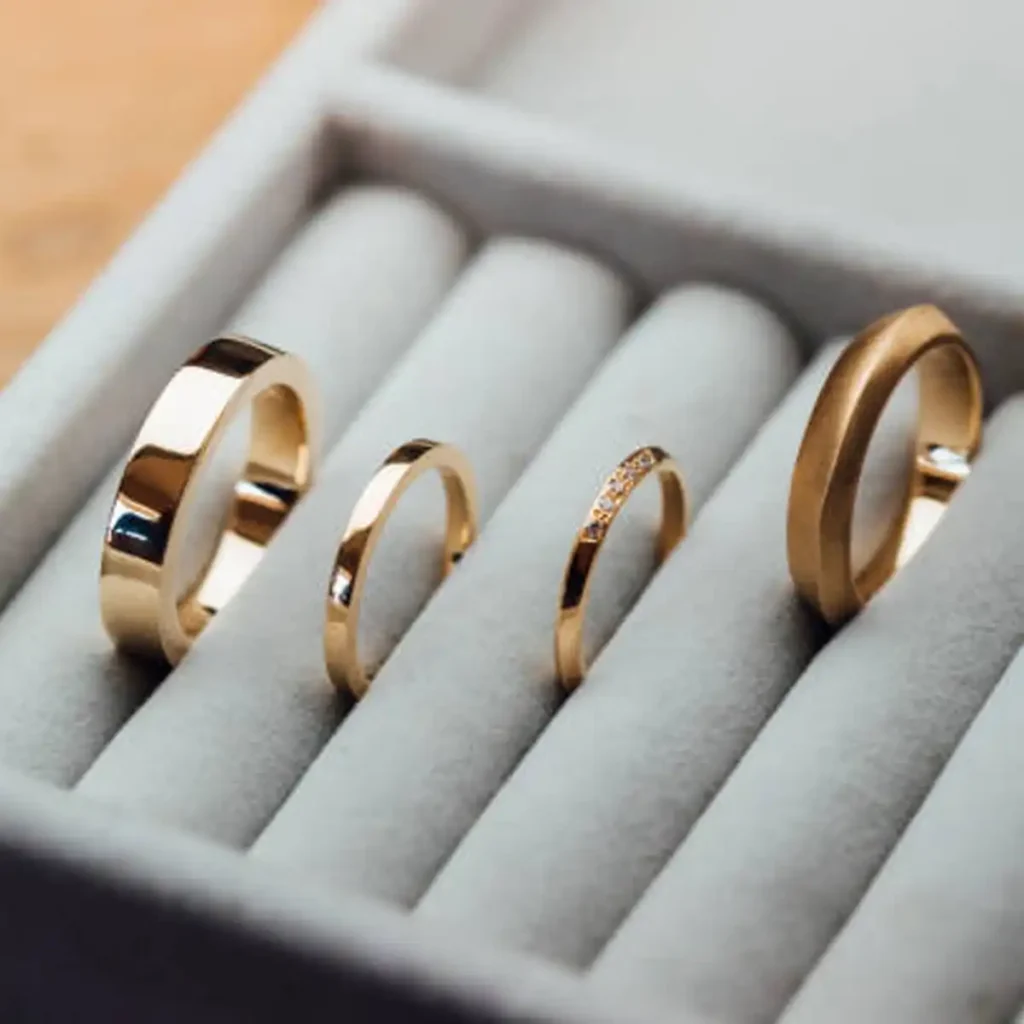
Bespoke wedding rings are usually less expensive than engagement rings because they involve more metal and less stone. A plain made-to-measure band in 9ct or 14ct gold can begin around £500, with many 18ct gold or platinum designs without diamonds falling between £800 and £1,500 per ring. Shaped bands that contour exactly around an engagement ring, or diamond eternity bands, will cost more, especially where there is a full circle of stones. Men’s rings in heavier sizes or in platinum will naturally reflect the extra metal.
For bespoke diamond earrings and pendants, the range is broad. Small diamond studs or a simple solitaire pendant might begin in the low hundreds, whereas 1ct total diamond studs or elaborate drop earrings with multiple stones can travel into several thousands, depending on quality and design complexity. Coloured gemstones, from rich sapphires to delicate morganite, offer scope for impact at a range of price points.
Across all categories, three variables drive cost:
Most Hatton Garden jewellers ask for a deposit in the region of 30% to 50% once the design is agreed, with the balance payable on completion. A good quote will set out what is included: design time, CAD work, wax or resin models if needed, hallmarking, presentation box and often documentation for insurance.
Timeframes matter, especially if you are working towards a proposal, wedding or anniversary. For a bespoke engagement ring commissioned in Hatton Garden, a typical schedule is around 4 to 8 weeks from first meeting to finished piece, though complex designs or unusual stones can extend this.
Most projects follow a similar structure. The initial consultation and early design work usually occupy 1 to 2 weeks. During this phase, you discuss ideas, view stones and receive first sketches or digital designs. CAD modelling and revisions add a further 1 to 2 weeks as you fine-tune band width, setting height and other details.
Gemstone sourcing may run in parallel, taking anything from a few days to several weeks, depending on whether you want a classic round diamond readily available in London, or a rarer stone that needs to be located through specialist suppliers. Once the design and stone are confirmed and you have approved the CAD or wax model, the workshop phase begins. Casting, assembly, stone setting, finishing and hallmarking typically take 2 to 3 weeks, with additional time allowed for complex pavé or elaborate metalwork.
External steps, such as hallmarking at the London Assay Office and seasonal demand, can influence the schedule. Hatton Garden is particularly busy in the run-up to Christmas, Valentine’s Day and the summer wedding season, so starting 3 to 4 months ahead of a firm date is wise if you want a relaxed experience and plenty of room for revisions. At the other end of the spectrum, some jewellers can compress lead times for urgent requests by simplifying design decisions and prioritising your piece in the workshop, but this should always be discussed at the outset.
As a broad guide, plan for 6 to 8 weeks from first conversation to collection for a straightforward commission, and allow additional time for rare gems or intricate work. The more decisive you are at each stage, the smoother the schedule will be.
Working with Smith & Green in Hatton Garden feels less like a sales appointment and more like a collaborative studio session. From the first conversation, the focus is on understanding the wearer, not just the metal and stones.
The process begins with a consultation in their Hatton Garden showroom or via video call. You are encouraged to bring anything that expresses your ideas: images of rings you admire, screenshots from social platforms, heirloom jewellery, or simply a list of adjectives such as “sleek”, “vintage-inspired” or “bold”. If the piece is a surprise, the team can help you infer ring size, discuss the recipient’s style and suggest practical shapes for daily wear.
From there, the designers translate these insights into initial concepts. Depending on complexity, this might be hand sketches or immediate CAD proposals. Smith & Green often reference existing collection pieces to help you articulate preferences, such as borrowing the halo from one design and the band profile from another to create something individual.
Once a direction is agreed upon, a detailed CAD model is created. This 3D representation shows the ring or bracelet from every angle, with precise measurements. You receive clear visuals that make it easy to evaluate proportions, stone height and band thickness. If something does not feel quite right, revisions are straightforward, with small adjustments to dimensions or settings made quickly and shown back to you for approval.
For some projects, particularly fitted wedding bands, a wax or resin model is produced so you can see the piece in three dimensions and test how it sits alongside an existing ring. When you confirm that the CAD and any prototypes are exactly as you want them, you formally sign off on the design. At that stage, major changes become more difficult and may incur additional costs, so it is important to feel fully comfortable before giving the final go-ahead.
The jeweller retains intellectual property in the CAD files and design work, which is standard in the trade. What you own is the finished piece, crafted to your specifications. For you, the benefit is practical rather than legal: your design and measurements remain on file, making it straightforward to commission a matching wedding ring, eternity band or complementary diamond bracelet in future.
Throughout production, communication is clear and measured. You may receive progress updates or workshop photographs, but the priority is always that goldsmiths and setters can work without interruption. When your bespoke diamond ring or other piece is ready, you are invited for a fitting or collection appointment, where final details such as engraving and documentation are confirmed.
Perhaps the greatest satisfaction in commissioning bespoke jewellery is choosing materials that align with both your aesthetics and your values. In Hatton Garden, and with Smith & Green in particular, you can specify everything from the exact shade of rose gold to whether your centre stone is natural or lab-grown.
On the metal side, 18ct gold in yellow, white or rose is a mainstay for fine engagement rings and wedding bands. It offers a rich colour and a good balance between purity and strength. White gold is usually rhodium-plated to achieve a crisp white finish and will need occasional re-plating, something Smith & Green incorporates into their long-term service. Platinum, by contrast, is naturally white, extremely durable and hypoallergenic, making it a popular choice for settings that hold important stones. Its density gives a pleasing weight in the hand and makes prongs particularly secure.
Lower carat gold, such as 9ct, can be a smart option for those focused on budget or for pieces not worn every day. It is harder due to higher alloy content, but paler in tone, something to consider if you are pairing it with existing jewellery. High-carat 22ct gold is prized for its saturated yellow colour and is often reserved for plain bands and traditional designs where its softness is less of a concern. Silver, while relatively inexpensive, is generally used for dress pieces rather than engagement rings because it is softer and prone to tarnish.
Choosing stones is where your piece truly comes alive. Natural diamonds remain the classic choice, with GIA-certified diamonds offering reassurance on cut, colour, clarity and carat. Your jeweller will explain how marginal adjustments in these grades can create savings without compromising beauty to the naked eye, for instance, by prioritising an excellent cut and slightly relaxed clarity.
Lab-grown diamonds have transformed what is possible at various budget levels. Chemically and visually identical to mined stones, they offer dramatic size-for-spend advantages, particularly in 2025’s market, where lab prices have fallen sharply compared with natural stones. Many clients now commission a lab-grown diamond engagement ring to secure a larger carat weight or higher specification without increasing their budget, while still receiving certification from respected gem laboratories.
Coloured gemstones add character and meaning. Sapphires, rubies and emeralds are popular centre stones, with shades ranging from classic royal blue to pastel peach. Semi-precious options such as aquamarine, morganite, spinel and tourmaline can provide generous colour at approachable prices. An experienced Hatton Garden jeweller will guide you on hardness, treatments and appropriate settings so that your chosen gem remains secure and attractive over many years of wear.
Ethical sourcing underpins these choices. Diamonds sold through established Hatton Garden workshops are conflict-free under international certification schemes, and reputable jewellers are open about their supply chains. Increasingly, clients also ask for recycled precious metals or, where available, Fairtrade and Fairmined gold for added reassurance on environmental and social impact.
Fun fact: The British hallmarking system is one of the oldest forms of consumer protection in the world, with some Assay Offices tracing their origins back more than 700 years.
Between careful metal selection, certified stones and transparent sourcing, a bespoke commission lets you align your jewellery with your principles as much as with your taste.
Quality is not an abstract promise in British jewellery; it is written into law. Any piece over the minimum legal weight in precious metal must carry a hallmark from an official Assay Office, and that mark is your guarantee of metal content.
On a platinum engagement ring or 18ct gold band from Hatton Garden, you will typically find several tiny stamps inside the shank. These indicate the maker’s mark, the fineness of the metal (such as 750 for 18ct gold or 950 for platinum) and the symbol of the Assay Office that tested and marked the piece, often London for Smith & Green. Because hallmarking is mandatory for gold over 1 gram, platinum over 0.5 grams and similar thresholds for other metals, you can be confident that the jewellery you receive is exactly what it is described to be.
Craftsmanship sits alongside hallmarking as the second pillar of quality. In a bespoke setting, each design is engineered for strength as well as beauty. Bands are made to appropriate thicknesses so they feel refined without being flimsy. Settings are built to cradle stones securely while still allowing light to enter. Pavé and halo designs are carefully calculated so that small diamonds are seated evenly and protected by sufficient metal.
During production, your piece will pass through several specialists: casters, goldsmiths, setters and polishers. At each stage, inspections take place to pick up issues long before the ring or bracelet reaches you. Final checks include examining every stone under magnification, assessing the polish for uniformity and verifying that the piece matches the approved design.
Smith & Green send their creations to the London Assay Office for hallmarking before carrying out final polishing and presenting the jewellery. The combination of legal metal testing, rigorous in-house quality control and long-term service gives confidence that your bespoke jewellery is built not only to impress on day one but to withstand a lifetime of wear with sensible care.
Commissioning a custom ring or bracelet is an investment, both financial and emotional. Proper aftercare, supported by robust warranties and good insurance, preserves that investment across decades.
Smith & Green underpin their service with a lifetime warranty on craftsmanship, a commitment that covers manufacturing faults for the life of the piece. In practice, this means that if a structural issue linked to workmanship were to emerge, they will repair or remake as needed. Normal wear, accidental damage, and loss are not covered by warranty, which is where your own habits and insurance become important.
Regular professional maintenance is part of the package. Clients are invited to return for complimentary cleaning and polishing, which restores the shine dulled by everyday lotions and dust. During these visits, jewellers typically check prongs and settings, tightening where needed so stones stay secure. White gold pieces can be re-plated with rhodium at intervals to keep them bright.
Resizing is another common aftercare task. Even with careful fitting, fingers can change size over time. Straightforward resizes are usually handled quickly in the workshop, though full eternity rings and certain complex designs may be more limited. Because Smith & Green hold design details and CAD files, they are well placed to adjust or maintain your jewellery in line with its original structure.
Insurance deserves particular attention for high-value engagement rings and statement jewellery. Many clients choose to list significant pieces separately on their home cover or take out specialist jewellery insurance that includes accidental loss or damage outside the home. An up-to-date valuation report helps set appropriate cover levels. It simplifies any future claim, so it is worth asking your jeweller to provide an initial valuation and periodic updates as metal and stone prices shift.
Good practice also includes simple daily habits: removing rings for heavy manual work or gym sessions, keeping jewellery away from harsh chemicals and storing pieces individually so diamonds do not scratch softer metals or stones. With these routines, plus professional checks every few years, a well-made bespoke piece should remain structurally sound and visually impressive for generations.
Amid the bustle of Hatton Garden, Smith & Green occupy a particular niche as a contemporary boutique combining traditional craft with modern technology and approachable service.
Founded in 2011, the firm has grown into a recognised destination for bespoke engagement rings in London, wedding bands and fine jewellery commissions. Clients visit their showroom at 9 Hatton Garden to sit down with experienced consultants, often one of the founders themselves, and to view carefully selected diamonds and coloured stones. The atmosphere is polished yet relaxed, designed to make first-time buyers as comfortable as seasoned collectors.
What distinguishes Smith & Green is the depth of attention given to each commission. Rather than steering clients towards what happens to be in the window, they begin with questions: how the ring will be worn, what styles the wearer gravitates towards, which aspects of quality matter most and where the budget should be focused. Transparent discussions about natural versus lab-grown stones, platinum versus 18ct gold and classic versus contemporary settings help clients feel fully informed before making decisions.
Behind the scenes, the workshop network spans both London and specialist partners abroad, particularly in Italy, bringing together advanced CAD and casting techniques with meticulous hand-finishing. Every piece is London-hallmarked, finished to a high standard and presented with thoughtful packaging and documentation.
Although best known for engagement and wedding rings, Smith & Green also designs diamond line bracelets, earrings, and necklaces, as well as redesign projects that breathe new life into inherited stones. Clients who collect luxury watches often commission matching jewellery, such as diamond-set wedding bands that echo a favourite timepiece or cufflinks created to complement a particular watch dial.
Reviews consistently highlight clear communication, honest guidance and a sense that the team genuinely cares about the result. Many clients return for anniversary pieces, eternity rings or gifts, treating Smith & Green as their personal jewellery house within Hatton Garden.
Preparing well for your first appointment ensures the design process begins smoothly and that you gain maximum value from the jeweller’s expertise.
Start by clarifying your budget. Rather than a single rigid figure, think in terms of a range you are comfortable with, for example, “around £4,000 to £6,000 for the ring”. This gives your consultant room to propose options, such as different centre-stone sizes or metal choices, while staying within the boundaries.
Gather inspiration. Save images of rings, bracelets or diamond necklaces that catch your eye, even if they are not perfect. Note what you like about them – perhaps a fine pavé band, a particular stone shape or the way two metals are combined. It can be equally helpful to show designs you dislike so the jeweller knows what to avoid.
Consider lifestyle. Think about how and when the piece will be worn. For someone in a hands-on profession or who is very active, a lower-set stone or a slightly thicker band may be advisable. If sleeves and gloves are involved daily, a smooth profile might work better than pronounced claws and sharp edges.
Work out the ring size if applicable. If the recipient already wears a ring on the correct finger, discreetly borrow it for measurement or trace the inner circle on paper. If that is not possible, the jeweller can help you estimate from other information, and resizing later is usually straightforward.
Reflect on metal preferences. Does the wearer already favour yellow, white or rose metals? Do they have strong feelings about platinum versus gold, or about the warmth of high-carat yellow gold? Make a note of any sensitivities, such as reactions to certain alloys in the past, so alternatives can be suggested.
Identify gemstone preferences. Decide whether you lean towards a classic round brilliant diamond, an oval or cushion shape, or perhaps a coloured centre stone such as sapphire or emerald. If ethical considerations are important, think in advance about whether you wish to explore lab-grown diamonds or specific origins for natural stones.
Bring existing pieces or loose stones if you hope to incorporate them. An heirloom diamond can be reset into a modern design, and gold from sentimental pieces can sometimes be melted and reused in a new commission, subject to suitability.
List any personal details you should include. Engraved dates, initials, coordinates or meaningful phrases can transform a beautiful ring into a deeply personal one. These can be finalised later in the process, but discussing them early helps integrate them gracefully into the design.
Finally, jot down questions. No query is too simple, whether about cleaning routines, how often rhodium plating is needed, or what happens if you lose a small accent stone in the future. Your consultation is the moment to draw on expert knowledge; arriving prepared makes it easier to leave with clarity and confidence.
Choosing bespoke jewellery in Hatton Garden, and particularly working with a house like Smith & Green, is a decision to invest in a process as much as in a finished object. You gain the ability to steer every decision, from the sparkle of the stone to the curve of the band, with experienced designers and goldsmiths translating your ideas into something structurally sound and beautifully made.
You now have a clear picture of what that journey involves: realistic budget ranges, honest timeframes, the steps of consultation, CAD and approval, the role of metals and gemstones, the safeguards of hallmarking, and the comfort of long-term aftercare. Whether you are planning a proposal, marking a milestone or commissioning a piece simply because you appreciate exceptional jewellery, Hatton Garden offers the infrastructure and expertise to make it happen.
If you are ready to begin, the next step is simple. Arrange a consultation, bring your inspirations and priorities, and let a specialist guide you from concept to finished piece. Over a matter of weeks, sketches and digital models become precious metal and stone, and the story you had in mind becomes something you can hold, wear and eventually pass on.
A well-commissioned bespoke engagement ring or fine jewel is rather like a tailored suit or a coach-built car. Once you have experienced how precisely it fits, how closely it reflects the wearer and how long it lasts, everything else feels off-the-peg.