People often use “shape” and “cut” interchangeably, but they mean different things. Shape is the outline of the diamond when viewed from above — round, oval, square and so on. Cut refers to how well the diamond’s facets have been proportioned and aligned, which determines its brilliance and sparkle (see our Four Cs guide for more on cut grading). A round diamond can have an Excellent or a Poor cut; the shape stays the same. The GIA only assigns an overall cut grade to the round brilliant; all other shapes are classified as “fancy shapes” and receive polish and symmetry grades instead.
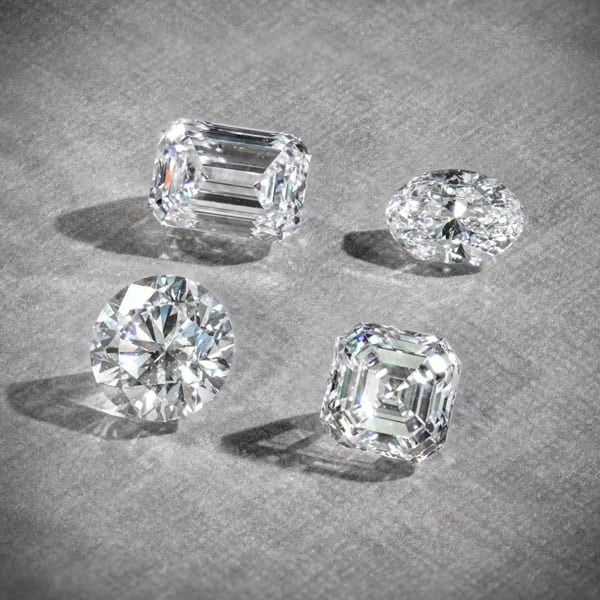
Every diamond shape falls into one of two cutting styles, and this affects how it handles light and how forgiving it is of colour and clarity:
Brilliant cuts (round, oval, cushion, pear, marquise, radiant, princess, heart) have many small, triangular and kite-shaped facets arranged to maximise sparkle. Their complex light return helps mask inclusions and body colour, meaning you can often choose a lower clarity or colour grade and still have an eye-clean, bright diamond.
Step cuts (emerald, Asscher) use long, parallel facets that create broad flashes of light rather than intense sparkle. This open, hall-of-mirrors effect is elegant and distinctive, but it also means inclusions and colour are easier to spot. For step cuts, it’s worth aiming a grade or two higher in clarity (VS1+) and colour (G–H) to keep the face-up appearance clean.
Shape | Type | Facets | What Makes It Special | Best Suited To |
Round Brilliant | Brilliant | 57–58 | The only shape with a GIA cut grade. Maximum brilliance and fire. | Classic, timeless engagement rings |
Oval | Brilliant | 56–58 | Elongated silhouette creates the illusion of a larger stone. Flattering on most hand shapes. | Those who want a bigger look per carat |
Cushion | Brilliant | 58–64 | Soft, rounded corners with a romantic, pillow-like outline. Square or elongated. | Vintage-inspired and halo settings |
Princess | Brilliant | 50–58 | A sharp, modern square with pointed corners (which need protective prong settings). Strong sparkle. | Contemporary solitaires |
Pear | Brilliant | 56–58 | A teardrop shape — round at one end, pointed at the other. Elongates the finger beautifully. | Pendants, drop earrings, unique rings |
Marquise | Brilliant | 56–58 | A long, narrow boat shape with pointed ends. Delivers one of the largest face-up areas per carat. | Maximising visual size on a budget |
Radiant | Brilliant | 70 | Emerald-cut outline with brilliant-style faceting. Excellent sparkle in a rectangular form. | Those who love emerald shapes but want more fire |
Heart | Brilliant | 56–58 | A romantic symbol that requires skilled cutting to achieve even, balanced lobes. | Sentimental, statement pieces |
Emerald | Step | 57 | Long, clean facets create a hall-of-mirrors effect. Elegant and understated. | Art Deco and minimalist styles |
Asscher | Step | 57–58 | A square emerald cut with a distinctive X-pattern when viewed from above. Bold vintage character. | Those drawn to geometric, Art Deco designs |
💡 Insider tip: Fancy shapes (everything except round) typically cost 15–40% less per carat than a round brilliant of equivalent quality, because the round cut wastes more rough diamond during cutting. If budget matters, choosing an oval, cushion or pear can get you a noticeably larger diamond for the same spend. |
Elongated shapes — oval, pear, marquise and emerald — make fingers appear longer and more slender. Square and round shapes (round brilliant, princess, Asscher) sit compactly and suit wider fingers or a classic, centred look. The best shape is simply the one that makes you smile when you look at your hand.
Your choice of shape directly affects which grades you need in the other Cs. Brilliant cuts are forgiving — an SI1 clarity and I–J colour often looks perfectly clean. Step cuts show everything, so VS1+ clarity and G–H colour gives you confidence. And because only the round brilliant receives a GIA cut grade, when shopping for fancy shapes always look for Excellent polish and Excellent symmetry as your quality markers.