
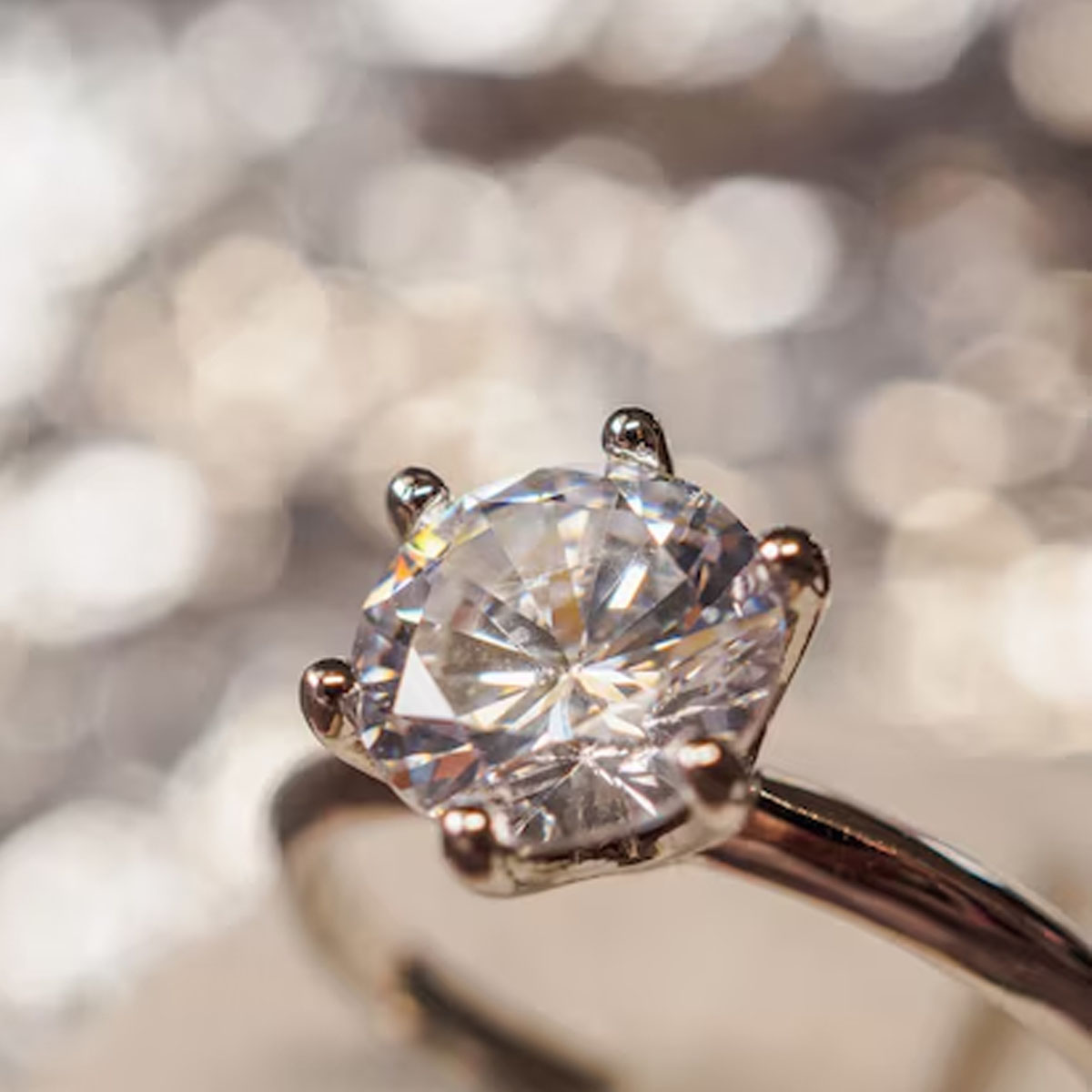
The engagement ring has travelled through thousands of years of human history, yet its central promise has scarcely shifted. A small circle of precious metal, often crowned with a gemstone, signals commitment, love and a shared future. Its path from practical contract to romantic declaration mirrors the transformation of marriage itself, from transaction to partnership. To trace the ring’s story is to follow a persistent human urge to mark devotion in something tangible and enduring.
In Ancient Egypt around 2800 BCE, couples exchanged braided reeds or sedges as tokens of eternal unity. The unbroken circle embodied endlessness, while the hole at its centre was a doorway to an unknown future that the pair would face together. Leather, bone and ivory soon replaced fragile plants, a clear bid for permanence.
Egyptians also launched the enduring custom of wearing the ring on the fourth finger of the left hand. They believed a “vena amoris” ran from that finger straight to the heart. Anatomy has since disproved a unique vein, but the romance of the notion has kept the habit alive.
Carried across the Mediterranean, the practice morphed in Rome. Early Roman betrothal bands were iron, chosen for strength and permanence, and in a stark reflection of patriarchy, for the husband’s claim over his bride. Wealthy Romans added a gold ring for public display, an early nod to status signalling. Romans even linked diamonds with desire, imagining Cupid’s arrowheads tipped with the stones.
From reeds to iron, the ring proved a cultural mirror, absorbing the values of each society it touched. What began as a private promise became a formal, public contract, laying the foundations for later legal and religious weight.
The custom waned after Rome but surged anew when the Christian church formalised it. In 860 AD, Pope Nicholas I described the ring as central to Western betrothal rites, a man’s solemn promise to marry. In 1215, the Fourth Lateran Council under Pope Innocent III introduced marriage banns, mandating a waiting period between betrothal and wedding. The ring became the emblem of that interval, a public statement of intent and of the groom’s financial responsibility.
With the Renaissance came artistic exuberance. Trade routes expanded Europe’s access to gemstones, and jewellers responded with intricate designs. Engagement rings moved beyond utility, becoming crafted artworks. Romance and fidelity joined legality as dominant meanings, preparing the ground for the jewel’s transformation into a personal statement of beauty.
A single 15th-century proposal changed jewellery history. In 1477, Archduke Maximilian of Austria offered Mary of Burgundy a ring set with thin diamond slivers arranged in an “M”. Nobles routinely exchanged jewellery, so the gesture was hardly shocking at the time. Yet it became the first widely recorded diamond engagement ring and sparked aristocratic imitation.
Diamonds, prized for hardness and emerging brilliance, soon symbolised endurance and power. Still, their prominence was not ancient law. For millennia, betrothal rings had showcased other materials. The diamond’s ascendancy started with one royal choice and took centuries to reach the mainstream, remaining long the preserve of elites. Remembering this context strips away the myth that diamonds are the only legitimate option, and instead places them as a historically significant choice among many.
Fun fact: The phrase “diamond is forever” did not exist until a 1947 advertising slogan, yet a Habsburg prince effectively set the stage 470 years earlier.
Designs shifted quickly from the 19th century onwards. The Victorian era (1837-1901), shaped by Queen Victoria and Prince Albert’s famously affectionate marriage, embraced sentiment. Rings bore hearts for love, flowers for romance and even serpents for eternal wisdom. Victoria’s fondness for birthstones encouraged bespoke symbolism. Meanwhile, vast South African diamond finds in 1867 opened access for the middle class. Durability dovetailed neatly with ideals of steadfast affection.
The 1920s and 1930s saw Art Deco sweep in with symmetry, clean lines and a machine-age aesthetic. Platinum’s strength and cool sheen suited sharp geometry. The solitaire diamond setting soared in popularity, its simplicity highlighting brilliance. Yet coloured gems such as emeralds, rubies and sapphires also flourished, flanked by diamonds in balanced compositions. Individuality never disappeared, even as the diamond’s star rose.
These eras teach that “timeless” stems from harmony of form and meaning, not trend-chasing. Whether Victorian symbolism or Deco geometry, enduring pieces obey core design principles that still persuade the eye.
A fine ring is architectural. It comprises interdependent parts, each crafted to support beauty and strength. Learning this vocabulary turns choosing a ring from picking options on a sheet into shaping a coherent, resilient whole.
Design principles cut across cultures. Rings that feel “right” obey rules of proportion and symmetry.
Symmetry and balance: Reflectional or rotational symmetry creates calm and order. No single element should dominate; the result should feel cohesive. Art Deco’s lasting appeal proves the power of disciplined balance.
Proportion and scale: The centre stone’s size relative to band width, side stones, and the wearer’s hand is crucial. Master jewellers tweak these relationships to ensure the ring feels comfortable and looks harmonious. Get the ratios wrong, and even a costly stone looks awkward. Get them right and everything sings.
Metal is not a mere colour swatch. It is the structural core, the feel against skin and the frame that keeps a precious stone safe for decades. Yellow gold dominated for centuries, but today platinum’s cool brightness and rose gold’s warmth sit beside it. Choosing among them is an exercise in aesthetics, lifestyle and longevity.
| Metal | Natural colour | Durability & hardness | Maintenance | Hypoallergenic | Common symbolism |
| Platinum | Silvery white | Extremely durable, dense, resists wear, metal is displaced | Low, patina develops and can be polished | Yes | Purity, rarity, strength, enduring love |
| 18k Yellow Gold | Rich warm yellow | Softer, more malleable than platinum, prone to scratches | Low, polish restores shine, colour is inherent | Generally yes | Wealth, prosperity, divinity, tradition, eternity |
| 18k White Gold | Silvery white | Durable but softer than platinum, rhodium plating adds defence | Medium, re-plate every 1-3 years | Not if nickel | Unity, commitment, modern elegance |
| 18k Rose Gold | Warm pink/red | Durable thanks to copper alloy | Low, colour is inherent, may deepen over time | No | Love, warmth, romance, individuality |
Gold has signified wealth and divinity from Egypt to the Incas. Across the Middle East and Asia, it remains the wedding metal of choice. Metals with white lustre evoke the moon. Platinum’s rarity and strength have become metaphors for exclusivity and steadfast love. In Native American traditions, silver paired with turquoise is cherished. Japan’s Mokume Gane combines contrasting metals into wood-grain patterns, symbolising unity from diversity.
The centre stone anchors the ring’s identity. For decades, the diamond has dominated, its quality decoded by the 4Cs, introduced by the GIA in 1953. Yet sapphires, emeralds and rubies predate diamond supremacy and carry royal pedigree. A universal understanding accepts that the “right” stone is the one that tells a couple’s story and survives daily wear.
| The ‘C’ | What it measures | Why it matters (impact on beauty) |
| Cut | Angles, proportions, symmetry, polish | Primary driver of sparkle. Excellent cut unlocks brilliance, fire and scintillation |
| Colour | Absence of colour, graded D to Z | Colourless stones reflect pure white light, enhancing brilliance |
| Clarity | Lack of inclusions and blemishes | Fewer internal marks increase rarity and value. Most are invisible face-up |
| Carat | Weight of the diamond (1 ct = 200 mg) | Big influence on price. Apparent size also depends on cut and shape |
Durability is crucial for a ring worn every day. The Mohs scale ranks hardness from 1 to 10, with diamond at 10.
Sapphire (corundum, hardness 9): Symbol of loyalty, wisdom and sincerity. Famous in blue but found in pink, yellow and more. Tough enough for daily life.
Emerald (beryl, hardness 7.5-8): Vivid green, tied to rebirth and love. Characteristic inclusions, the jardin, make each stone unique. Softer, so it needs protective settings and care.
Ruby (corundum, hardness 9): Red from chromium, emblem of passion and courage. Once regarded as the most precious gemstone, even above diamonds in some cultures.
Modern buyers want beauty without harm. The Kimberley Process (2003) curbs conflict diamonds by certifying that rough stones do not fund rebel wars. Shipments must travel in sealed containers with government-validated certificates, and trading is limited to compliant members.
Yet the scheme’s definition of conflict is narrow. Ethical consumers also weigh labour rights, safety and environmental impact. Bespoke jewellers with transparent supply chains can exceed minimum standards, offering assurance that aligns with personal values.
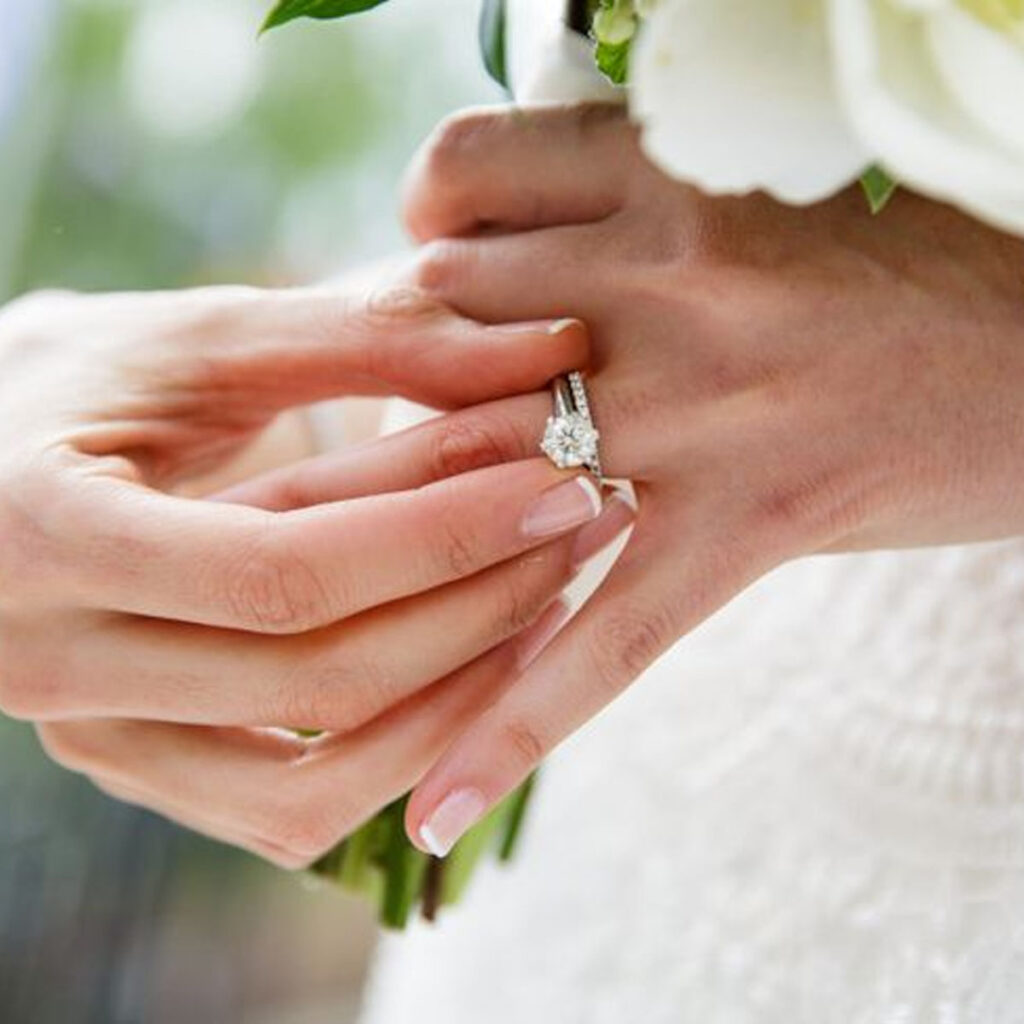
Comfort and security hinge on the correct size. Too tight and it hurts and sticks. Too loose and it spins or slips away. The sweet spot slides over the knuckle with slight resistance, then sits snugly without twisting.
Size changes through the day and with conditions:
There is no single global system:
Resizing reveals craftsmanship. To size down, jewellers remove a small section of the shank, rejoin and polish. To size up slightly, they may stretch metal; for larger increases, they insert a new section.
Limits exist:
Engagement is universal, expression is local. Western-style rings are now seen worldwide, often woven into existing customs rather than replacing them.
Proposal: The kneeling suitor stems from medieval chivalry, mirroring fealty to a lord. Many cultures focus on family. In Ghana, a “knocking ceremony” brings the groom’s family to the bride’s home. Seeking a parent’s blessing in Greece or France remains common, shifting from permission to support.
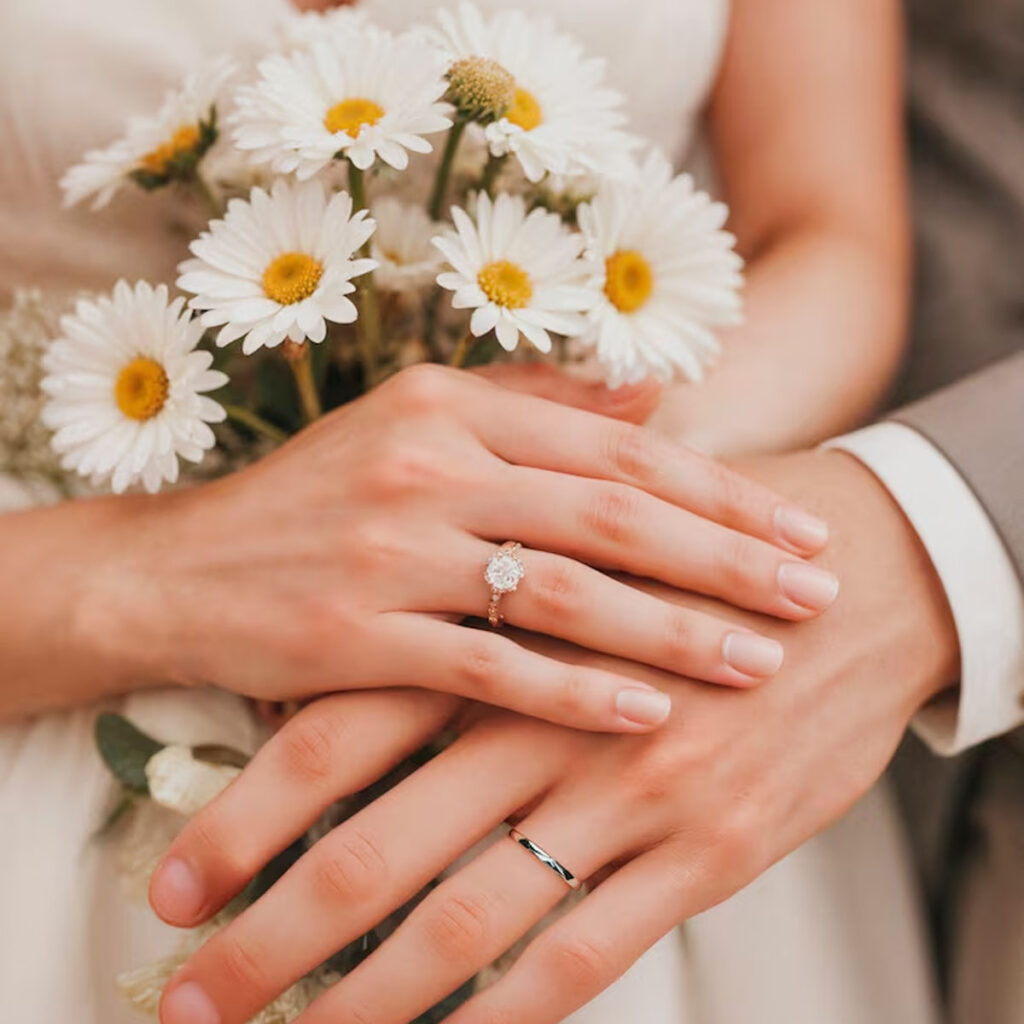
Ring finger: The left-hand fourth finger tradition flows from the Roman vena amoris idea. A romantic myth, but a powerful one.
Heirloom ring: Passing down a family piece turns jewellery into a conduit of memory. It is sustainable, needs no new mining and carries a lineage of stories. Material value merges with priceless sentiment.
| Country/Region | Engagement ring hand | Wedding ring hand | Noteworthy customs |
| USA / UK / Canada | Left, ring finger | Left, ring finger | Wedding band placed first, engagement ring above it |
| Germany / Austria / Norway | Left, ring finger | Right, ring finger | Engagement ring often moves to the right post-wedding |
| Russia / Poland / Bulgaria | Right, ring finger | Right, ring finger | Both rings worn on the right |
| France | Left, ring finger | Left, ring finger | Coloured gemstones popular. Couples often shop together after proposal |
| India | Right, ring finger | Right, ring finger | Rings now common, but iron bangles (loha) or toe rings (bichiya) are traditional |
| Chile / Sweden | Right, ring finger | Left, ring finger | Both partners wear engagement rings. In Chile they switch to the left after marriage |
| Spain / Italy / Portugal | Right, ring finger | Left, ring finger | Engagement on right, wedding on left |
| Ireland | Left, ring finger | Left, ring finger | Claddagh ring: heart outward means engaged, inward means married |
An exceptional ring lives at the intersection of asset and artefact. Precious metal and stones can hold or rise in value, a hedge against turbulence. Yet the deeper worth is emotional, impossible to appraise.
Material value: High-purity gold or platinum, certified diamonds or fine coloured gems, and strong brands can retain value. Condition matters. Jewellery is a portable store of wealth.
Sentimental value: The memory of the proposal, the daily reminder of commitment, the bond with the giver. This is the value insurers cannot quantify, and it grows each year.
Mass-made rings are cast in batches. To cut costs, some use minimal metal, hollow galleries or thin shanks. They look good on day one but may not survive generations.
A bespoke ring is commissioned. An artisan selects stones, engineers a sturdy structure and finishes by hand. The couple’s input shapes the design. Rarity adds financial resilience, and personal authorship adds emotional depth. Contrary to the assumption, an independent jeweller’s lower overheads can make bespoke pricing competitive with chain-store pieces.
A true heirloom begins before casting. The design conversations are chapter one of its story. Built with solid materials and intention, it is ready to be passed down. A purchased, ready-made ring’s tale starts at the till; a bespoke ring’s narrative starts with “what do we want this to mean?” That difference endures.
Approach the process deliberately. Thoughtful preparation turns you from shopper to co-creator.
Across continents and centuries, the engagement ring has recorded humanity’s need to make love visible. Its forms shift, its materials vary, yet the intention stays steady. Choose with care, build with integrity, and the result becomes more than jewellery. It becomes a story in metal and light, ready to travel through time like a well-loved book passed between generations. As the saying goes, “measure twice, cut once” – a fitting mantra when the cut is of stone and the measure is of meaning.