
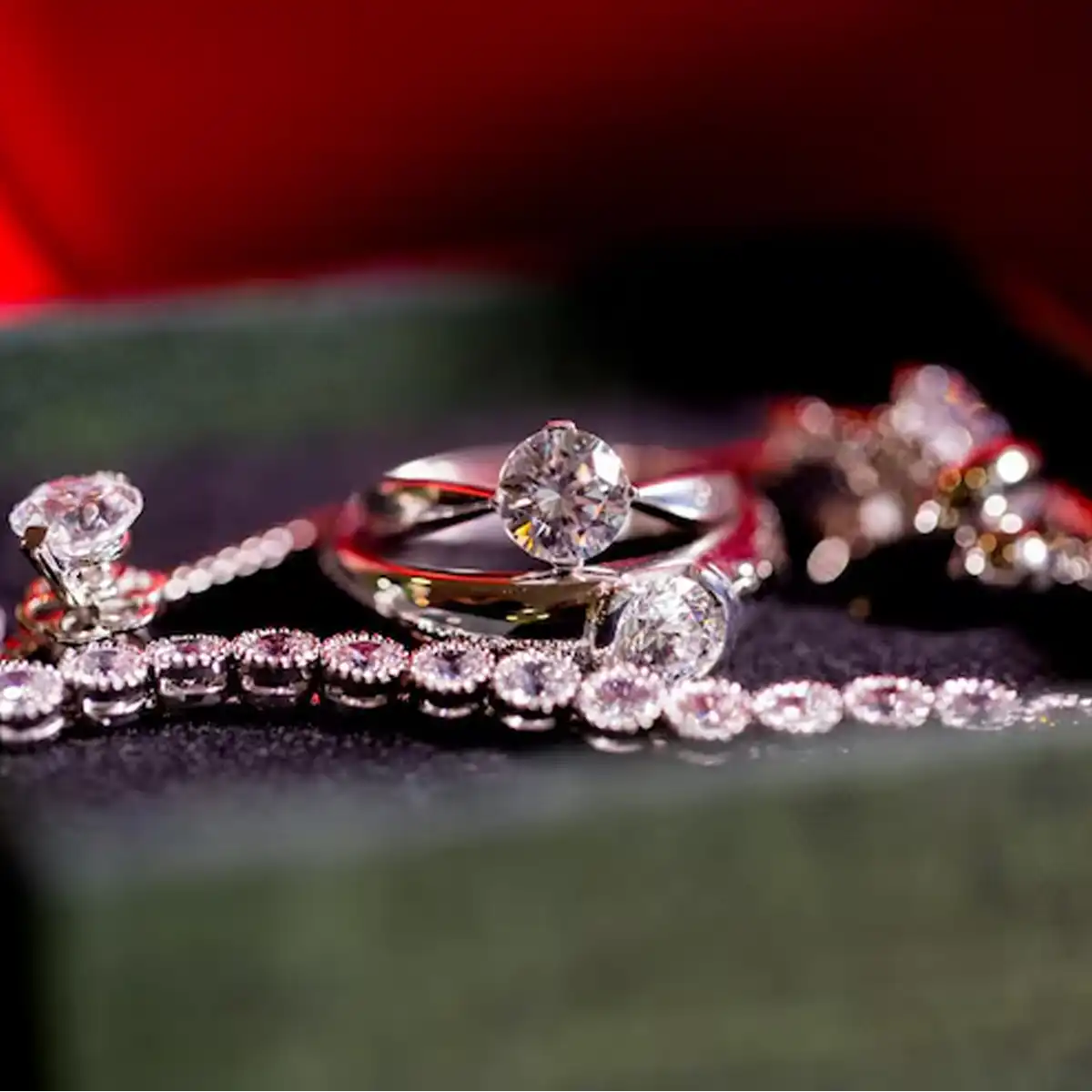
Hatton Garden can deliver an exceptional engagement ring or a forgettable purchase, and the difference rests on your ability to recognise genuine craft behind the sparkle. The surest way to protect your investment is to understand how true bespoke work looks, behaves and is presented, so you can distinguish it from mass-produced settings and polished sales routines. This guide shows you exactly how to identify authentic Hatton Garden jewellers who build pieces to last, helping you commission jewellery that carries depth, integrity and long-term value.
For first-time visitors, the street can feel intense. Rows of windows filled with diamonds; confident sales language and a constant sense of motion create an atmosphere where decisions are often made too quickly. Yet within the same postcode, you will find master workshops that approach each bespoke engagement ring as a technical and emotional commitment, not a transaction. Learning how to read the signs that point towards true craftsmanship, and how to sidestep the distractions that do not, is the key to walking away with a piece that feels as good in 20 years as it does on the day you say yes.
Selecting the right workshop, not just a ring, is the critical step in Hatton Garden. Recognising true expertise over performance makes the street less daunting and helps focus your search.
The district is dense with history, suppliers, setters, polishers and retailers. Some businesses handle full production from raw metal to final polish on-site. Others outsource most of the work while presenting a smooth showroom front. Both models can exist side by side, so appearances alone are unreliable. An ornate doorway or impressive frontage does not guarantee that the person advising you has ever held a graver or measured a stone.
An informed buyer watches behaviour as much as display. Workshops that focus on bespoke jewellery tend to be calm, with staff who listen carefully before suggesting solutions. Their emphasis is on structure, proportion and longevity rather than on quick discounts or limited time offers. Retailers that rely more on hard selling often feel busier, with staff at the door guiding passers by inside and conversations that move rapidly towards price rather than design.
Understanding these cues resets your expectations. You start to judge a jeweller less by how brightly their window shines and more by how clearly they can explain what they do, how they do it and why it matters to your ring.
The quickest way to stay in control in Hatton Garden is to treat visual spectacle as a starting point, not a verdict.t. Diamonds and polished settings are designed to look compelling under intense lighting. Your task is to see how they behave once that theatre has been stripped away.
Window displays often sit beneath concentrated halogen or LED beams. These create explosive sparkles that can flatter even modest stones. When you view a diamond under this kind of lighting, you are effectively judging it in a carefully engineered environment. The first practical step is simple. Ask to see any stone you are considering away from the counter, ideally nearer natural light or at least under softer illumination.
A well-cut diamond should maintain its character when the lighting becomes less dramatic. Its brightness may moderate, but the pattern of reflections should remain attractive and balanced. If a stone appears lively in the case yet looks flat once it is moved to the side of the showroom, treat that as a warning that you are admiring the lighting, not the stone.
Sales tactics deserve similar scrutiny. Staff standing outside, sometimes referred to as touts, are there to pull you in quickly. This approach is the opposite of how serious Hatton Garden engagement ring specialists operate. Workshops built on reputation tend to welcome visitors through appointments or measured walk-ins. Their confidence lies in their craft, not in intercepting passing trade.
The distinction between true bespoke work and catalogue adjustments is critical. Understanding this difference will significantly improve your judgement when evaluating jewellers.
Many shops use the word bespoke to describe a service that begins with an existing computer model. They open a library of designs, adjust details such as finger size or shoulder width and then send the file for 3D printing. The wax or resin model is turned into metal through casting. The result can look appealing and is often perfectly acceptable at a lower price point, but it is not bespoke in the traditional sense. It is a customised production.
True bespoke work starts more fundamentally. At Smith & Green Jewellers, bespoke means taking a bar of gold or platinum and shaping it directly for your project. The metal is rolled, drawn, hammered and carefully worked so that every millimetre of the ring’s architecture responds to the stone it will hold and the way it will be worn. This process is slower and requires a higher level of training, but it produces a structure tailored in three dimensions rather than adapted in a file.
The impact on durability is significant. Cast pieces can contain microscopic air pockets that soften the metal. Forged work, by contrast, is work-hardened as the metal is compressed and refined. When you wear a ring every day against door handles, bags and laptop edges, that difference in strength becomes important not just for aesthetics but for security.
If your engagement ring is going to be worn daily, sometimes for decades, the way its metal has been formed should matter as much to you as its carat weight or colour. Forging and casting are not simply alternative production routes. They create different internal structures, with different behaviours over time.
Forging uses heat and physical strength to shape metal. Each hammer blow compresses the material, tightening its internal arrangement and increasing its density. This process is particularly valuable with platinum, which responds very well to controlled deformation. The result is a shank and setting that resists bending more effectively, and that can be kept in good order through routine maintenance.
Casting involves pouring molten metal into a mould. While modern casting can be highly accurate, it cannot replicate the strengthening effect of forging. The initial structure is more porous, and though polishing and finishing will refine the exterior, the underlying metal can remain comparatively softer. The prongs that secure a diamond, or the claws that hold a sapphire, are therefore more vulnerable to gradual movement if the ring experiences knocks or pressure.
You do not need a metallurgical degree to appreciate this difference in practice. A hand-forged ring commonly feels slightly heavier and more precise in the hand. Edges appear crisp, shoulders line up sharply with the stone, and the inside of the band is smooth yet structurally taut. Cast rings often show slightly rounded corners when examined closely, with less definition around the gallery and under the bezel.
One of the most empowering things you can do in Hatton Garden is learn to use a loupe. This small magnifier turns each ring into a case study in workmanship and lets you see the decisions that were made at the bench.
Start with the basics. Hold the loupe close to your eye, bring the ring towards the lens and adjust the distance until the details come into focus. Look first at the junctions where claws meet the stone. On finely made pieces, the metal flows neatly onto the girdle with no visible gaps or excess solder. The claws should be consistent in width and shape, holding the stone securely without overwhelming it.
Next, inspect the edges of the band and the shoulders. In a hand-forged ring made by experienced Hatton Garden jewellers, you will see clean transitions and sharp lines where they are intended. There will be a sense of control in the way curves are executed. In a cast ring, these areas can look slightly softened, with a more rubbery profile, particularly at points that are difficult to reach in finishing.
Finally, examine the underside. The quality of finishing beneath the setting tells you whether the workshop takes pride in the detail that most people never see. Stones should be seated on well-prepared surfaces, and any decorative piercing or lattice work should look intentional rather than roughly cut.
The loupe is not about catching a jeweller out. It is a tool that helps you appreciate the difference between basic manufacturing and craft that has been developed over the years at the bench.
Paperwork may feel less romantic than diamonds and gold, but independent certification is one of your strongest protections as a buyer. In an area as competitive as Hatton Garden, it pays to understand which documents carry genuine weight.
Independent laboratories such as the Gemological Institute of America (GIA) and the International Gemological Institute (IGI) assess diamonds using consistent, published criteria. Their grading reports describe characteristics such as colour, clarity, cut and carat weight in neutral terms. Because they are not involved in the sale, they have no incentive to soften their assessments.

In contrast, some retailers rely on in-house grading. This can take the form of a certificate printed on smart stationery, often with an impressive logo, yet it represents only the opinion of the seller. In-house grades can be optimistic, describing a stone as, for example, F colour when an independent lab might assess it lower. The difference is not merely academic. It can influence the price significantly.
When a jeweller shows you a stone, ask directly which laboratory has graded it and request to see the report. A reputable workshop will readily provide this and explain any terminology you are unsure about. You should also check that the certificate number is laser-inscribed on the diamond girdle and that it matches the document.
Treat a reluctance to provide independent certification as a clear sign to look elsewhere. A high-quality diamond engagement ring deserves grading that stands up to scrutiny wherever you have checked in future.
In a landscape filled with confident sales patter, the right questions are your best instrument. They shift the conversation from surface presentation to substance and give your insight into how deeply a workshop engages with its craft.
First, ask whether the ring you are viewing is hand forged or cast. The answer should come promptly and clearly. If the response is vague or if the staff member does not seem to understand the distinction, that tells you as much as a direct no.
Second, ask where the workshop is physically located. Many of the most respected Hatton Garden jewellers complete their work in the same building as their showroom or within a short walk. Being able to point to the room where your ring will be made, or to introduce you to the person who will set your stone, is a strong sign of accountability.
Third, ask to see any diamond or coloured stone loose before it is set. Settings can hide inclusions near the edge of the stone or distracting colour zoning. Viewing the stone on a white card under daylight equivalent lighting allows you to make an informed decision.
Fourth, if you are buying an engagement ring, ask how the design accommodates a future wedding band. A well-considered setting allows a band to sit comfortably alongside, with either a flush fit or a deliberately integrated contour. Rings that ignore this principle can leave an awkward gap that is difficult to correct.
Fifth, ask about porosity and how the workshop prevents it. This might sound technical, but a craft-based jeweller will welcome the question and explain their approach to metal quality, whether through forging, careful casting control or both.
These conversations rapidly differentiate between retailers reading from a script and professionals who understand the relationship between structure, wear and long-term comfort.
One of the most striking differences you will notice when stepping into an appointment-based workshop is the pace. Instead of browsing at a crowded counter, you are seated in a calm environment with time to talk through ideas, budgets and practicalities.
At Smith & Green Jewellers, this format is deliberate. Designing a bespoke engagement ring or a significant piece of fine diamond jewellery involves more than choosing a style. It requires understanding how you live, how you like to wear jewellery and what matters most to you in a stone. An appointment gives both you and your jeweller space to explore these questions without pressure.
During a typical consultation, you might handle different metals to compare weight and feel, assess stones side by side under various lighting conditions and sketch out potential designs that balance aesthetic preferences with long-term durability. The focus is always on clarity. You are encouraged to ask direct questions and to take the time you need to absorb the information.
This approach is just as relevant when selecting luxury watches as it is for rings. Discussing movement types, case materials and bracelet construction in a quiet setting allows you to appreciate the engineering behind each piece, rather than simply its surface shine.
The result of this slower, more considered process is a piece that feels individually resolved rather than generically attractive. You leave not only with an object, but with an understanding of how it was made and why it has been built in a particular way.
Arriving in Hatton Garden with a clear sense of your priorities will make every conversation more productive. Preparation does not require technical fluency, but it does benefit from a little reflection.
Start by considering lifestyle. If you work with your hands, travel frequently or rarely remove your jewellery, mention this at the outset. It will influence recommendations on setting styles, band thickness and whether certain stones are suitable for daily wear.
Next, have a realistic budget in mind and share it honestly. A serious workshop uses this information to advise on where to place emphasis. You might decide to focus on stone quality while keeping the setting understated, or to prioritise design details while accepting a slightly smaller carat weight. A collaborative jeweller will propose options that respect your limits rather than pushing you to stretch beyond them.
It can also help to gather visual references of pieces you admire, even if you do not want to replicate them. Showing a jeweller what you respond to in terms of proportion, line and character gives them a starting point for interpreting those preferences into something structurally sound and original.
Finally, be prepared to listen. The best Hatton Garden engagement ring specialists see their role as guides rather than order takers. They will explain trade-offs, suggest alternatives and occasionally recommend against a choice if experience tells them it will not wear well. Honesty is one of the most valuable services they offer
Choosing excellent craftsmanship is only part of the story. Caring for your jewellery and watches properly helps them retain their character and structural health over time.
For rings, particularly those worn daily, schedule regular checks with your jeweller. A quick inspection of claw tension, band wear and stone security can identify issues before they become problems. Polishing and re-finishing are best approached conservatively, preserving metal where possible and maintaining the original geometry of the piece.
When it comes to luxury watches, follow the service intervals recommended by the manufacturer, but do not hesitate to seek specialised advice if you notice changes in performance. A well-maintained mechanical movement can offer decades of reliable service, especially when cared for by experts who understand both the mechanics and the aesthetics of high-grade timepieces.
Proper storage is equally important. Diamonds and sapphires can scratch metals and softer stones if stored loosely together. Use separate compartments or soft pouches, particularly when travelling. Avoid exposing jewellery to harsh chemicals and always remove rings before activities that could subject them to sudden shocks.
Partnering with a workshop that offers lifetime care, from cleaning to repairs, strengthens your relationship with the piece and with the people who crafted it. This ongoing dialogue is one of the quiet pleasures of genuinely bespoke work.
Fun fact: Platinum used in high-quality engagement rings is often denser than gold, so a platinum band of the same dimensions typically feels noticeably heavier on the hand
The essence of successful buying in Hatton Garden lies in balancing emotion with information. Your engagement ring, wedding band or luxury watch should speak to your story, but it should also be built with the kind of discipline that only comes from deep craft knowledge. By learning to read the signals that distinguish authentic bespoke jewellery from standardised production, you place yourself in a position of strength.
Look beyond bright lights and persuasive voices to the quieter details. Notice who invites questions, who can show you a workshop, and who takes time to explain forging, porosity and stone setting. Pay attention to how pieces look under a loupe, how diamonds perform away from the counter and how openly a jeweller discusses certification.
When you find a workshop that welcomes this level of scrutiny, such as Smith & Green Jewellers in the heart of Hatton Garden, you have likely found a partner rather than a seller. In that partnership, your brief, your lifestyle and your long-term expectations shape the final piece as much as the tools on the bench. Choosing the right jeweller is less like browsing a shop window and more like appointing a trusted architect. You bring the vision, they bring the engineering, and together you create something that feels solid, balanced and completely your own.