
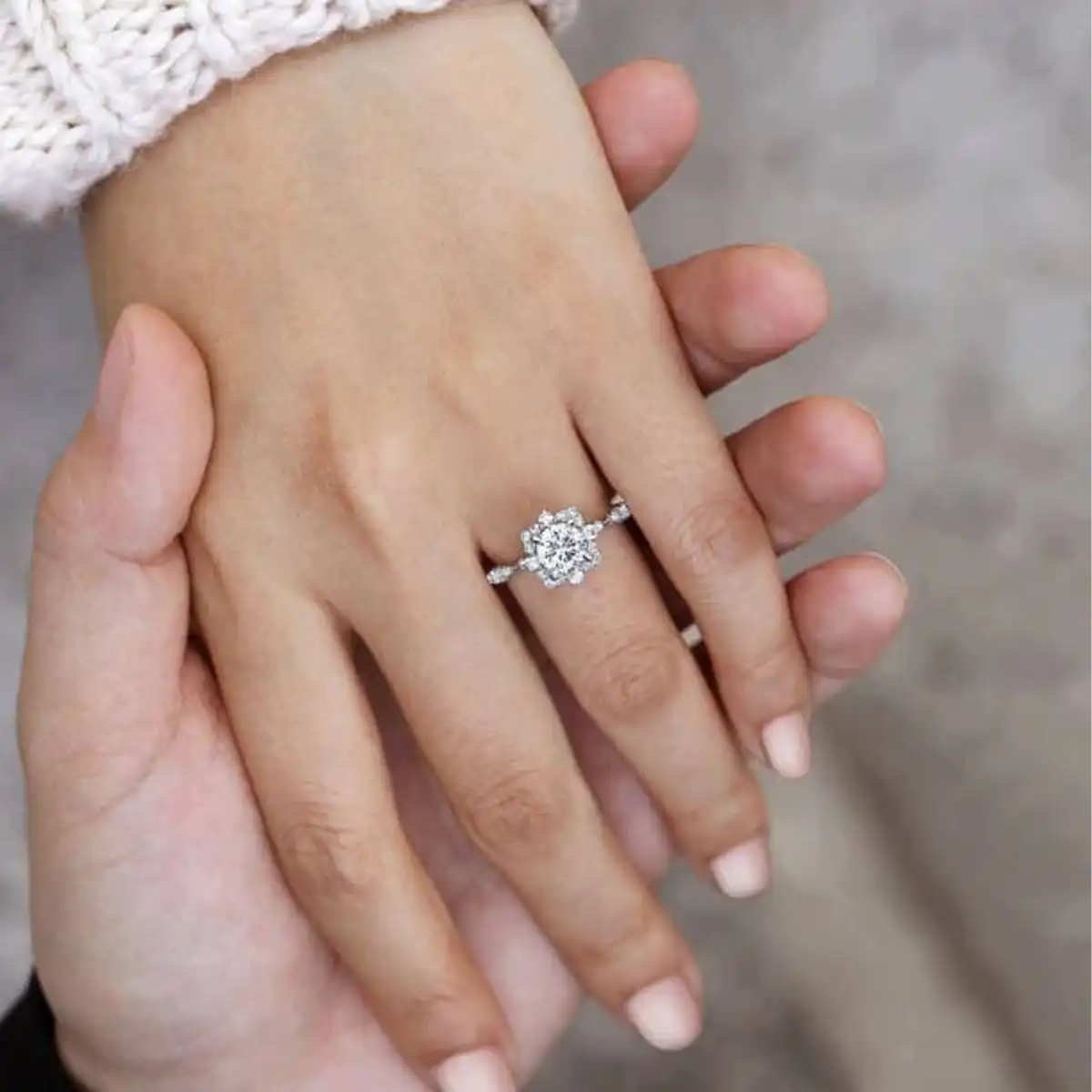
For couples planning a proposal or upgrading a significant piece, the most pressing question is often deceptively simple. Do you choose a natural diamond steeped in geological history, or a lab-grown diamond that allows you to achieve a far more generous carat weight for the same budget? In 2025, that choice is no longer about authenticity. It is about how intelligently you deploy your money, how you define luxury, and how you want your ring to look and feel every day on your hand.
At Smith & Green in Hatton Garden, we work daily with both lab-grown diamond engagement rings and fine natural stones. Through thousands of consultations, one pattern is clear. When clients see a natural one-carat stone beside a two-carat lab-grown of equal cut and colour, the emotional reaction is instant. The larger stone simply has more presence, and for many, that visual impact is what they have always imagined.
This article will guide you through the scientific reality of lab-grown and natural diamonds, the genuine price differential, the ethical nuances, and the long-term considerations that matter. By the end, you will understand how it is possible to almost double your carat size on the same budget, and whether that trade-off suits your values and priorities.
Lab-grown diamonds and natural diamonds are both pure crystalline carbons. They share the same hardness, refractive index, and optical behaviour. They are equally capable of delivering that signature diamond brightness and scintillation, which makes a stone feel alive in London light.
The difference lies entirely in how they are formed. A natural diamond originates deep within the Earth, created under immense pressure and temperature over millions to billions of years, and later brought closer to the surface by volcanic activity. A lab-grown diamond is formed in a controlled environment that replicates the natural conditions using advanced equipment and highly trained technicians. From a gemological perspective, the finished stones are so similar that laboratories rely on sophisticated testing instruments to distinguish them.
Two core technologies dominate the modern production of lab-grown stones. HPHT, short for High Pressure High Temperature, recreates the conditions of deep mantle geology. A small diamond seed is placed with carbon in a press, which is then subjected to extreme pressure and heat until the carbon crystallises around the seed. CVD, or Chemical Vapour Deposition, starts with a flat seed plate placed in a vacuum chamber. A gas mixture rich in carbon is energised so that carbon atoms settle onto the plate, slowly building up a diamond crystal layer by layer.
Both methods can deliver stones of excellent quality. In practice, HPHT is often used for smaller stones and certain colours, while CVD is widely favoured for larger engagement ring centre stones because it offers fine control over growth. In either case, the 4Cs of diamonds still apply. Cut, colour, clarity and carat weight remain the decisive factors in how your stone performs.
Reputable Hatton Garden jewellers now insist that both natural and lab-grown diamonds carry independent grading reports. Organisations such as the GIA and IGI assess lab-grown stones using the same fundamental criteria as natural diamonds, noting their origin clearly on the certificate. At Smith & Green, if a diamond lacks a recognised laboratory report, whether natural or lab-grown, it does not enter our workshop.
This parity in grading means you can compare stones directly. A 2.00 carat lab-grown graded E colour, VS1 clarity, Excellent cut will behave optically in the same way as a natural diamond with identical grades. The difference you will notice is not in sparkle, but in the size of the stone achievable for your chosen budget.
The reason lab-grown diamonds have transformed the market is straightforward arithmetic. Mining is expensive. Bringing natural diamonds to market involves exploration, extraction, transport, sorting and cutting, all of which sit on top of geological scarcity. Lab-grown production removes much of that supply constraint. As capacity has expanded, the cost per carat has fallen significantly compared with natural stones of similar quality.
For many clients, the key number is the gap in price between a natural and a lab-grown diamond once you fix the cut, colour and clarity at a level you are happy with. In typical high-quality grades suitable for fine jewellery, lab-grown diamonds are often around 60% to 80% less expensive than natural diamonds with the same specification. That range varies with market conditions and specific grades, but the principle is consistent. Lower cost per carat means more visual impact for the same spend.
Imagine a client with a defined budget for a diamond engagement ring. If they favour natural stones, that budget might comfortably accommodate a 1.00 carat round brilliant in G colour, VS2 clarity with an Excellent cut, set in platinum. If they are open to lab-grown, the same budget could typically stretch to a 2.00 or even 2.50 carat stone in similar grades, still in a platinum mount.
That is not a theoretical exercise. We see this decision play out across our consultation rooms every week. Some clients prefer to keep carat weight modest and use the savings to upgrade to D or E colour, or to a higher clarity. Others direct the surplus towards a more intricate setting, adding pavé diamond shoulders, a hidden halo under the center stone, or a pair of fine diamond wedding bands to complete the ensemble. A growing number simply choose to enjoy the presence of a larger center stone, accepting that they are prioritizing aesthetics over long-term resale.
Whichever path you take, the important point is that lab-grown pricing gives you genuine room to express your taste. If you have always pictured a stone that covers more of the finger, or a bold oval diamond engagement ring that feels significant from across a room, lab-grown diamonds allow you to achieve that look without altering your overall financial plan.
Most clients today also want to understand the ethical footprint of their choice. Here, the conversation becomes more nuanced, and it is important to separate marketing language from reality.
For natural diamonds, concerns historically centred on conflict funding and human rights. The industry response, including the Kimberley Process and more rigorous supply chain auditing, has reduced the risk of conflict stones entering reputable channels. At Smith & Green, our natural diamonds are sourced through trusted partners with clear chains of custody. We look for additional assurances beyond basic Kimberley compliance, focusing on partners that can document responsible labour standards and community investment.
Lab-grown diamonds often feature in marketing materials as a simpler ethical choice. They do remove questions about conflict mining and can be produced in locations with transparent labour regulation. However, they are not impact-free. HPHT in particular is energy-intensive, and even CVD processes require steady power for extended periods. The true environmental footprint depends largely on how that energy is generated.
That is why we encourage clients who are motivated by environmental concerns to ask about the energy mix behind the stones they are considering. Some producers now use facilities powered by hydroelectric or solar generation. Others rely on conventional grids with varying carbon intensity. A lab-grown diamond grown in a plant using predominantly renewable electricity has a markedly different profile from one produced where electricity is coal-dominated.
Fun fact: The first reproducible synthetic diamond was grown in a laboratory in the 1950s for industrial cutting tools. Jewellery quality lab-grown diamonds have only become widely available over the last decade, which is why consumer awareness has accelerated so quickly in recent years.
As for water use, land disturbance and biodiversity impact, lab-grown production compares favorably with open-cast mining. Yet natural diamonds can contribute positively through well-managed mining projects that restore land and support local economies when operations close. Ethical assessment in either category is therefore less about broad labels and more about the specific practices of the producers involved.
Our view is that both paths can align comfortably with conscientious values, provided the stones come from responsible sources. If you prefer the romance of a geological origin and the idea of wearing something formed deep beneath the Earth, a carefully sourced natural diamond is entirely justifiable. If you lean towards current technology and a lighter, direct environmental footprint, choosing lab-grown diamonds from a producer with strong energy credentials is a valid expression of modern luxury.
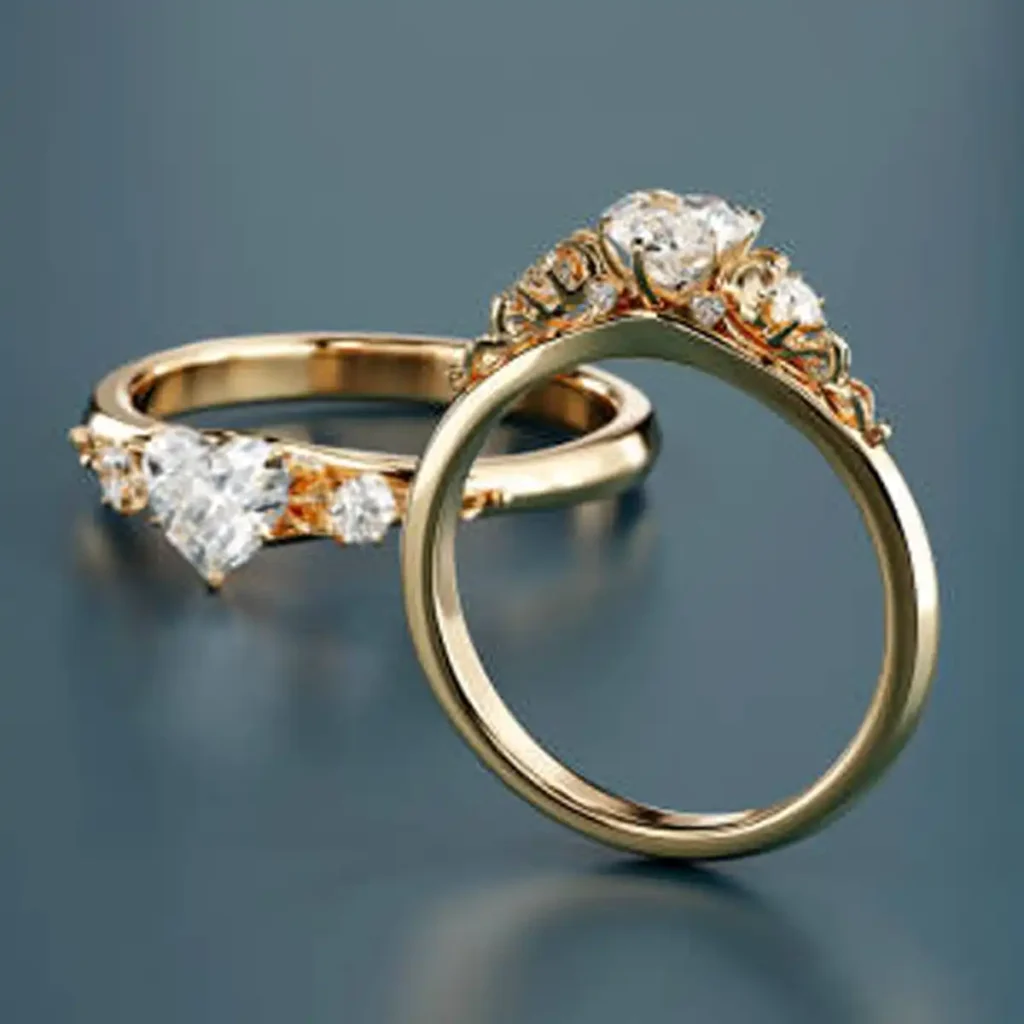
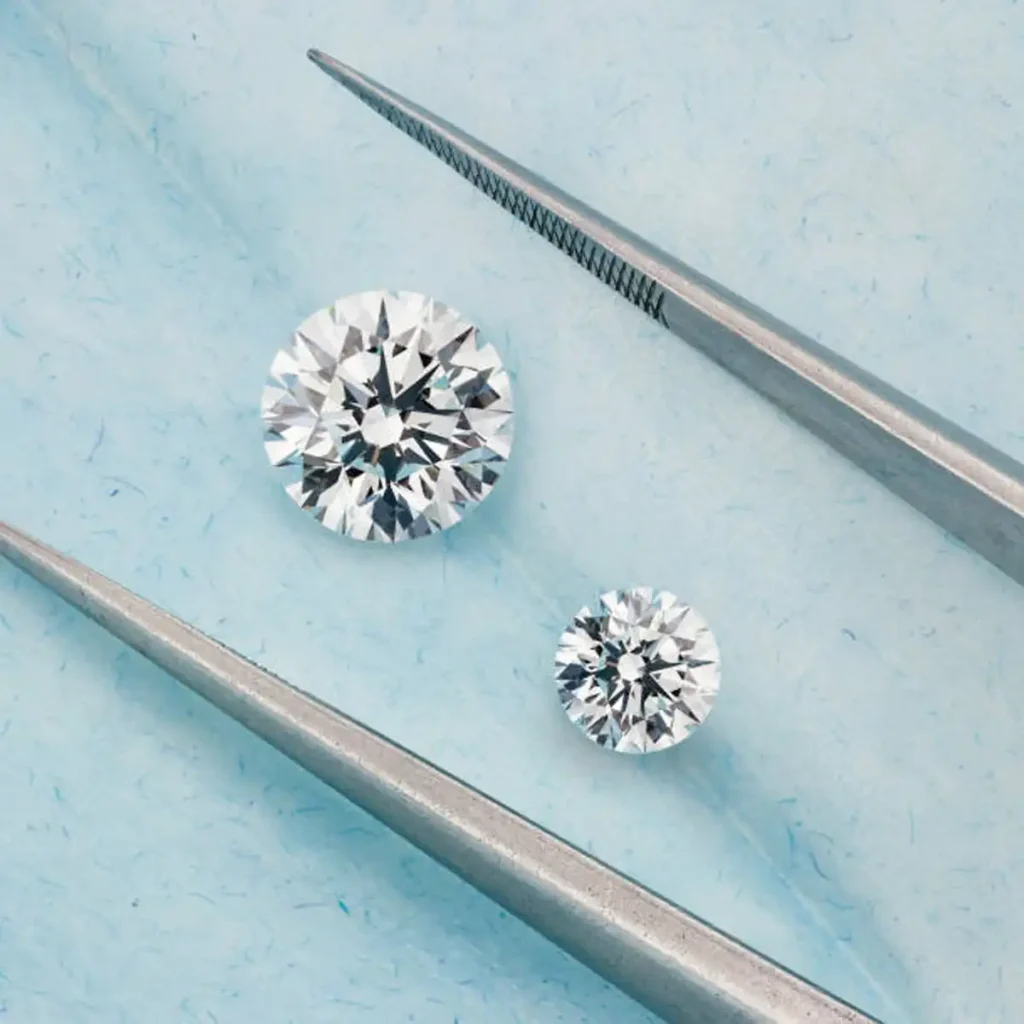
When clients speak about diamonds as an investment, they often mean different things. For some, it is financial, focused on potential resale. For others, it is about emotional longevity, ensuring that the ring feels enduring and precious as it is worn through the decades.
On the financial side, natural diamonds enjoy a modest but established secondary market. Auction houses and specialist dealers trade in high-quality stones, and it is possible, in certain cases, to resell a certified natural diamond for a meaningful sum. It is important, however, to be realistic. Retail pricing reflects more than the wholesale cost of the stone. When you sell back into the market, you will usually receive a lower figure than you paid, especially once you account for changes in taste and demand.
Lab-grown diamonds, by contrast, currently have little structured resale market. Production capacity continues to increase, which has pushed prices downward year after year. A lab-grown diamond purchased today will likely be cheaper to buy new in several years, which naturally depresses its second-hand value. While some platforms are beginning to explore buy-back schemes, they are in their infancy and typically offer modest sums.
Where both categories converge is in what truly endures. A finely made bespoke engagement ring derives its lasting value not only from the stone, but from the craftsmanship of the mount, the quality of the metal, and the design as a coherent whole. Hand forged platinum claws that are shaped precisely to the girdle, a delicately pierced gallery that lets light breathe under the stone, or a sculpted band that feels perfectly balanced on the finger all contribute to the ring’s status as a treasured object.
In family terms, most heirlooms are rarely sold. Instead, they pass between generations as symbols of continuity. Whether the centre stone is natural or lab-grown, a ring designed with care and built to endure can become part of that story. When we design pieces intended for long life, we pay attention to practicalities such as claw thickness, the depth of engraving, and how easily the ring can be resized or refurbished decades from now.
If your primary objective is to preserve financial value in the stone itself, natural diamonds currently remain the safer bet. If your focus is on the emotional and aesthetic return you gain over a lifetime of wear, both options can satisfy that aim, provided the ring is executed to a high standard.
One of the most powerful aspects of choosing lab-grown diamonds is the freedom it gives you to think creatively about design. When carat weight becomes more accessible, you can start to consider shapes and settings that would otherwise feel out of reach.
Carat is only one part of how large a stone appears. Shape plays a major role. Elongated cuts such as ovals, pears and emeralds tend to cover more of the finger lengthwise, creating an elegant, slender effect. A 1.50-carat oval diamond engagement ring can appear larger on the hand than a 1.50-carat round because of the way the proportions are presented on the finger. If you pair that with lab-grown pricing, it becomes easier to explore centre stones in the 2.00 carat range without dramatically increasing your budget.
Cut quality is equally critical. The difference between a truly well-cut diamond and an average one is not subtle. Precision-cut stones return light in a crisp, structured way that feels vibrant in low winter sun and under evening spotlights. At Smith & Green, we would rather guide a client to a slightly smaller stone with exceptional cut than a larger diamond that looks dull. With lab-grown diamonds, the savings can allow you to insist on top cut grades while still enjoying a generous size.
Setting choices further influence perceived scale. Slim, finely made bands in platinum or 18ct gold make the centre stone appear larger. Delicate pavé diamond shoulders draw the eye along the finger without overpowering the main stone. A halo of small diamonds around the centre can increase the footprint on the finger by several millimetres, giving the impression of a larger stone while keeping the centre carat weight moderate.
For clients who choose natural diamonds, the same principles apply. However, when you step into higher carat weights in natural stones, the price curve becomes steeper with each incremental jump. That is where careful design can be a powerful ally. A beautifully proportioned 1.20-carat natural diamond in a thoughtfully engineered setting can feel every bit as important as a larger stone if the overall composition is resolved.
With either origin, this is where a dedicated Hatton Garden jeweller comes into their own. In our workshop, gemologists, designers and goldsmiths sit around the same bench. Stones are selected for how they will perform in a particular setting, not in isolation in a tray. Every claw position, gallery shape and band contour is considered. It is that interplay between stone and metal that determines whether a ring feels simply pretty or genuinely exceptional.
Given all the above, how do you make the decision that is right for you? The starting point is clarity about your priorities. Some clients begin by saying they want the “biggest diamond possible” for their budget. Others are clear that they want an Earth-formed stone because of its story, even if that means accepting a more modest carat weight. Many sit somewhere between those positions.
If you value visual impact above all, lab-grown diamond engagement rings offer a compelling case. You can achieve the stone size you have always imagined, often at higher colour and clarity grades than you expected, without exceeding your budget. You can indulge in bolder shapes, from elongated ovals to dramatic emerald cuts, and still allocate budget to an intricate mount.
If you are drawn to rarity and the sense of wearing something that carries geological history, a natural diamond remains unmatched. You may choose a smaller stone, but you gain the knowledge that your diamond is part of a finite resource shaped deep within the planet. For some clients, that narrative is an integral part of what engagement jewellery represents.
For many couples, the best approach is to see both options in person. Under the controlled lights of a Hatton Garden showroom, and equally under natural daylight, you can compare natural and lab-grown stones with identical grades side by side. When you do, you quickly realise where your eye and your heart naturally go. Numbers and reports are essential, but the final decision is always a human one.
At Smith & Green, we find that conversations become clearer when clients hold sample rings in their own hands. A 1.00 carat natural round in a classic four claw mount, a 1.80 carat lab grown oval in a refined halo, a 2.00 carat lab grown emerald cut in a sculpted bezel. Each tells a different story. Your task is to recognise which story feels like your own.
In the end, the debate between lab-grown diamonds and natural diamonds is not a conflict between “real” and “fake”. Both are authentic gemstones. Both can be cut to a high standard. Both can symbolise commitment, celebration and personal style.
The real question is how you want to balance size, budget, ethics and long-term expectations. Lab-grown stones allow you to almost double your carat weight for a given spend, opening the door to designs that previously felt out of reach. Natural diamonds carry long-established traditions and a modest secondary market, grounding your purchase in geological rarity.
Whichever path you choose, the quality of the design and craftsmanship will determine whether your ring feels genuinely luxurious. A well-chosen stone, secure in its setting, harmonious in its proportions, and comfortable on the hand, will remain a pleasure to wear long after current conversations about technology have moved on.
Selecting a diamond engagement ring is one of the most personal decisions you will make. When you walk into our Hatton Garden townhouse and sit with our gemologists over a tray of carefully selected stones, you are not choosing between right and wrong. You are choosing between two excellent options, each with its own strengths. Our role is to listen, to explain the trade-offs, and to help you translate your priorities into a piece of jewellery that will feel exactly right every time it catches the light.
Like all good choices in life, it comes down to alignment. When the origin of the diamond, the design of the ring, and the story you want to tell all align, you will know you have found the perfect fit.