
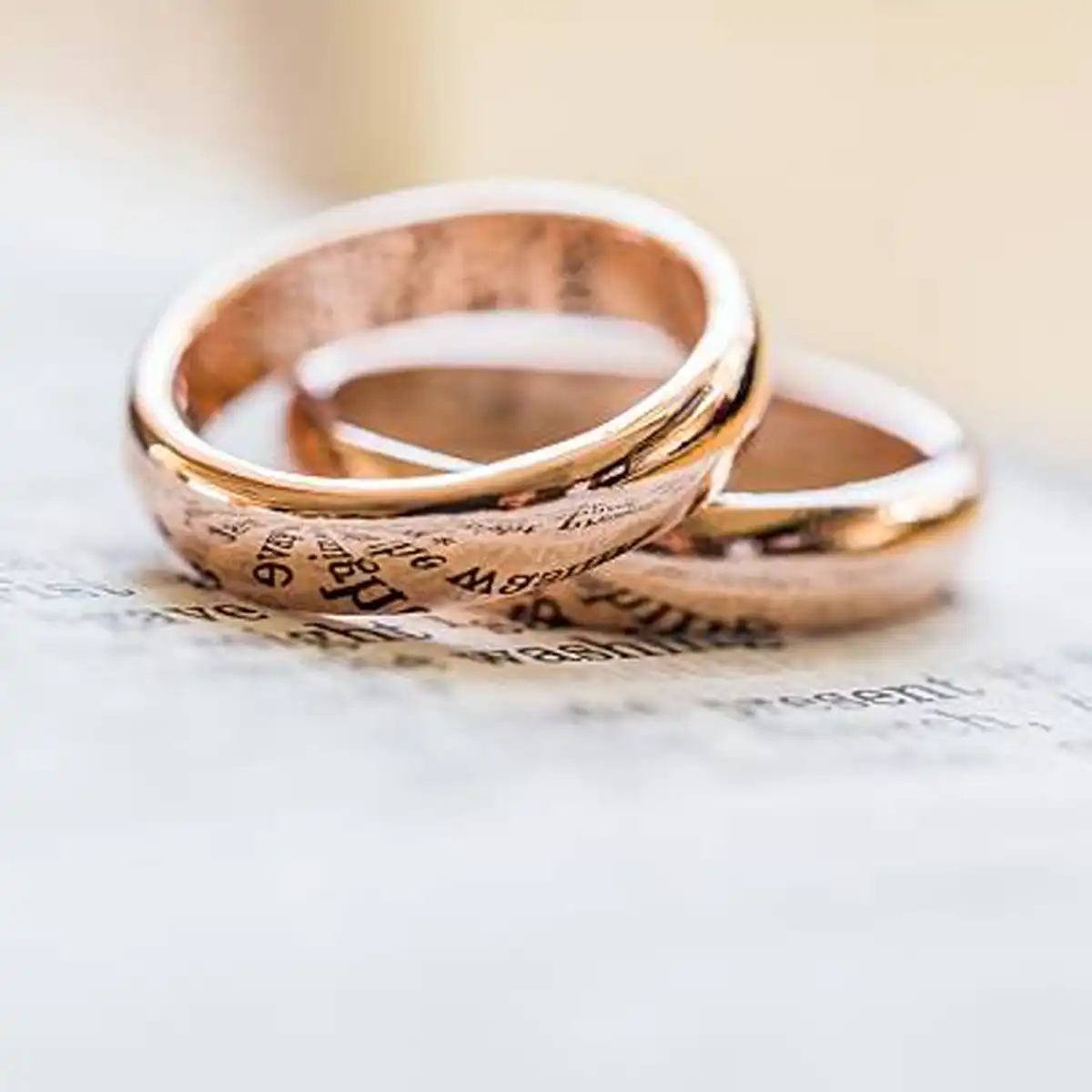
For decades, the process of selecting the groom’s wedding ring could be completed in minutes. The choices were narrow and predictable, built around a thin band in yellow gold or platinum with little variation beyond width. These designs held meaning, but they rarely expressed personality, craftsmanship or the identity of the man who would wear them. In 2025, that limited approach falls short of the expectations of modern grooms who want a ring that reflects their tastes, lifestyle and connection to materials that feel engineered for purpose. Contemporary couples look for durability, provenance and character, and the wedding band has become one of the most personal elements of the celebration. This guide explores why new materials such as tantalum wedding rings, meteorite details and precious textured metals are becoming essential in the search for rings built to last.
The shift is driven by a new attitude towards design. Men are no longer satisfied with the minimal options offered in the past. Instead, they look for the strength of industrial metallurgy, the narrative of ancient cosmic material and the visual depth provided by hand-applied textures. The result is a category that feels invigorated and distinctly contemporary. Whether shaped from rare metals, constructed from celestial iron or patterned by skilled goldsmiths, the modern groom’s band has evolved into a piece of wearable engineering with substance and style.
The rise of sophisticated wedding bands comes from a desire for authenticity and technical integrity. Men look for rings that suit their routines, from office work to gym sessions and practical tasks. The traditional polished band, while classic, can feel delicate in fast-paced environments. Modern buyers want strength that can handle daily wear while maintaining its character over time.
This change is also driven by aesthetics. A ring is one of the rare pieces of jewellery a man may wear every day. It becomes part of his identity, so materials with distinctive colour, weight and structure have become increasingly attractive. A ring that tells a story feels more meaningful than a piece chosen purely for tradition. The following sections explain how different materials and finishes create those stories and offer technical advantages.
Tantalum has emerged as a standout material for men seeking a darker, more substantial band. Known for its deep grey tone and impressive weight, it appeals to those who want something that feels engineered rather than decorative. This transition metal offers a combination of strength and visual understatement that few materials can match.
Tantalum is significantly denser than titanium and stainless steel. When held in the hand, its mass provides an immediate sense of stability. The colour is naturally present, so it does not rely on coatings or plating to achieve its signature tone. This makes it highly reliable for long-term wear. The surface can be polished, brushed or textured, giving clients flexibility to tailor its appearance.
The metal is also ductile, which is crucial in a category where many industrial materials fail to offer practicality. Tungsten and carbon fiber are well known for their hardness, but both are rigid and brittle. If the wearer’s finger size changes, rings made from these materials cannot be adjusted. Tantalum avoids this limitation. Skilled goldsmiths can resize a tantalum by carefully stretching or compressing the band. This characteristic elevates it from an industrial novelty to a viable lifelong ring.
When a groom picks up a tantalum ring, the first thing he notices is the sound it makes when placed on a table. It has a deep, satisfying thud created by its density. This sensation reinforces the feeling that the metal is built for durability. The structure of tantalum resists deformation, so it is suitable for men with active lifestyles who want a ring that holds its integrity despite constant use.
Tantalum is also hypoallergenic, which is a growing consideration for many clients. Some industrial materials cause irritation when worn daily. Tantalum avoids this issue, making it comfortable for long-term wear against the skin. As a result, it has become a popular alternative for clients who appreciate both engineering and comfort.
The dark tone provides a confident aesthetic. It suits minimal styles and pairs well with textured surfaces. Many clients prefer the muted sophistication of tantalum over the brightness of platinum or white gold, which can appear reflective under certain lights. The understated colour draws attention without feeling ornate, which appeals to contemporary taste.
Few materials available to jewellers carry the same emotional depth as meteorite. Crafted from the iron cores of ancient space bodies, meteorite inlays offer a direct connection to the origins of the solar system. For grooms interested in science, history or narrative, a meteorite band becomes more than a design. It becomes part of a cosmic timeline.
The meteorites most used in fine jewellery include Gibeon and Muonionalusta. These materials formed billions of years ago and travelled through space before falling to Earth. They are composed primarily of iron and nickel, which cool slowly in the vacuum of space. This long cooling process produced the Widmanstatten pattern, a geometric cross-hatch motif that cannot be replicated on Earth. The arrangement appears when the meteorite is cut and etched, revealing a structure that reflects its extraordinary formation.
Because meteorites are distinctive and scientifically rare, they offer a story unlike any other material. No two pieces display the same pattern. This makes every meteorite ring inherently individual, appealing to clients who want a wedding band with personal resonance.
Meteorites require mindful care because they are iron-based. As with any iron material, it can oxidize if exposed to moisture or corrosive substances. Transparent communication is essential when discussing a meteorite with clients. Understood and maintained correctly, it is a highly rewarding material with long-term stability.
The safest approach is to use a meteorite as an inlay rather than as a full band. Our workshop often sets a meteorite within a sleeve of platinum ring or a yellow gold ring. The precious metal forms the interior and exterior framework that protects the meteorite from direct contact with the skin. This construction also allows the client to appreciate the pattern prominently on the outer surface.
When cared for sensibly, a meteorite develops a subtle character that reflects its age and origin. Occasional cleaning with a soft cloth and storing it away from humidity can maintain its visual clarity. For many grooms, these small considerations feel insignificant compared to the experience of wearing material that predates human civilisation.
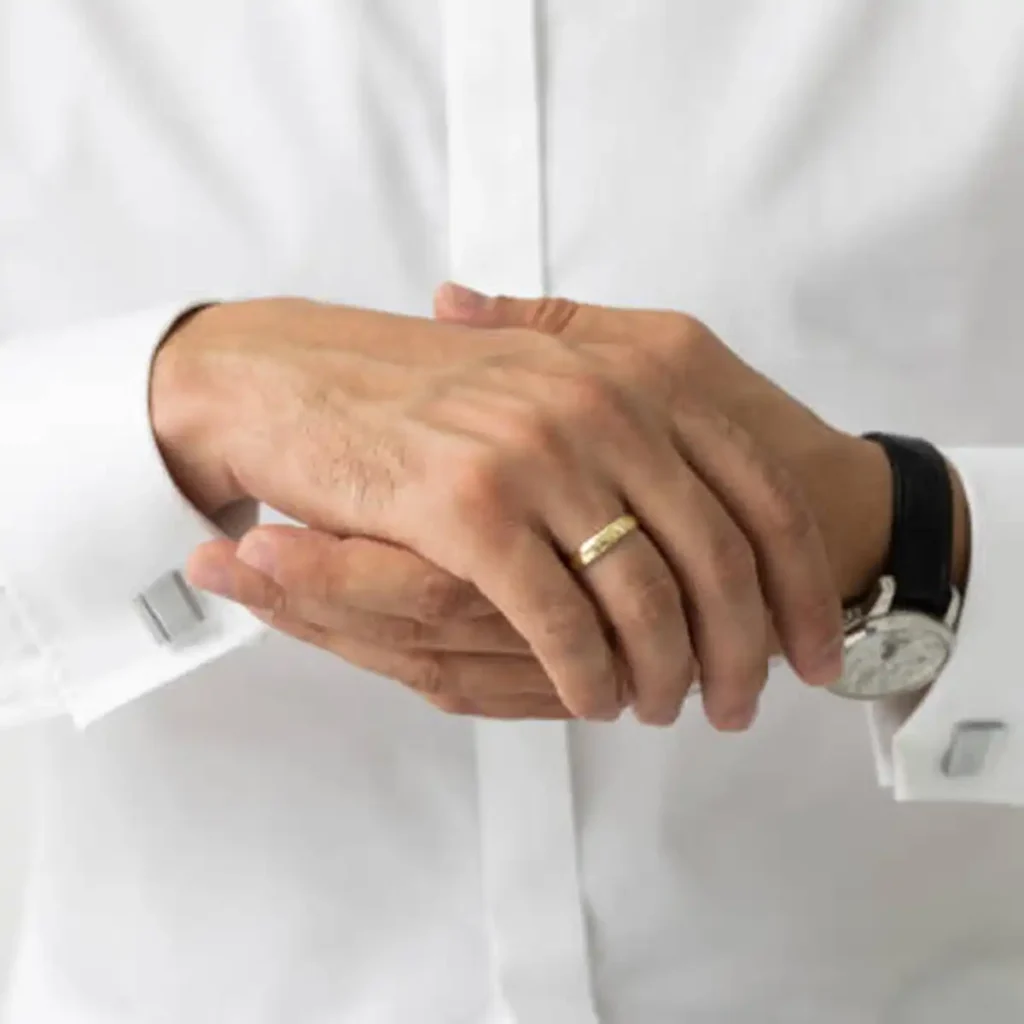
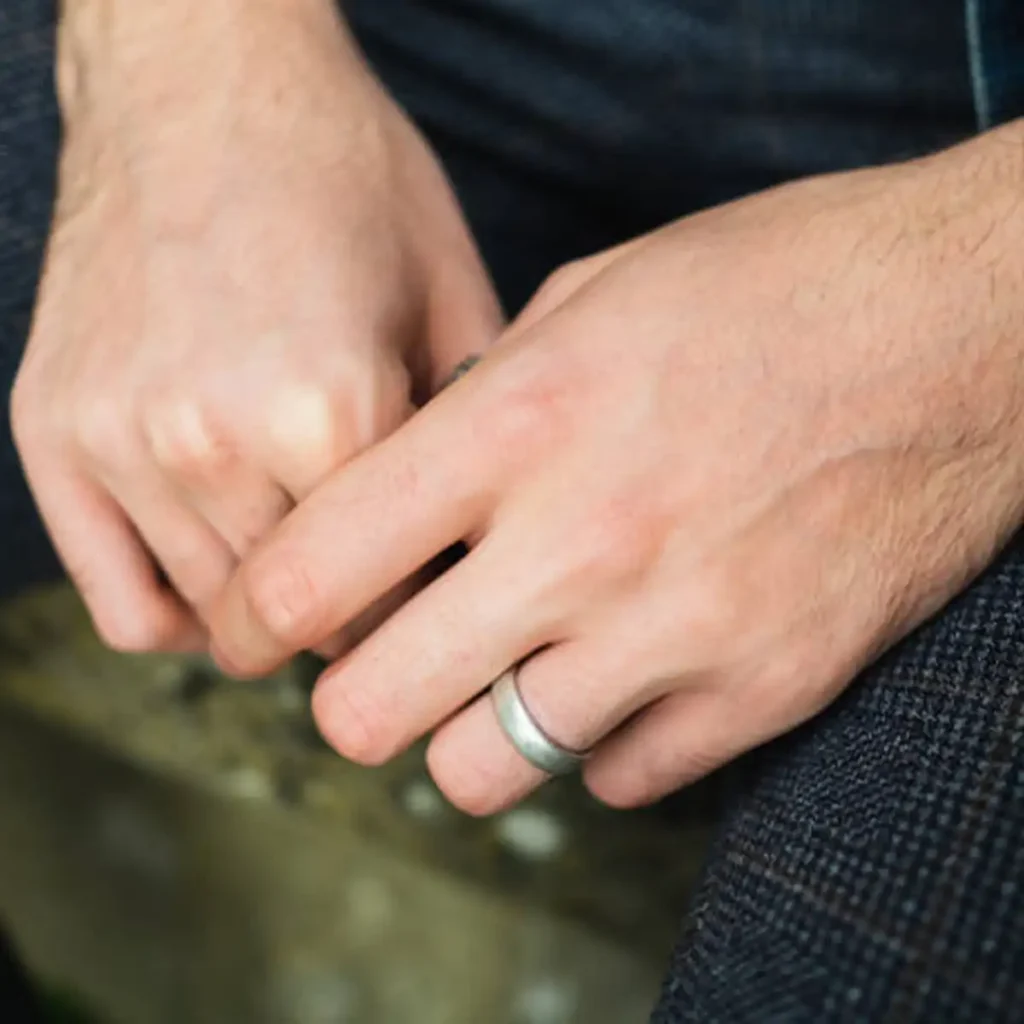
Textured finishes have become one of the most expressive trends in wedding jewellery. Many grooms appreciate the investment value of 18ct gold rings or platinum rings, but they do not necessarily want a reflective polished surface. A textured finish offers a rugged, architectural aesthetic and provides practical advantages.
One of the most popular options is the hammered finish. Goldsmiths achieve this by striking the surface repeatedly with a polished hammer, creating small facets that catch light in a subdued way. The irregular pattern helps mask minor marks from daily wear, making it ideal for clients who prefer a live-in look.
A sandblasted finish produces a flat matte surface with a modern, industrial feel. The fine texture disperses light evenly, creating a soft glow instead of a sharp reflection. This finish suits grooms who want an understated band with a clean, contemporary profile.
Another compelling option is the ice finish. Goldsmiths intentionally scratch and score the metal to create a dynamic, roughened surface. The effect is bold and expressive, giving the ring a distinctive character from the first day it is worn. Clients who enjoy pieces that evolve with age often choose this finish because it blends new marks into the existing pattern seamlessly.
Fun fact: When a textured gold ring is worn daily, the high points of the pattern naturally soften and develop shine while the low points retain depth, creating a balanced patina.
A ring with a polished surface will inevitably develop marks and fine scratches through daily wear. These marks are more visible on reflective metals. Textured surfaces disguise this natural ageing process more effectively, so the ring maintains its visual strength for longer.
Texture does not reduce the structural integrity of the band. Whether hammered, sandblasted or scratched, a well-made ring retains the underlying strength of its metal. Instead, texture provides a practical advantage by making the outer surface more forgiving to knocks and abrasion. This characteristic appeals to clients who prefer low-maintenance jewellery that still carries aesthetic depth.
The beauty of texture lies in its evolution. Over time, each mark tells part of the story of the wearer’s life. Many grooms value this quality because it creates a connection between everyday experiences and the physical surface of the ring. Instead of striving to keep the band in a pristine state, they embrace its development.
A significant trend in contemporary men’s jewellery is the bi-metal wedding band. This design combines two metals in a single construction, often pairing a strong industrial material with a warm precious metal. The concept delivers technical durability on the exterior and tactile comfort on the interior.
One popular combination is a tantalum exterior with an 18ct rose gold ring lining. The tantalum protects the ring from external knocks while the rose gold brings warmth and softness against the skin. The contrast between the dark outer layer and the rich interior creates visual intrigue without feeling ornamental.
Bi-metal construction is also used to incorporate meteorites safely. A meteorite inlay set within platinum or gold achieves the ideal balance between cosmic narrative and precious metal resilience. This approach allows clients to enjoy materials that might otherwise be too reactive or fragile if used alone.
These hybrid bands appeal to clients who appreciate both engineering and luxury. They represent a balanced expression of strength and refinement.
Choosing the right wedding band involves understanding lifestyle, personal taste and material behaviour. Start by considering how you use your hands daily. If your routine includes physical tasks or frequent travel, prioritise metals such as tantalum or platinum that resist deformation. If you enjoy design details and narrative, meteorite or textured finishes may resonate.
Next, consider colour. Tantalum offers cool grey depth. Rose gold introduces warm richness. Platinum provides classic brightness with unrivalled longevity. Some clients choose metals that complement their skin tone, or that match the jewellery their partner wears.
It is also important to handle different materials in person. Weight, temperature and texture contribute significantly to your experience. A ring that feels right immediately often remains satisfying for decades. Quietly observing your reaction to each material will guide your decision.
Consultations in a calm workshop environment allow for deeper conversations about construction, finishing and care. Working with specialists who craft their rings on site ensures transparency. You can discuss resizing, maintenance and long-term expectations directly with the people who will make your ring.
At Smith & Green Jewellers in Hatton Garden, clients engage in a design process that prioritises engineering, comfort and individuality. Each consultation explores how different metals behave over time and how finishes interact with daily wear. This approach allows clients to make informed decisions without pressure.
The workshop environment supports experimentation. Clients can compare tantalum rings, textured gold and meteorite inlays, observing how each one feels in the hand. These sessions often reveal preferences that were not immediately obvious, such as a liking for the weight of tantalum or the complexity of meteorite patterns. Every ring is crafted with technical care and a commitment to long-term durability.
The evolution of men’s wedding bands reflects a broader shift in how jewellery is understood and appreciated. Modern grooms look for pieces that express identity, carry meaningful stories and withstand the demands of daily life. Materials such as tantalum and meteorite, and the rise of textured finishes, have transformed the category into an exciting space where craft, engineering and personal expression meet.
Choosing the right wedding band is similar to selecting a piece of architecture for your hand. It should feel grounded, balanced and designed with intention. When approached thoughtfully, the process becomes a meaningful part of the wedding experience, resulting in a ring that reflects both commitment and individuality. The new generation of grooms embraces this philosophy, redefining the role of the wedding band for years to come.