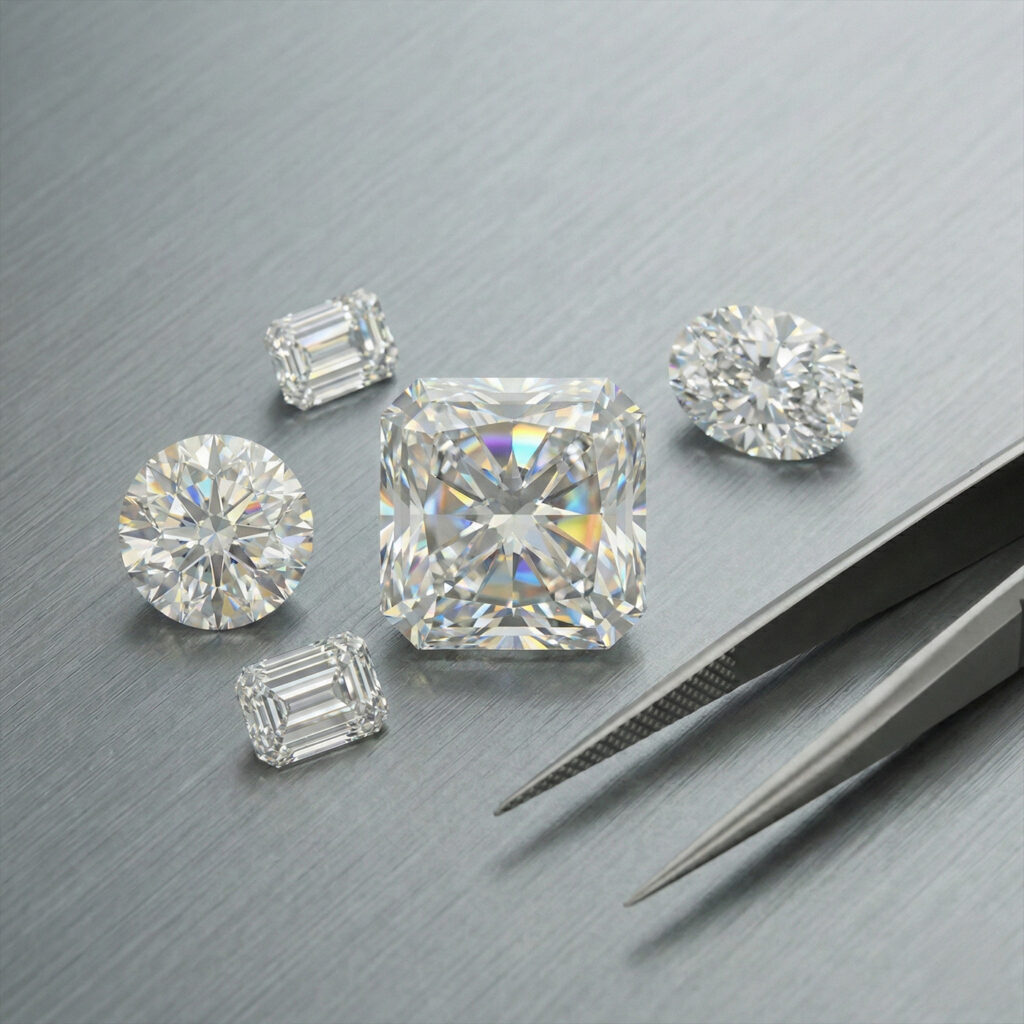
A natural diamond is a crystal of carbon formed deep within the Earth under immense heat and pressure, then brought upward by rare geological forces over vast spans of time. What sets it apart for an engagement ring is not just its chemistry or sparkle, lab and natural can share those, but its origin: a one-off geological story measured in millions to billions of years, with each stone shaped by conditions that cannot be repeated to order.
When a couple chooses a natural diamond, they are choosing that sense of singularity and permanence. It is a tangible piece of the Earth’s history, selected once, cut once, and worn as a daily marker of a promise intended to last.
Natural vs lab-grown: the difference
A natural diamond carries a sense of deep time. It formed beneath the earth, then was discovered, cut, and polished. A lab-grown diamond can feel just as meaningful because its story is intentional. It is chosen by design, created with purpose, and set to celebrate your moment.
Visually, the two can look extremely similar. That is why trustworthy documentation and professional identification matter more than casual claims like “you can tell by looking”.
If your shop offers both, this balanced framing helps shoppers feel seen, not steered.
The natural signature: inclusions
Many natural diamonds contain small internal features—often only visible under magnification—that make each stone individual. This is one reason people describe naturals as having “character”.
What matters is not whether a diamond has inclusions (most do), but whether they change the diamond’s beauty in everyday wear. Experienced professionals think in three simple checks:
Placement: Is the feature central, or nearer the edge where a setting may conceal it?
Type: A pinpoint can be discreet; a larger cloud can sometimes soften transparency.
Impact: Does the diamond still look crisp and bright in normal light?
A natural diamond can be a brilliant choice even when it is not “flawless”, as long as it stays lively and clean-looking to the eye.
(For the fundamentals of carat, colour, clarity, and cut, refer to your Four Cs page. This page stays focused on what makes a diamond feel distinctly natural.)
Natural Diamonds
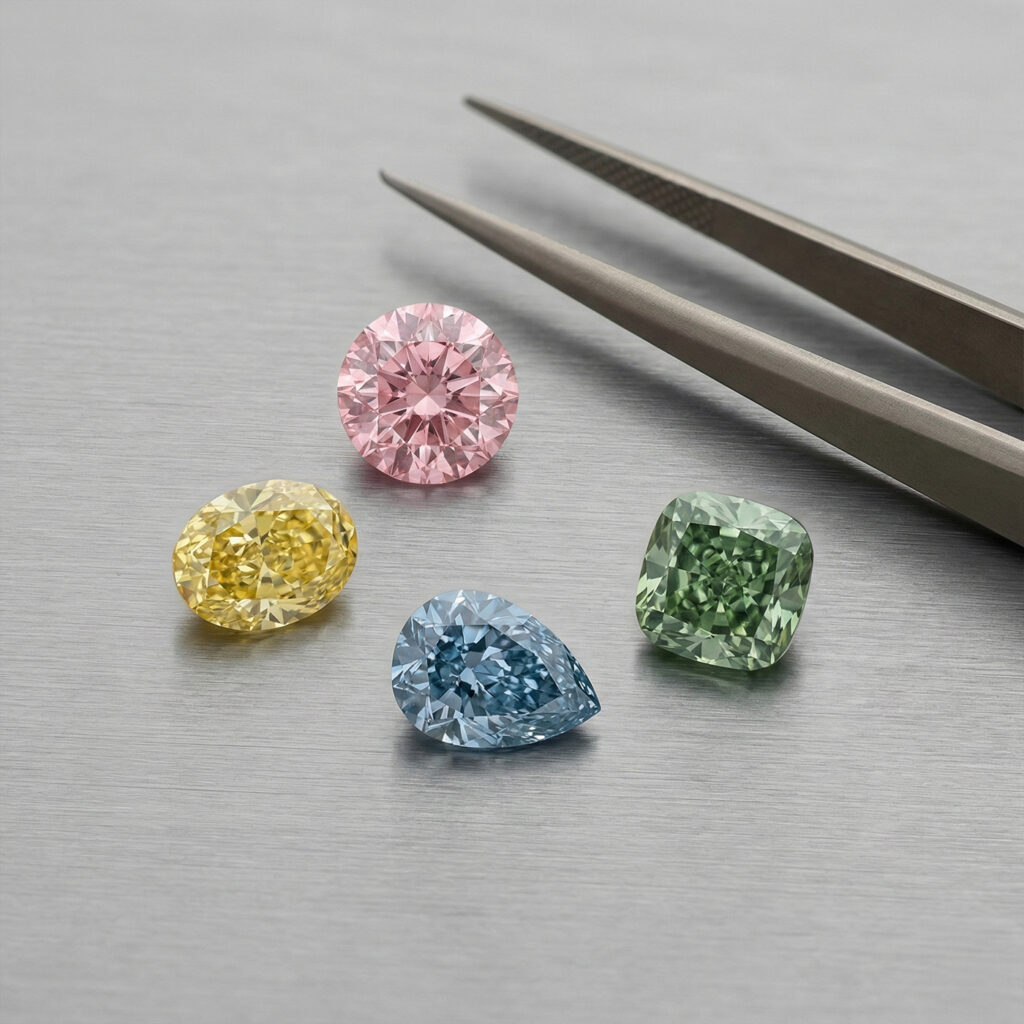
Natural Coloured Diamonds
Natural diamond colour: what exists, what’s common, what’s rare
People often think diamonds are only “white”. Natural diamonds can appear across a surprisingly wide colour range.
Colourless range and beyond
Many diamonds sit within the familiar near-colourless spectrum. Others show natural colour that is strong enough to be described as a fancy colour.
The most common fancy colours
Among natural fancy colours, yellow and brown are described as the most common.
This matters because “common” does not mean “ordinary”. A beautifully cut yellow diamond in the right shade can look warm, luminous, and unmistakably special.
The rarest fancy colours
GIA notes that red, green, purple, and orange are generally the most rare fancy colours, followed by pink and blue.
If a shopper is drawn to rarity, this is where the conversation becomes nuanced: the colour itself, how intense it appears, and how evenly it shows across the stone can transform the whole look.
Fluorescence: a calm way to judge it
Fluorescence is a recorded characteristic that describes how some diamonds react under ultraviolet light. The sensible approach is neither fear nor hype—just a straightforward check.
A practical routine:
View the diamond in daylight near a window.
View it in indoor lighting.
Look for any persistent haziness or softness.
If the diamond stays crisp and bright, fluorescence is simply part of the stone’s profile. If the diamond looks oily or misty, compare it with a different stone and prioritise the one that stays clear.
The paperwork question: what a shopper should expect
If a buyer is choosing between stones that look similar, documentation turns “I think” into “I know”.
Look for:
Whether the diamond is identified as natural or lab-grown
Notes on treatments
Notes on fluorescence
Identifying details (often including diagrams or inscriptions, depending on reporting)
This is not about making the purchase complicated. It’s about making it clear.
Treatments: keep it simple, insist on clarity
Some natural diamonds have treatments that affect colour or apparent clarity. This is not a reason for drama. It is a reason for transparency.
High-quality documentation should clearly state whether a diamond’s colour is natural or treated, and reputable reporting distinguishes stable treatments from unstable ones.
For shoppers, the rule is simple: disclosure protects confidence.
Choosing the story that suits you
A diamond can be romantic in more than one way.
If you love the thought of nature shaping something over geological time, a natural diamond may feel deeply personal.
If you value modern precision and a direct creation story, a lab-grown diamond can feel equally sincere.
Both can be exquisite. The best choice is the one that matches your values, your style, and the feeling you want every time you look down at your hand.