
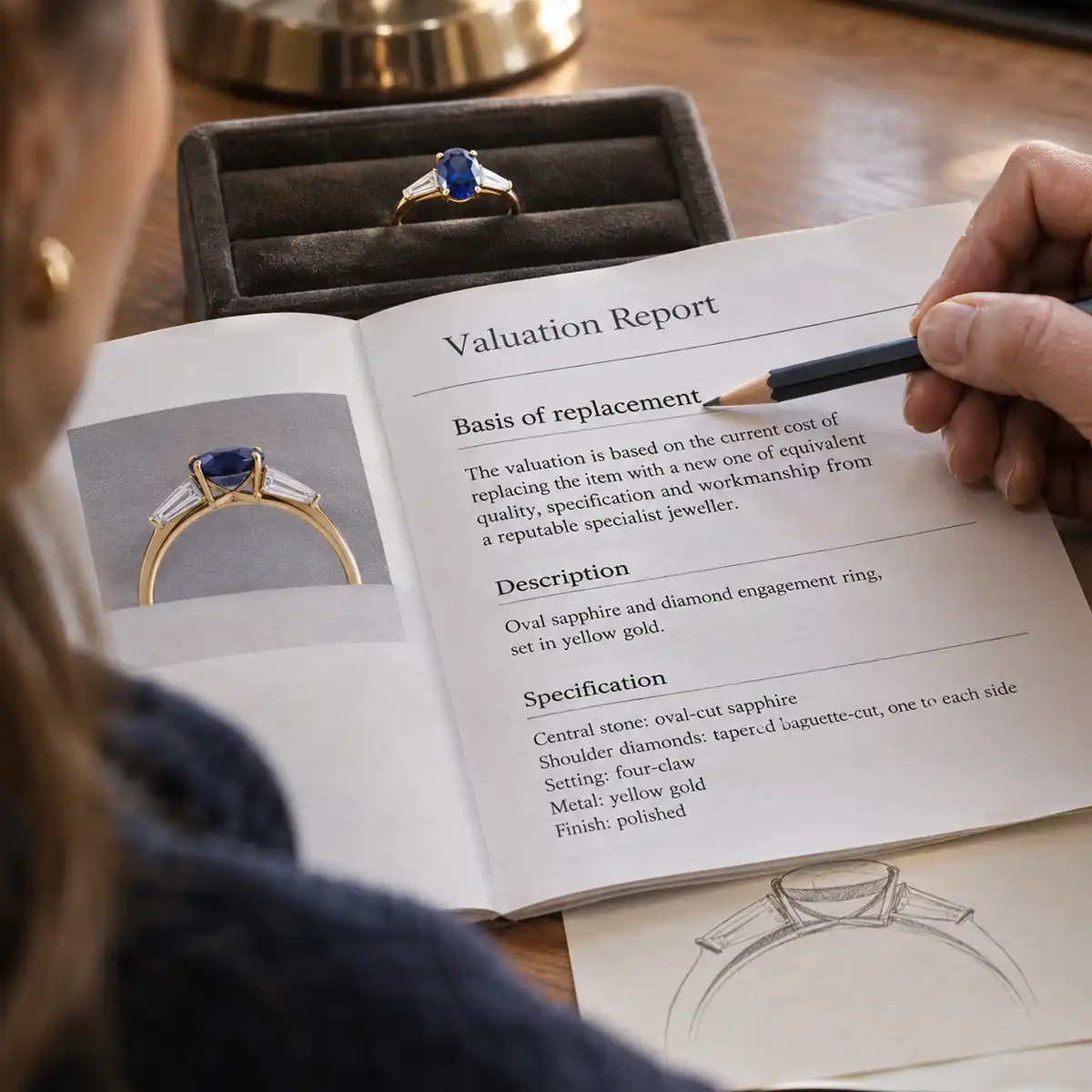
Turn your engagement ring sideways. Perhaps the diamond sits low enough for a wedding band to slip alongside it, or there is a small sapphire tucked beneath the centre stone. You know why that detail matters. If someone had to remake your ring from its paperwork alone, would they know it was there?
At Smith & Green Jewellers, an engagement ring purchase includes one complimentary insurance valuation. For a bespoke ring, we can arrange for a registered independent valuer to assess the finished piece before it leaves our Hatton Garden showroom. If you would like the report ready for collection, mention it while we are discussing your commission. That gives you the chance to read it with the ring in your hand.
Ask your insurer what it needs to cover this particular ring. Give them the purchase price and ask whether the ring must be listed individually, which documents they accept and when cover begins. If you plan to take it abroad for the proposal, tell them where you are going. Getting those answers before collection gives you time to pass on any specific requirements.
Keep your receipt and any diamond grading report. The receipt records the price you paid. A grading report describes an individual stone, including identifying details such as its measurements and report number. The insurance valuation brings the stones, metal and workmanship together in one description and gives an opinion of the cost of replacing the finished ring.
Start with the centre stone. If you chose an oval natural diamond, look for both its shape and its origin in the description. Where a laboratory report is referenced, match the number to your own copy. A valuer examining a mounted stone may have to estimate its weight because the setting restricts access. The wording should make clear which details come from the grading report and which are estimates.
Then look at the setting in profile. A platinum solitaire with six claws and a yellow gold ring with a platinum four-claw head might both be described casually as a “diamond solitaire”. They would be different commissions to remake. Check the metal used in each part, how the stone is held, and any smaller stones set into the shoulders or beneath the head.
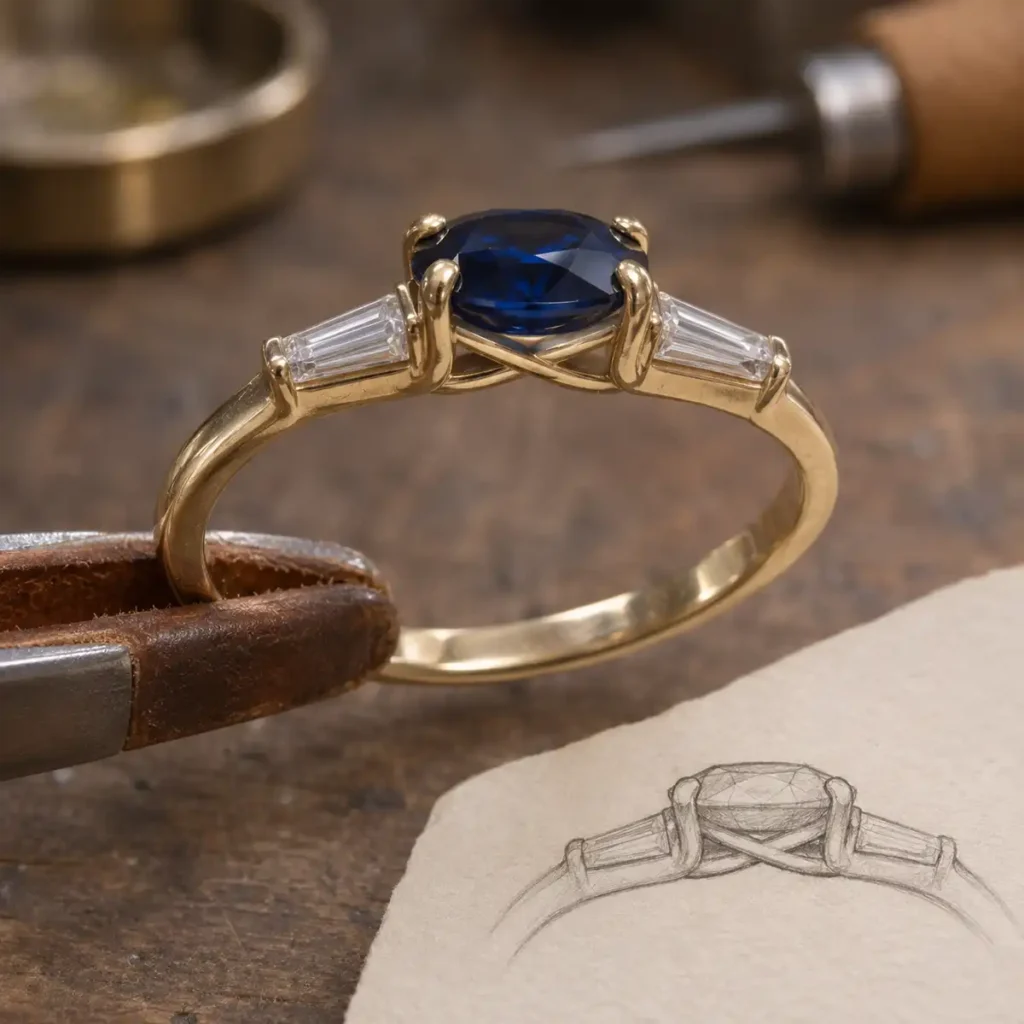
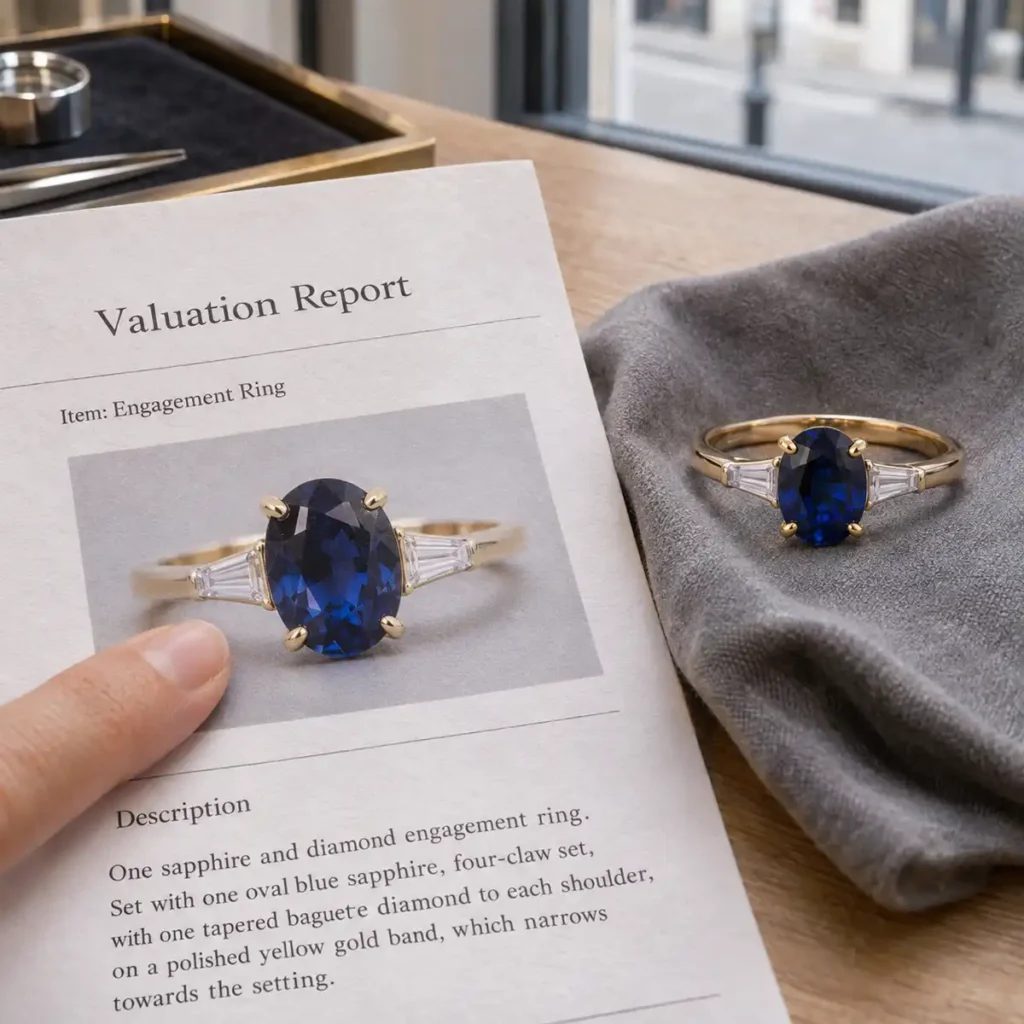
Read the description once more with your original design in mind. If you commissioned a tapered band, a hand-engraved pattern or a particular arrangement of family stones, can you pick out those features in the report or photographs? A photograph taken from above may show the outline perfectly while hiding the detail underneath. Ask for clarification if a feature that mattered to you is difficult to identify.
For a remodelled family ring, keep any photographs taken before the work alongside the new paperwork. They preserve the history of the piece. The current valuation should describe the ring as you wear it now, including which stones were retained and what was newly made, where those details are known.
Check the date, the name of the valuer and the purpose stated on the report. For insurance, the figure answers a specific question: what would it cost to replace the ring on the basis described, at the date of assessment? A bespoke setting may need to be made again from scratch, even if a similar centre stone is readily available.
If the figure differs from your receipt, ask the valuer which specification and replacement basis they used. The difference alone tells you little about the price you paid. The figure is also a poor starting point for a resale decision, because a buyer considering a second-hand ring is answering a different question. Your insurer can explain how it would settle a claim under your policy.
Send the documents your insurer requests and keep a digital copy of the report, photographs, receipt and grading paperwork together. Ask when the insurer wants a fresh valuation and make a note of the date. If you later replace the centre stone, change the setting or add diamonds to the band, ask whether the description and replacement figure need updating sooner.
If you are collecting a bespoke ring from us and have a valuation requirement from your insurer, contact our team at 9 Hatton Garden or call 020 3077 0096 before your appointment. We can discuss the paperwork while your ring is still with us.