
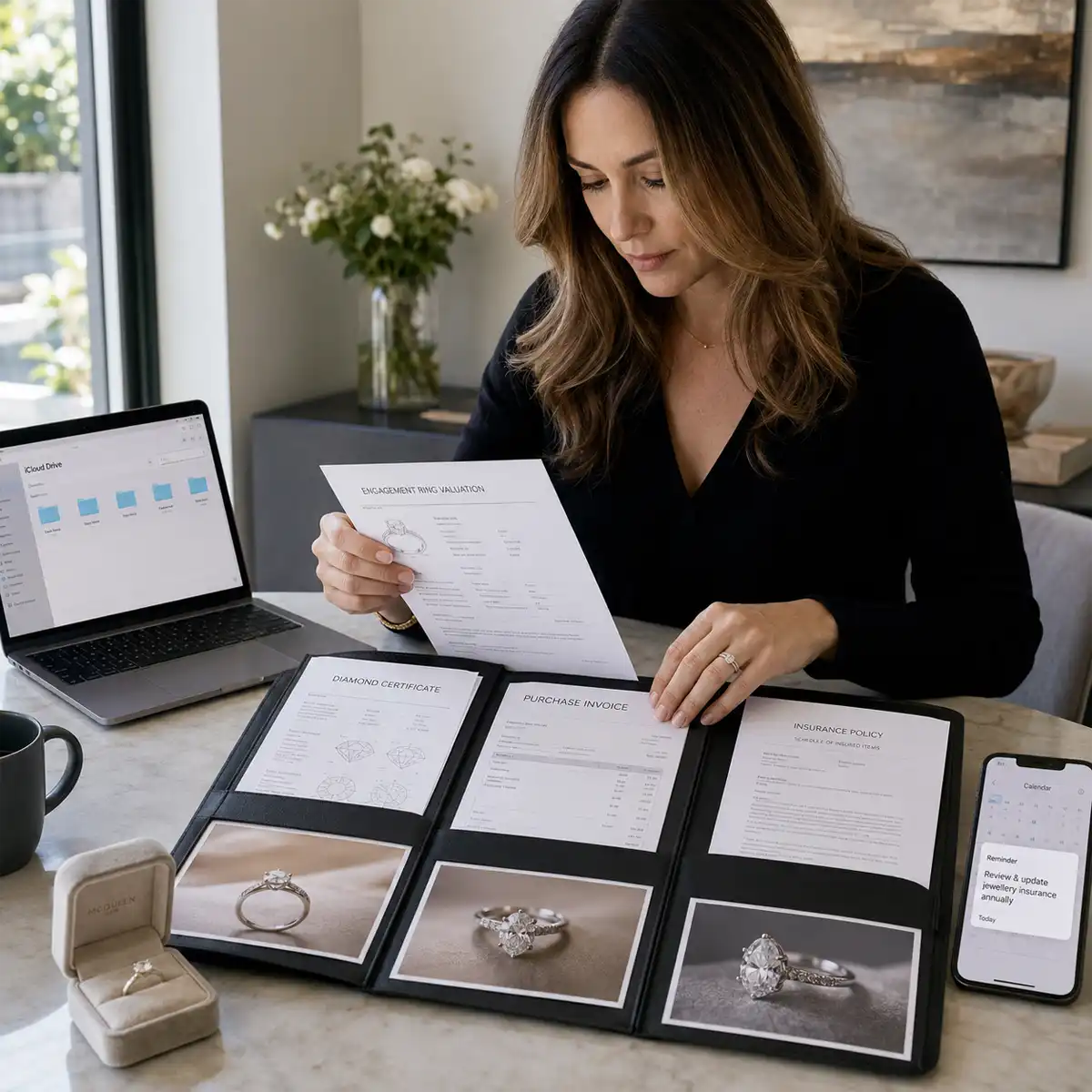
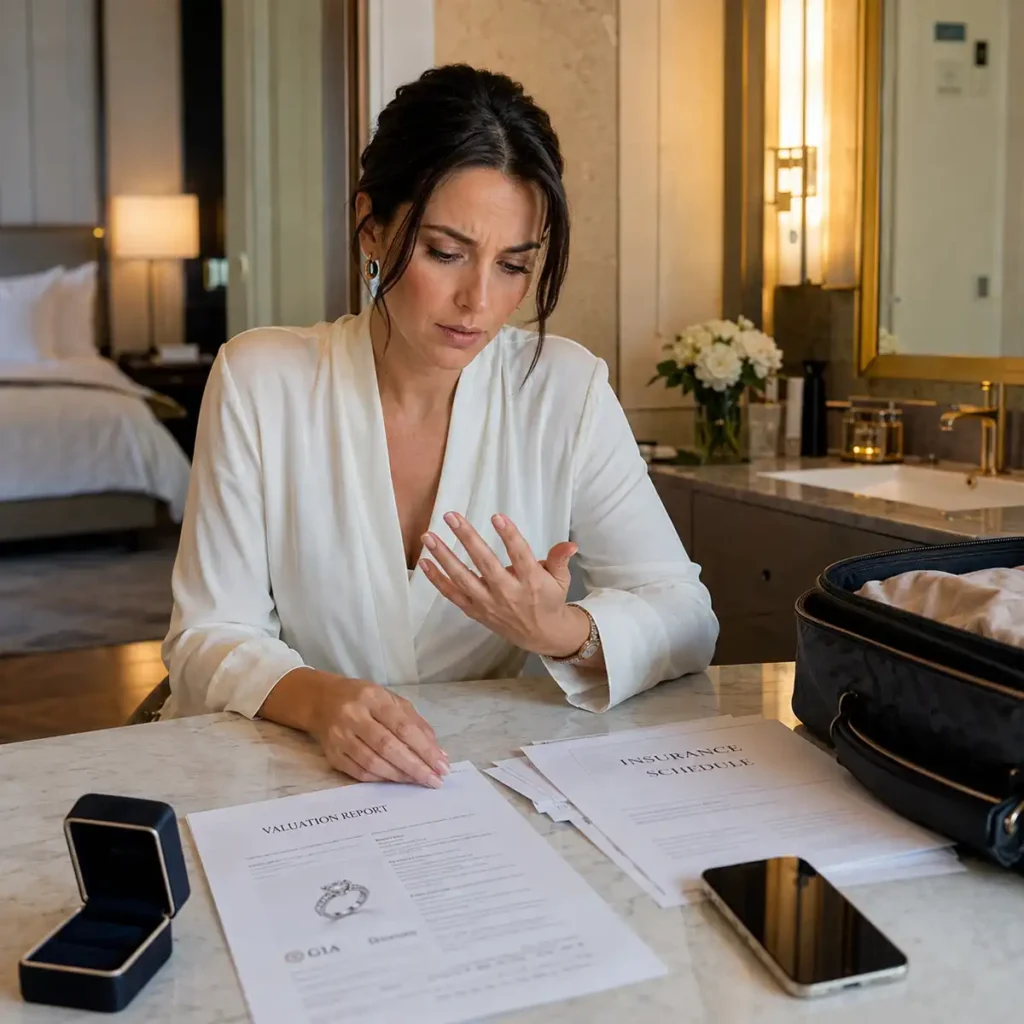
A client returned to the 9 Hatton Garden showroom on a Tuesday afternoon last spring with a story that arrives more often than it should. Her engagement ring had slipped down a hotel basin drain in Lisbon, the hotel plumber had not been able to retrieve it, and her insurer was now asking for documents she did not have. The valuation in her file was four years old. The replacement cost the insurer was offering was 40% below what a comparable ring would cost to commission today. The conversation that followed was harder than it needed to be. You will know the relief of a properly arranged file the moment you need it. This article is for every buyer who has just bought, or is about to buy, a meaningful engagement ring and is not sure what to do next. Engagement ring insurance and valuation is the post-purchase action list nobody walks you through, and getting it right protects everything the ring represents.
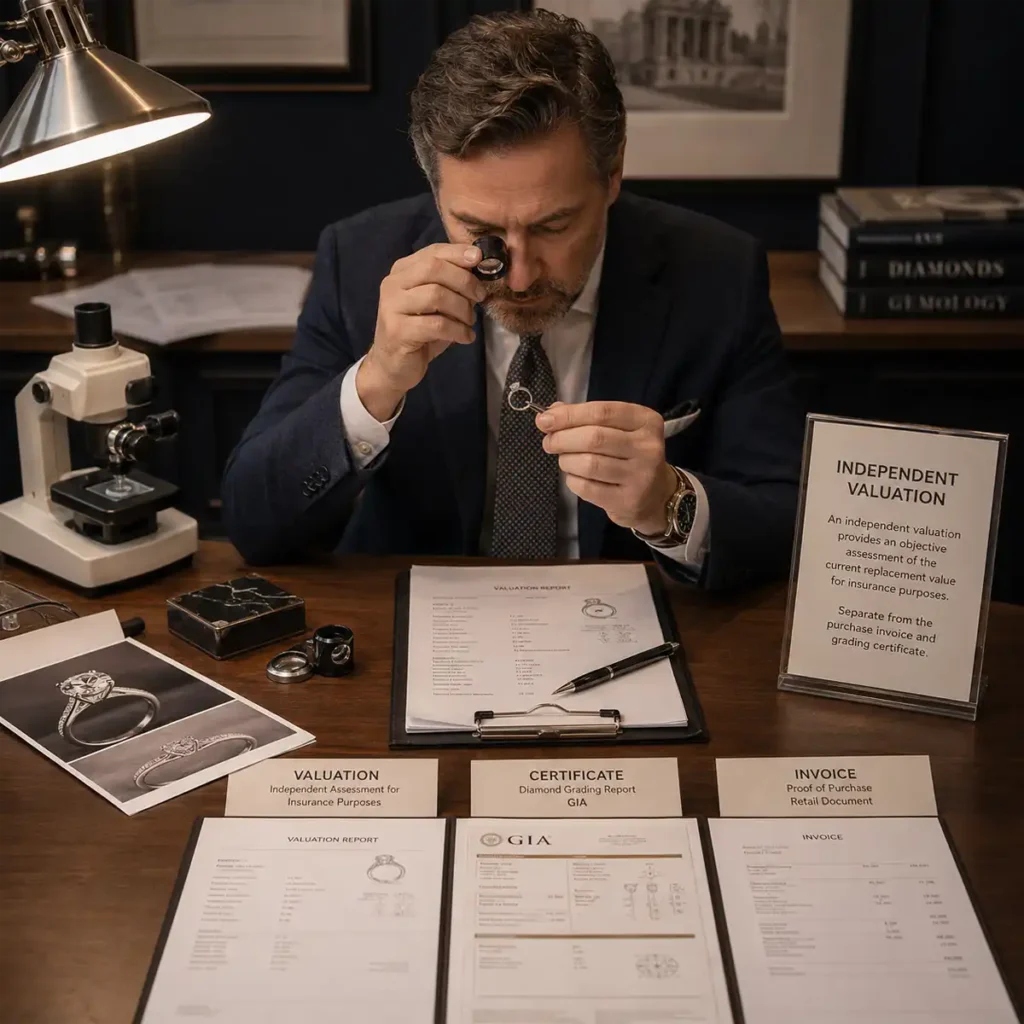
A valuation is a written assessment of the ring’s replacement cost prepared by a qualified independent valuer. It is not the same as the purchase price, not the same as the diamond certificate, and not the same as a manufacturer’s invoice. It is a separate document with a specific commercial and legal purpose. The valuation tells your insurer how much it would cost to replace the ring with an equivalent piece on the open market today, and that figure becomes the basis for your insurance cover.
A good valuation contains the ring’s full specification including metal, weight, design, setting, and finish, the centre stone’s full grading including carat weight, colour, clarity, cut, and certification reference, the side stones if any with their combined carat weight and grading, photographs of the piece from multiple angles, and the valuer’s signed assessment of replacement cost on the date of valuation. It should also state the valuer’s qualifications and the methodology used.
A valuation prepared by a registered valuer with credentials from a recognised UK body such as the Institute of Registered Valuers, the National Association of Jewellers, or with FGA or DGA gemmological qualifications carries weight with every UK jewellery insurer. A valuation prepared by an unqualified seller or written on shop letterhead with no methodology is essentially decorative and will not protect you in a serious claim.
The most common mistake new owners make is assuming the purchase invoice from the jeweller is sufficient documentation for insurance. It is not, for three reasons that matter.
First, an invoice records what you paid. A valuation records what the ring would cost to replace. These figures often differ, particularly for bespoke pieces, where the replacement cost includes design fees, sourcing time, and current market prices for the centre stone, which may have moved since the original purchase.
Second, an invoice is issued by the seller, not by an independent assessor. UK insurers increasingly require independent third-party valuations specifically to remove any conflict of interest between the seller’s stated price and the insured value.
Third, an invoice does not contain a full physical specification of the ring. If the ring is lost or stolen, your insurer needs to know what to replace, in enough detail that a replacement can be commissioned to match. An invoice typically says “diamond engagement ring” with a price. A valuation says exactly what the ring is, in 200 to 500 words and several photographs.
The right time to arrange a valuation is within the first month of taking the ring home. The certificate is fresh, the ring is in its original specification, and any minor wear that might affect future grading has not yet occurred.
For a bespoke ring made at Smith and Green, we can arrange an independent valuation through a registered third-party valuer before the ring leaves the showroom, and we deliver the valuation document with the ring. For rings purchased elsewhere, we can arrange a valuation as a standalone service, and many of our consultation appointments include exactly this work for clients with existing pieces.
Valuation fees in the UK typically range from £75 to £250 for an engagement ring, depending on complexity and the valuer’s level of detail. A 1 carat solitaire is at the lower end. A bespoke piece with multiple stones and a complex setting is at the higher end. For a ring valued in the thousands, the valuation fee is a small percentage of the value being protected and should not be the deciding factor.
The valuation should be refreshed every three to five years. Stone prices move, metal prices move, and a valuation more than five years old may understate the replacement cost significantly. Some insurers now require valuations updated every three years for cover above certain thresholds. Confirm your insurer’s specific requirements when the policy is arranged.
Engagement ring insurance in the UK can be arranged through two routes, and the difference between them is meaningful.
Home contents insurance with valuables cover is the most common starting point. Most UK home insurance policies allow named valuables to be specified above the standard single-item limit, and the engagement ring is added to the schedule at its valued replacement cost. The annual premium is typically a small uplift on the existing contents policy. This route is straightforward and works well for many owners.
Specialist jewellery insurance is a separate policy specifically designed for fine jewellery and offered by a small number of UK insurers focused on this market. Specialist policies typically offer worldwide cover as standard, replacement-only settlement, the option to use your preferred jeweller for replacement, and cover for accidental damage, loss, and theft on equal terms. The annual premium is higher than the contents-cover route but the protection is materially broader.
The choice between the two depends on three factors. The ring’s value. The level of cover you actually want. And whether you are likely to travel with the ring regularly.
For rings valued below approximately £10,000, home contents valuables cover is often adequate, provided you confirm the policy details carefully. For rings valued above £10,000, or for owners who travel internationally and wear the ring abroad, specialist jewellery insurance is usually the more sensible choice. Read the policy wording carefully in both cases. The differences between insurers on what is and is not covered are larger than most owners assume.
Before you commit to any engagement ring insurance policy, confirm the following six points in writing.
The replacement basis. Is the policy new-for-new replacement, like-for-like replacement, or cash-only settlement? Like-for-like replacement is what you want. Cash settlement is typically less generous and may force you to compromise on the replacement piece.
The geographical scope. Does the cover extend worldwide as standard, or is it UK-only with worldwide cover available as an add-on? If you travel internationally even occasionally, worldwide coverage is essential.
The excess. The amount you pay toward any claim. A low excess is reassuring. A very high excess can make smaller repair claims uneconomic.
Accidental damage and accidental loss. Some policies cover theft only and exclude accidental loss. Given how engagement rings are actually lost in the real world, almost always through accident rather than theft, accidental loss cover is essential.
The choice of replacement jeweller. Will the policy allow you to use your preferred jeweller for the replacement, or are you required to accept a replacement from the insurer’s nominated supplier? The right to choose your own jeweller is worth confirming, particularly if the original ring was bespoke.
The wear-and-tear exclusion. Most policies exclude damage caused by normal wear, but the definition of normal wear varies. Confirm that prong wear, stone loss from setting wear, and metal abrasion at the touch points between rings are clarified in writing.
If the ring is lost, stolen, or damaged, the sequence of actions in the first 24 hours matters.
Report the loss or theft to the police immediately and obtain a crime reference number. Insurers require this for theft claims and increasingly for loss claims above certain thresholds.
Contact your insurer within the period specified in your policy, typically 24 to 48 hours. Late reporting can void coverage. Document the circumstances of the loss in writing while the details are fresh.
Provide the valuation, certificate, photographs, and purchase invoice to the insurer as supporting documentation. This is where a well-organised file pays back the small effort of preparing it years earlier.
If the ring is damaged rather than lost, do not attempt to repair it yourself or instruct an unauthorised repair. The insurer will need to assess the damage and approve the repair route. A good policy will allow you to nominate your preferred jeweller for the repair, subject to insurer approval.
Keep a personal copy of every document. Insurers handle claims correctly the great majority of the time, but disputes do occasionally arise, and your own complete file is your protection in those rare cases.
Fun fact: The world’s first dedicated jewellery insurance policy was written in the City of London in 1782 by underwriters at Lloyd’s, who recognised that the unique combination of high value, portability, and frequent wear made fine jewellery a distinct insurance category from general personal property.
In the four weeks after collecting your engagement ring, the work that protects it for life is straightforward.
Week one. Photograph the ring from multiple angles in good light, on a plain background, ideally with a ruler in shot for scale. Save the photographs to two separate locations, including a cloud backup.
Week two. Arrange the independent valuation if not already provided by the jeweller. Allow 7 to 14 days for the valuer to prepare the document.
Week three. Add the ring to your home contents insurance valuables schedule or arrange specialist jewellery insurance. Confirm the six policy points listed above in writing.
Week four. Store the certificate, valuation, invoice, and policy documents together in a secure location. Many of our clients keep digital copies in a password-protected cloud folder and physical originals in a home safe or with their solicitor.
Set a calendar reminder for three years from the valuation date to refresh the valuation. This single calendar entry will save a significant amount of future stress.
We arrange independent valuations through registered third-party valuers for every bespoke commission as standard, and the valuation document is included with the finished ring at collection. For clients who bought their ring elsewhere and want a current valuation, we offer this as a standalone service at our 9 Hatton Garden showroom, a short walk from Chancery Lane station. We do not sell insurance ourselves because we believe in independent professional advice on financial products, but we maintain a list of UK jewellery insurers our clients have used successfully and we are happy to share that list at a consultation. The valuation conversation is part of how we deliver a ring properly. A ring without paperwork is half a ring, and we will not let any client leave the showroom thinking the certificate alone is enough.
Engagement ring insurance and valuation is the post-purchase action list every buyer should complete in the first month of ownership. Arrange an independent valuation within four weeks of collection, confirm the policy covers like-for-like replacement and accidental loss on a worldwide basis, choose between home contents valuables cover and specialist jewellery insurance based on the ring’s value and your travel patterns, and store the documentation securely with a calendar reminder to refresh the valuation every three years. If your ring was bought without these arrangements in place, it is never too late to put them right. Book a consultation, bring the ring, the certificate, and the original invoice, and we will walk you through the valuation step and the insurance considerations in 60 minutes. The protection you arrange now is the protection that lets you wear the ring without anxiety for the next 40 years.