
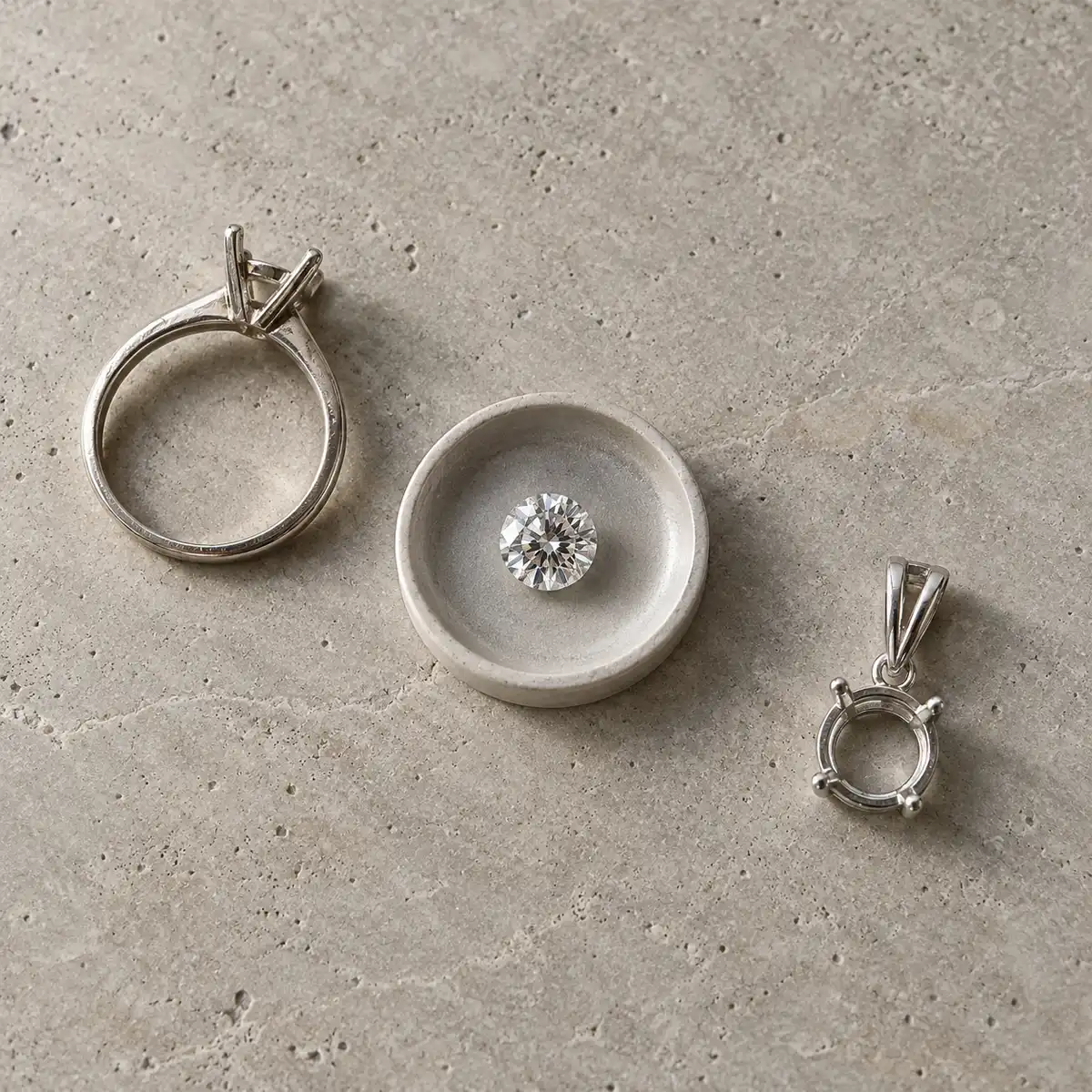
Two stones sit on a tray at a Hatton Garden counter, both round brilliants of about a carat, both bright, one priced at a fraction of the other. The cheaper one is a laboratory-grown diamond, and the question the buyer asks is the obvious one.
Smith & Green Jewellers is a fine jewellery retailer in Hatton Garden, London EC1N, specialising in bespoke engagement rings, diamond and coloured gemstone jewellery and handcrafted wedding bands, and whether lab-grown diamonds are worth it is now asked at its counter as often as any question about cut.
The plain answer is that lab-grown diamonds are worth it for a buyer who wants the largest or cleanest stone a budget allows and who does not expect the stone to hold resale value, and that they are not worth it for a buyer who wants the stone itself to retain a meaningful share of its price. The physical material is the same. The market behind it is not.
What follows sets the two stones against each other on named criteria, answers the value question directly, corrects the assumption that identical chemistry means identical worth, and ends with what to ask before choosing.
Set the stones side by side on criteria a jeweller would actually use. On material, the two are the same: crystalline carbon, hardness 10, the same optical behaviour. On price, they are far apart.
One US retail tracker put the median for a natural 1 carat round in the G to H colour and VS1 to VS2 clarity range at 4,049 US dollars on 16 August 2026, against a last recorded lab-grown median of 841 US dollars in the same range in October 2025, and recorded natural prices down 14.1% in 2026 to that date.
On grading, the houses have diverged. Natural stones receive the full D to Z colour and clarity scales from GIA, IGI and HRD. From 1 October 2025 the GIA stopped issuing those scales for lab-grown diamonds and replaced them with two descriptors, Premium and Standard, leaving IGI as the house that still grades most lab-grown stones on the familiar scales. On supply, natural output is finite and mined; lab-grown output can be increased in weeks by adding reactors.
On resale, the gap is the widest of all. Published buyer estimates in 2026 put lab-grown resale at roughly 10% to 40% of retail and natural at roughly 20% to 60%, with the natural figure supported by an established second-hand market that the lab-grown stone does not yet have. Resolve the comparison by the buyer: a lab-grown stone suits someone buying size and clarity for wearing; a natural stone suits someone who wants the stone to keep a recognised market behind it.
Lab-grown diamonds are worth it when the budget is fixed and the goal is the best-looking stone for the money, because the price gap of roughly 75% to 85% buys a larger, cleaner, whiter stone than the same sum buys in natural. They are not worth it when the buyer expects the stone to be resold, traded up or valued later at anything close to its cost.
Worth also depends on what the price is being paid for. A natural stone’s price includes scarcity and a functioning resale market, which a lab-grown stone lacks. A lab-grown stone’s price is closer to a manufacturing cost that has fallen for several years and, on the evidence of the trackers above, is still falling, so a stone bought today is likely to be cheaper to replace next year. That is good news for insurance and poor news for resale.
The mount changes the sum. Metal keeps its value on the market whatever stone it holds, so a buyer choosing lab-grown diamonds can reasonably spend the saving on 950 platinum or a heavier 18ct mount, where the value is more durable. A buyer who spends the savings on a bigger lab-grown stone is buying more of the part of the ring that holds value least.
The common advice is that because the two stones are chemically identical, paying more for natural is paying for a story. Tested against how the trade actually prices and buys back stones, the claim collapses. Value in diamonds has never been set by chemistry alone; it is set by what a buyer will pay when the stone comes back to the counter, and the two markets answer that question differently.
A natural stone that returns to Hatton Garden for remounting or sale is priced against a wholesale market with decades of dealing behind it. A lab-grown stone that returns is priced against the cost of growing a new one, which is lower every year, and against a second-hand market that is thin. Trade buyers therefore offer a fraction of retail for either stone, and a smaller fraction for lab-grown. The retail-to-resale gap is real for both; it is simply wider for the grown stone.
Remounting shows the same divide in a different way. When an owner brings a lab-grown stone to a bench near Farringdon and the Elizabeth line to be set into a new ring, the stone is worth setting, but the new mount will often cost more than the stone itself, which inverts the usual proportions of an engagement ring and surprises owners who paid the original price.
Fun fact: Every laboratory-grown diamond assessed by the GIA carries a laser inscription on its girdle reading Laboratory-Grown alongside its report number, so the origin is readable under a loupe for the life of the stone.
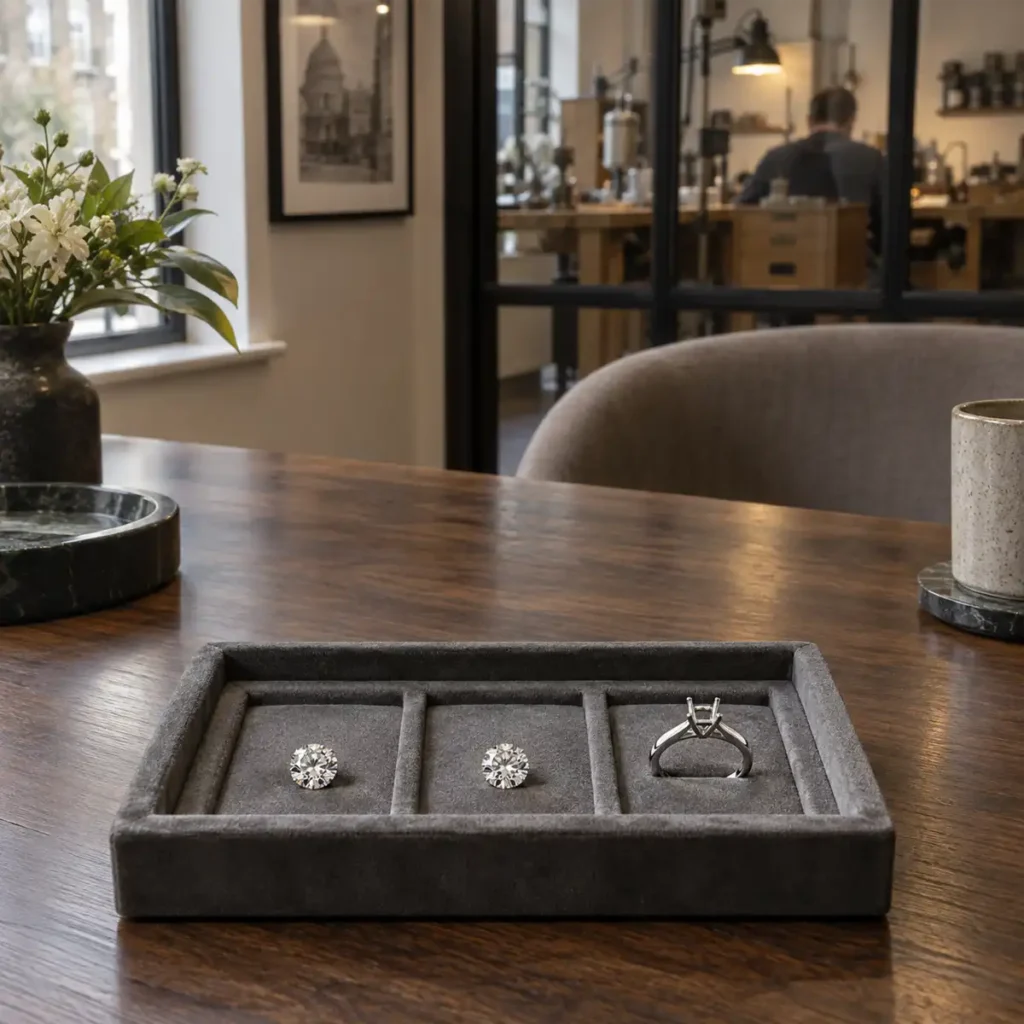
Smith & Green Jewellers is a fine jewellery retailer in Hatton Garden, London EC1N, specialising in bespoke engagement rings, diamond and coloured gemstone jewellery and handcrafted wedding bands. Its About page describes collections created using natural diamonds; its site describes those diamonds as GIA-certified, and its online ring builder also lists laboratory-grown diamonds carrying IGI reports alongside natural stones.
That published position suits a buyer who wants to see both stones and both certificates on the same tray at 9 Hatton Garden before deciding. It also suits a buyer thinking about the ring’s later life, since the site lists a service for selling jewellery and a pre-owned category, both of which sit on the natural side of the market described above. Prices are available on consultation and vary with carat weight, stone origin, setting complexity and metal choice.
Ask which house graded the stone and what the report says. For natural, expect a GIA, IGI or HRD report with full colour and clarity grades and a laser inscription matching the girdle. For lab-grown diamonds, expect an IGI report with grades or a GIA assessment reading Premium or Standard, and ask which growth method produced the stone, HPHT or CVD, because the report will say, and the answer belongs on the valuation.
Ask what the shop will do when the stone comes back. Whether it buys back or part-exchanges, and on what basis, is the question that reveals the resale gap before it is paid for, and a straight answer on lab-grown diamonds is worth more than any brochure. Ask what the mount is worth on its own, since that is the part of the ring with the more durable market.
Ask how the stone is described on paper. The trade convention, and the basis of UK advertising rulings, is that laboratory-grown diamonds are described as such, adjacent to the word diamond, wherever they appear, so ask that the receipt, the valuation and the insurance schedule all say it.
Bring any existing stone for comparison, and ask to see the two side by side under the daylight lamps rather than the cabinet spots, where the difference in price is easier to weigh against the difference in the tray.
Anyone deciding between the two stones should book a comparison rather than choose from a screen, and should bring a fixed budget, any existing ring and the question of resale written down so it is not forgotten at the counter. Ask about certification first, GIA or HRD for natural and IGI or a GIA assessment for lab-grown diamonds, and ask the shop plainly what it would offer for the stone in five years. Ask what the mount alone is worth. Typical Hatton Garden trade lead times for a bespoke ring in either stone run to weeks rather than days, and a mount tested at the Greville Street assay counter adds a few of them, so a date in the diary needs a decision six to eight weeks ahead.