
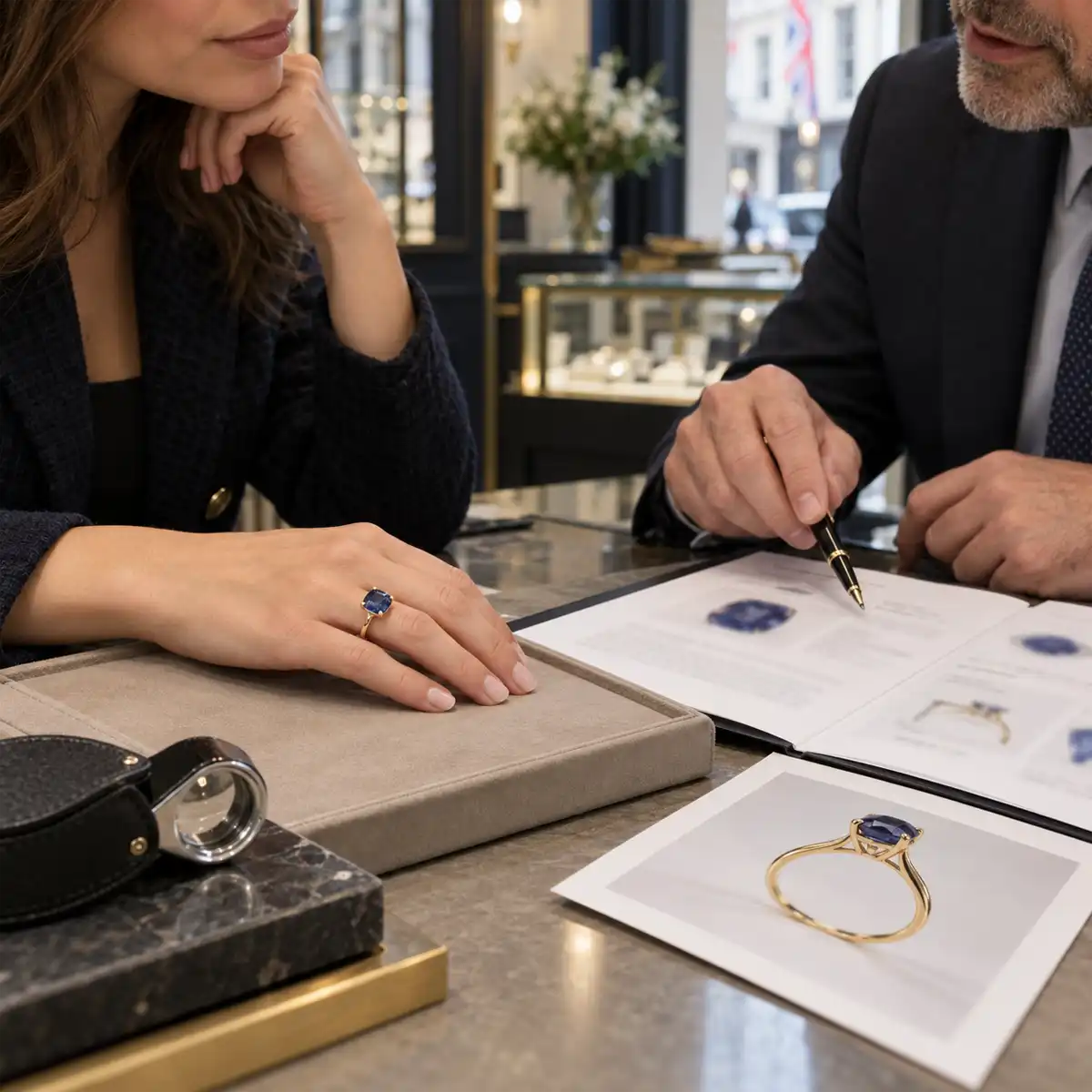
Choosing an engagement ring is rarely a calm, linear decision. Most buyers arrive having scrolled through a hundred images and still feel unsure, because a screen cannot show how a stone behaves in daylight. A sapphire changes that conversation. For the buyer who wants colour, history and a stone that withstands daily wear, a sapphire engagement ring is one of the most considered choices you can make in London’s jewellery quarter.
Hatton Garden, the dense run of workshops and showrooms between Holborn and Farringdon, is where that choice becomes real. A few minutes on foot from Chancery Lane station, behind the shopfronts on the main strip and the quieter benches off Greville Street, sit jewellers who handle coloured stones every week and can tell you, honestly, what you are looking at. That access to expertise is the reason buyers travel here rather than settle for a high street display.
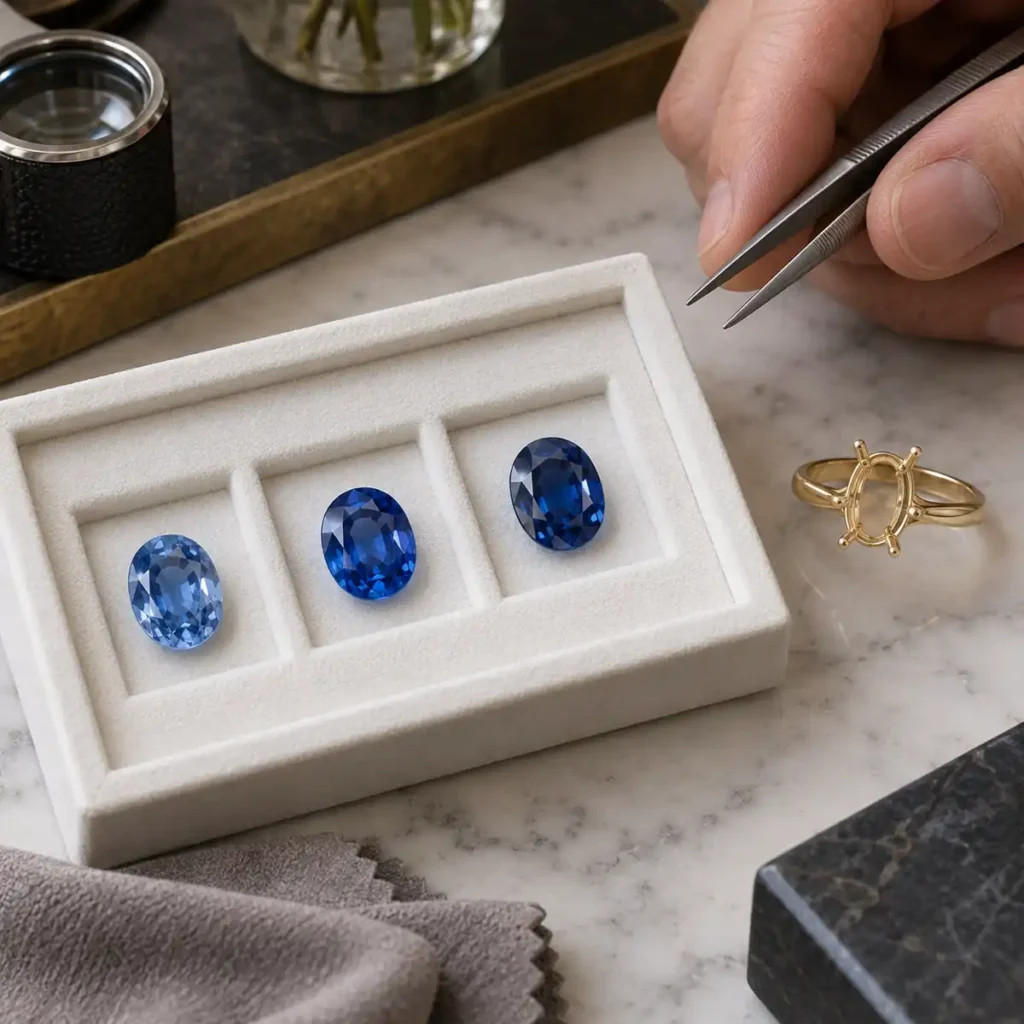
A sapphire engagement ring offers colour, exceptional hardness and a clear value story you can check. Sapphire scores 9 on the Mohs scale, second only to diamond, so it suits everyday wear far better than softer coloured stones. In Hatton Garden you can compare loose sapphires side by side, ask for the laboratory report, and see the setting made to suit the stone rather than the other way round.
That last point matters more than buyers expect. A blue sapphire reads differently under the warm light of a showroom than under the cool daylight by the door, and a good jeweller will walk you to both before you decide. The stone you choose is a personal response to colour, not a position on a quality ladder, and the better houses in the quarter treat it that way.
This is where trade knowledge separates a sound purchase from an expensive guess. Two sapphires can look almost identical and differ sharply in price, and the reasons are origin and treatment. Ceylon, or Sri Lankan, sapphires are prized for a bright cornflower blue. Burmese and Kashmir stones carry a heavier premium, Kashmir especially, because the historic deposits are effectively exhausted.
Treatment is the question most buyers never think to ask. The large majority of sapphires on the market are heat treated to improve colour and clarity, which is accepted practice and disclosed by reputable sellers. What you are paying a premium to avoid is undisclosed treatment, or to secure a rarer untreated stone. A jeweller in the quarter should state treatment plainly, and for a higher value stone you want that confirmed on an independent report.
Fun fact: sapphire and ruby are the same mineral, corundum, distinguished only by colour, with red corundum classed as ruby and every other colour classed as sapphire.
For coloured stones above a certain value, origin reports from laboratories such as Gübelin, GRS and SSEF carry real weight, because they address provenance and treatment rather than only the 4Cs. Ask which laboratory issued the report and what it actually tested. If the answer is vague, treat that as information in itself.
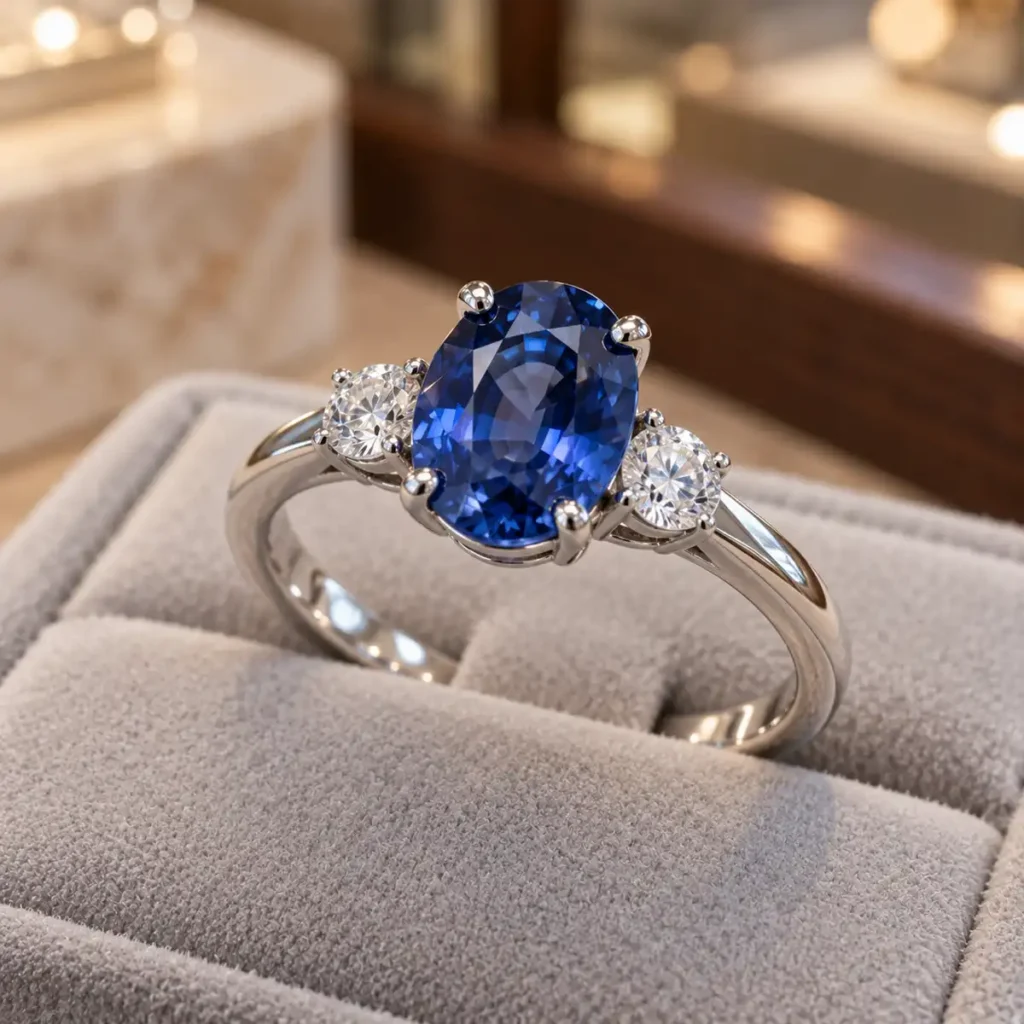
A sapphire’s hardness gives you freedom, but the setting still does real work. A claw, or prong, setting lifts the stone into the light and shows the colour fully, which suits a sapphire well. A bezel, where metal wraps the girdle of the stone, gives more protection at the edges and reads as cleaner and more modern, a sensible choice for active hands.
Three-stone and halo settings change the colour story too. A halo of small diamonds around a blue centre stone makes the sapphire look larger and lifts its brightness by contrast, while a plain solitaire lets the colour speak alone. Metal choice shifts the effect again. White metals such as 950 platinum or 18ct white gold cool the blue, while 18ct yellow gold warms it. None of this is a rule, only a set of trade-offs a good bench jeweller will show you in person.
By 2025, with lab-grown diamonds settling into a clear and much lower price tier, more buyers began treating coloured stones as a distinct choice rather than a diamond substitute. A sapphire is not a saving measure; it is a different decision about colour and character. On durability it holds up extremely well, sitting just below diamond on hardness and well above most other coloured gemstones.
Here is the snippet most buyers want. A sapphire is an excellent everyday engagement stone because at 9 on the Mohs scale it resists scratching better than almost any alternative, it does not require the careful handling that emeralds demand, and a well cut sapphire returns strong colour under ordinary light. The main difference from a diamond is that you are buying colour and origin rather than brilliance and certified cut grade.
Through 2026, rising gold and platinum prices have pushed more of the budget conversation toward the metal and the setting, so it is worth deciding early how much of your figure sits in the stone and how much in the mount. A jeweller in the quarter can model both before you commit.
A first appointment is a conversation, not a sale. Bring your ring size if you know it, a few images of styles that appeal so the jeweller can read your taste, a clear budget figure, and any inherited stones you might want to set. Booking ahead is worth it, since the benches off the main strip and the appointment-only rooms near Farringdon and the Elizabeth line exit are quieter and give you proper time with the stone.
Ask three things early. Where is the sapphire from, has it been treated and how, and what laboratory report comes with it? For a bespoke commission, lead times in Hatton Garden typically run 6 to 10 weeks from design approval to collection, so a stone chosen for a specific date needs ordering well in advance. Ask to see the CAD render and, where offered, a wax model, because both confirm scale and proportion before any metal is cut.
A sapphire ring asks little, but it asks for some sense. Clean it with warm water and a soft brush, keep it off hard surfaces, and have the setting checked once a year so a loosened claw is caught before a stone is lost. None of this is onerous for a stone this hard, which is part of why a sapphire suits a ring worn every day.
Insurance is the step buyers most often skip. A purchase receipt is not a valuation, and an independent valuation describes the stone, the treatment and the setting in terms an insurer can actually underwrite. Arrange it soon after purchase rather than years later, when the market and your memory have both moved on.
If a sapphire appeals, book an appointment with two or three jewellers in the quarter rather than one, and see the same budget expressed in different stones before you decide. Bring your size, your images and your figure, and ask each jeweller for origin, treatment and the laboratory report on any stone you are seriously considering. For a dated occasion, start at least 10 to 12 weeks ahead to allow for a bespoke setting. The buyer who treats the first visit as research, not commitment, almost always chooses a better sapphire engagement ring, and leaves Hatton Garden confident in both the stone and the price they paid for it.
Buyers weighing a blue stone usually meet a few alternatives in the quarter, and it helps to know how they sit against sapphire. Spinel is the one most often overlooked. It is hard, close to 8 on the Mohs scale, comes in fine blues and reds, and has earned real respect in the trade over the past decade as a stone valued in its own right rather than a substitute.
Tanzanite is softer, around 6.5 to 7, which makes it a lovely stone but a riskier choice for a ring worn every day; it shows its colour best in earrings or a pendant. Blue topaz is affordable and widely available, though softer again and easily scratched. Iolite offers a violet blue at a modest price but lacks the durability a daily ring demands.
For an engagement ring that will be worn constantly, sapphire remains the sensible blue. A jeweller in Hatton Garden should be willing to lay these options beside one another and tell you plainly where each one gives way, rather than steering you toward the dearest stone in the cabinet.
Sapphire is not only blue, and this is where the choice becomes personal. The same mineral produces pink, yellow, green and the rare pink-orange padparadscha, which commands a strong premium for its unusual warmth. A coloured-fancy sapphire engagement ring is a distinctive route for a buyer who wants something clearly their own.
Within blue, the prized tone is an even, medium cornflower, neither too dark nor too pale. Watch for colour zoning, where the blue sits unevenly through the stone and can look patchy once set. Zoning is visible under a loupe and against a white surface, so ask to view the stone loose before it is mounted.
A good bench jeweller will turn the stone for you under different lights and point out zoning honestly rather than hiding it in the setting. If you are drawn to a fancy colour, ask how consistent the supply is, since matching a future earring or band to an unusual hue can be difficult years later.