Platinum is a dense, naturally white precious metal and the benchmark choice for fine jewellery, particularly engagement rings, for over a century. It belongs to the Platinum Group Metals (PGMs) and takes its name from the Spanish word platina, meaning “little silver,” given by South American conquistadors who first encountered it in the rivers of Colombia in the sixteenth century. They considered it a nuisance, an impurity found alongside gold, unaware they were handling one of the rarest metals on Earth.
European scientists recognised its true value in the mid-1700s, and by the Art Deco era of the 1920s platinum had become the defining metal of high jewellery, prized for its strength, workability and cool white lustre. When platinum was reserved for military use during World War II, white gold took its place, but platinum returned and has remained the premier choice for diamond settings ever since.
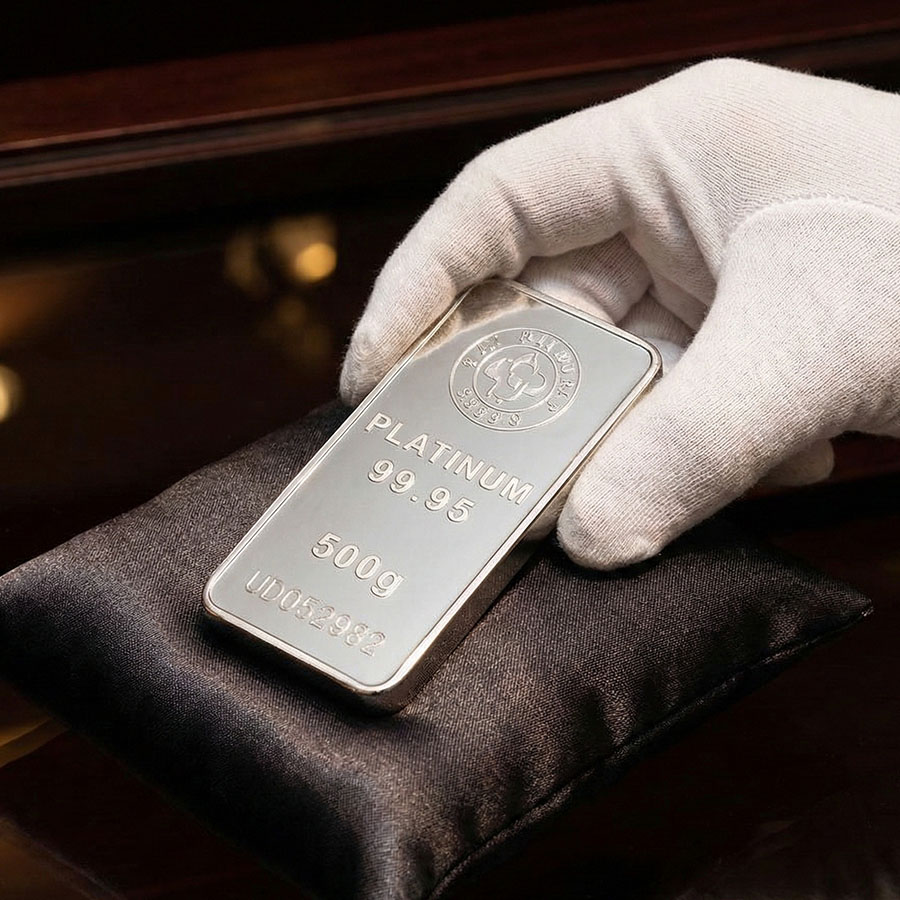
Naturally white, permanently. Platinum’s colour is white all the way through and will never yellow or require rhodium replating. This makes it the ideal setting for colourless diamonds; the neutral metal won’t cast any tint into the stone.
Dense and substantial. With a density of 21.4 g/cm³, platinum is the heaviest precious metal used in jewellery, roughly a third heavier than 18ct gold and almost twice the weight of palladium. Many wearers love this substantial feel; it gives a ring a sense of quality and permanence you can feel every time you put it on.
Exceptionally secure for stone setting. Platinum is highly malleable, it can be shaped into fine prongs and intricate settings without cracking or becoming brittle. This makes it the preferred metal for securing diamonds, particularly in delicate designs like pavé and micro-pavé where tiny claws must hold stones firmly under daily wear.
Self-healing surface. When platinum is scratched, the metal is displaced, not lost. No material leaves the ring, it simply moves from one spot to another. Over time this creates a distinctive soft patina that many consider part of platinum’s character. A jeweller can restore the mirror polish at any time.
Pure and hypoallergenic. The standard jewellery alloy is 950 platinum (95% platinum, 5% ruthenium or cobalt). It contains no nickel and is completely safe for sensitive skin.
Platinum 950 | Palladium 950 | 18ct White Gold | |
Colour | Naturally white (slightly cool tone) | Naturally bright white | Rhodium-plated (needs redipping every 1–2 years) |
Hardness (Mohs) | 4.25 (4.5 alloyed) | 4.75 (5.75 alloyed) | 2.75–3.0 |
Density | 21.4 g/cm³ | 12.0 g/cm³ | ~15.5 g/cm³ |
Weight on finger | Heavy (substantial) | Light | Medium |
Purity | 95% | 95% | 75% gold |
Hypoallergenic | Yes | Yes (nickel-free) | Often contains nickel |
Best for | Diamond settings, intricate designs, heirloom pieces | Comfortable everyday wear, lighter bands | Budget-conscious buyers happy with periodic replating |
💡 Insider tip: Platinum’s real advantage over palladium isn’t hardness; it’s malleability. For engagement rings with delicate diamond settings, platinum allows our craftsmen to create finer prongs and more intricate detailing. For a plain wedding band where weight and feel are the main considerations, the choice between platinum and palladium comes down to whether you prefer heavy or light on the finger. |
UK law requires all platinum jewellery to carry a hallmark. The platinum hallmark consists of the sponsor’s mark, the fineness mark (typically 950, displayed inside a pentagon shape, distinct from palladium’s three connected ovals), and the Assay Office mark (London, Birmingham, Sheffield or Edinburgh). An optional orb symbol may also appear as platinum’s traditional voluntary mark. This hallmark is your guarantee that the metal has been independently tested and certified.
Platinum requires very little upkeep. It won’t tarnish or discolour under normal conditions. Clean it with warm water and mild soap. The patina that develops with wear is a natural feature — embrace it, or have your jeweller restore the polish whenever you wish. Platinum is straightforward to resize and repair, making it a practical choice for a lifetime of daily wear.
Yes, it feels weighty. Many people enjoy that sense of substance in an engagement ring or wedding ring.
Its naturally white tone enhances brightness and avoids colour transfer, so it pairs cleanly with near colourless stones.
Usually yes, once the stone is assessed. Platinum’s strength supports fine claws and protective settings.
Choose platinum jewellery for a nickel free, hypoallergenic option that stays comfortable in daily wear.
Have claws and settings checked yearly and polish as needed. No replating is required, which keeps maintenance simple.