
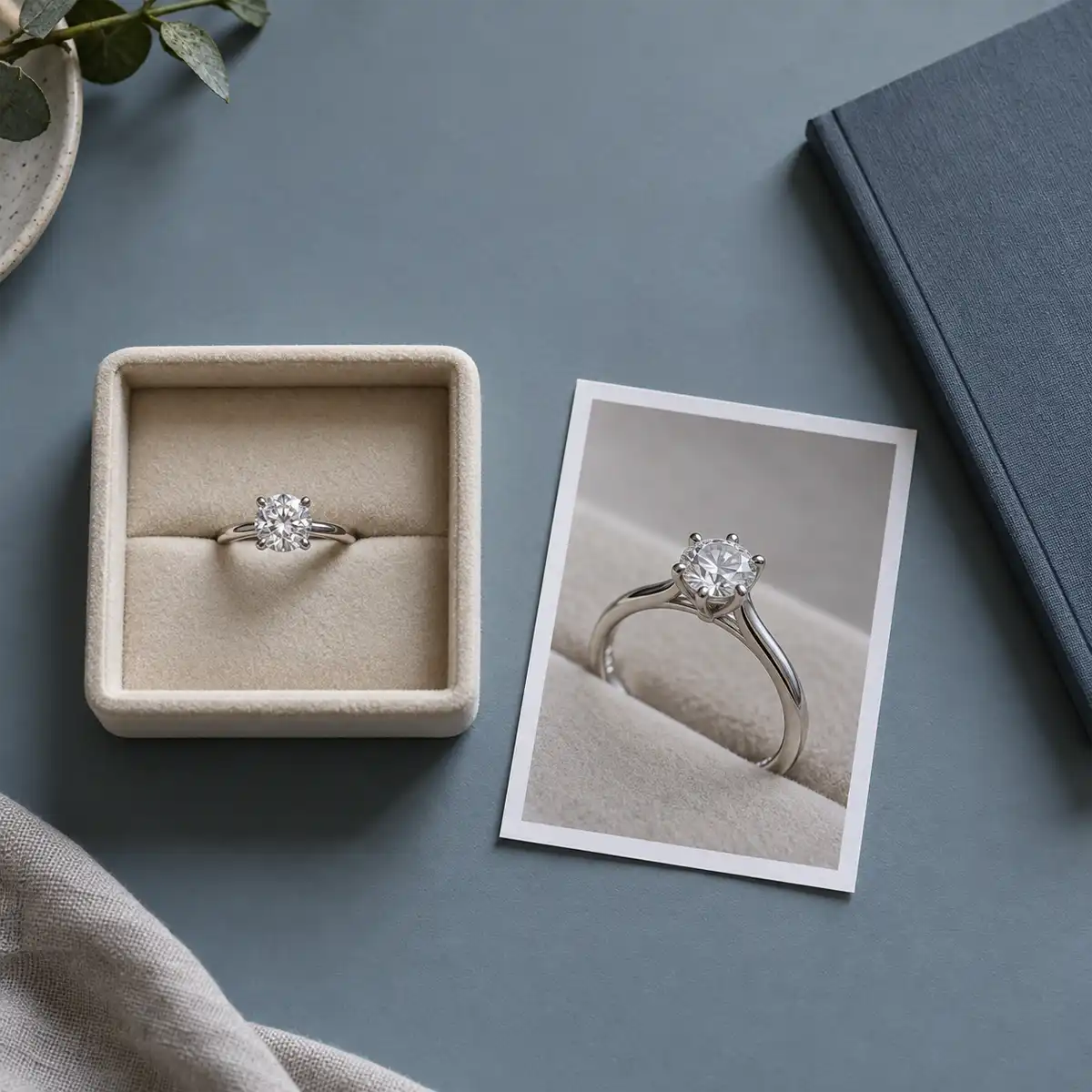
A ring leaves 9 Hatton Garden on a Saturday afternoon in a small box, with the receipt folded underneath it. The receipt records what was paid. It does not record what the ring would cost to replace in three years, and that gap is where most engagement ring insurance claims come unstuck.
Smith & Green Jewellers is a fine jewellery retailer in Hatton Garden, London EC1N, specialising in bespoke engagement rings, diamond and coloured gemstone jewellery and handcrafted wedding bands, and its services page lists valuations for insurance or probate alongside resizing and remodelling.
The plain answer to the question is this. Engagement ring insurance in the UK normally starts with a home contents policy, which caps any one item at a figure that is often lower than the ring, so the ring has to be listed separately with a current replacement valuation. The valuation then has to say the right things, in sterling, at today’s metal and stone prices.
The sections below set out what those things are, why a receipt is not enough, and what a Hatton Garden valuer actually looks for when a ring comes back across the counter.
Engagement ring insurance in the UK is usually one of three arrangements: cover under a home contents policy up to its single item limit, the same policy with the ring listed as a specified item, or a standalone jewellery policy. Each pays against the replacement value on file, not the price paid, so the valuation decides the claim.
The single item limit is the point most people miss about engagement ring insurance. Comparison sites reporting in 2026 put the typical cap on a standard UK contents policy between £1,500 and £2,500, with £2,000 the figure quoted most often. A ring worth more than the cap is only covered up to the cap unless it has been added as a specified item, and insurers generally expect a recent valuation certificate or a receipt as proof of value.
Two further gaps sit inside the same policy. Loss or theft away from home is usually excluded unless personal possessions cover has been added, which matters for a ring worn every day between Chancery Lane station and the office. Accidental damage, the bent claw or the chipped stone, is often a separate add-on again. A standalone engagement ring insurance policy tends to bundle worldwide cover and accidental damage together, at a premium that scales with the valuation.
The advice passed between friends is to keep the receipt safe. The receipt is worth keeping, but it answers a different question. A receipt records a price on a date. An engagement ring insurance claim needs a specification and a replacement cost that holds on the day of the loss, and those two things drift apart from the moment the box leaves the shop.
Metal is the clearest example. Gold traded at 4,349.90 US dollars per troy ounce on 14 August 2026 according to the Daily Metal Price index, a level far above anything a 2021 receipt was priced against, so an 18ct mount bought a few years ago now costs more to remake than the document says. The stone moves too, in both directions, and the labour to set it moves with wages in Hatton Garden workshops.
The second failing is descriptive. A till receipt rarely states the metal fineness, the hallmark, the carat weight, the colour and clarity grades with the house that issued them, or the setting style. Without that detail an insurer can fall back on a depreciated figure rather than a like-for-like replacement, which is the outcome jewellery valuation for insurance exists to prevent.
Fun fact: A modern UK hallmark has only three compulsory marks, the sponsor’s mark, the fineness number and the assay office mark, because the date letter became voluntary on 1 January 1999.
A typical valuation in the EC1N workshops follows the same order wherever it is done. The ring is cleaned and examined under a loupe, because dirt under a stone hides both the girdle and any damage. The hallmark is read and recorded, which tells the valuer the fineness and the assay office but not, on its own, who made the ring or when the stone was set.
The stone comes next. Where a grading report exists, the valuer checks the girdle for the laser inscription and matches it to the report number, then confirms the measurements against the certificate. Where no report exists, the stone is measured and graded in the mount, which is less precise and is stated as such.
Coloured stones are described with their species and any treatment the valuer can identify, because a heated sapphire and an unheated one do not replace at the same price.
The metal is weighed, the setting style is named, and the whole description is written up with a replacement value in sterling, dated, and supported by photographs. Replacement value means the cost of a new equivalent piece at retail on the date of the document, which is why engagement ring insurance figures usually sit above the price paid. Trade practice is to revisit the document whenever markets move; the 2026 gold price alone justifies refreshing any valuation written before 2024.
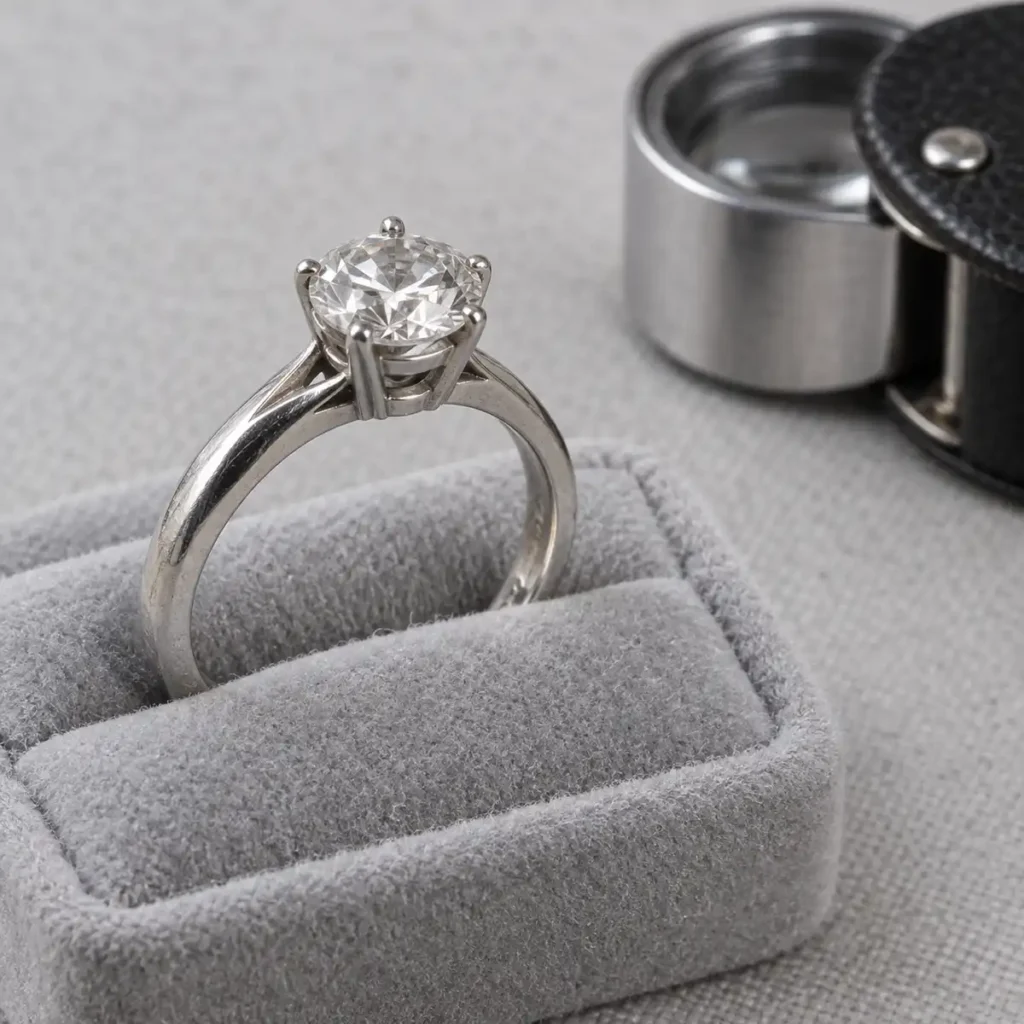
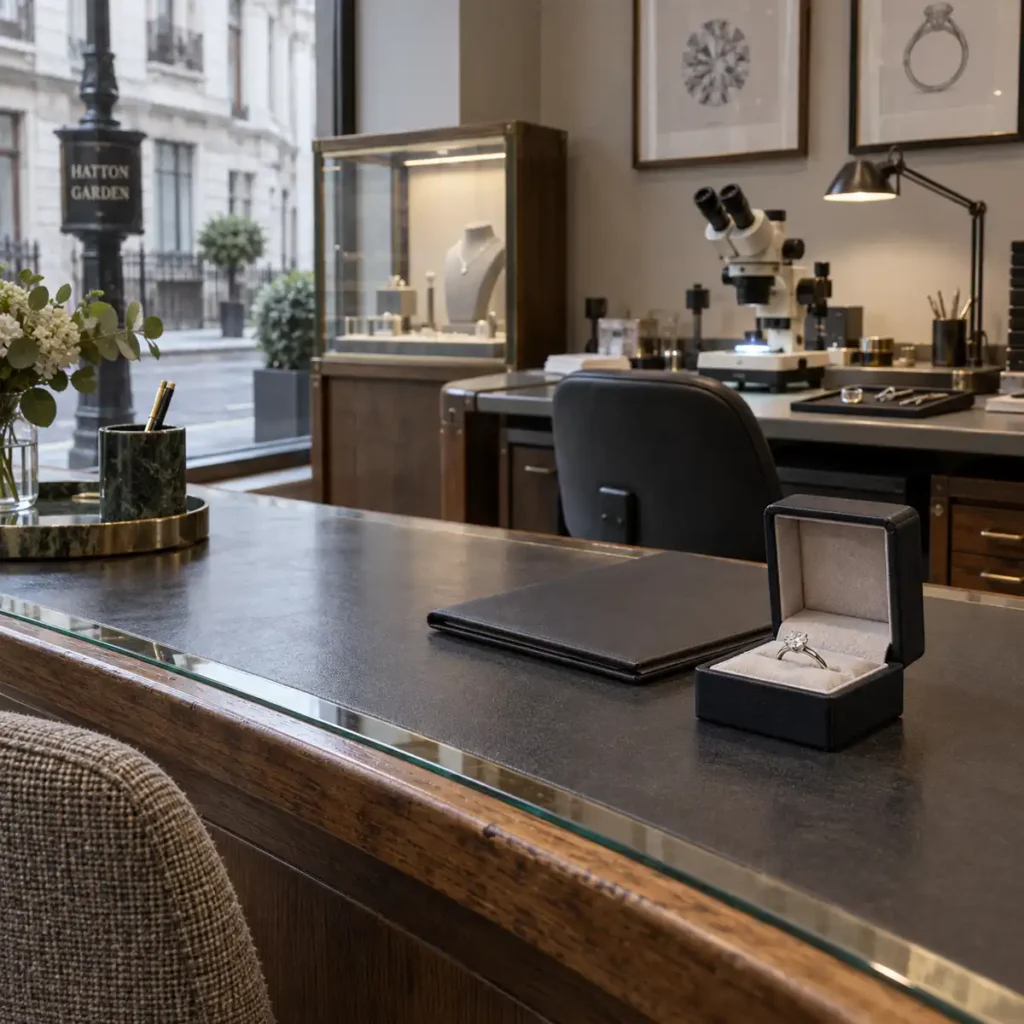
Smith & Green Jewellers is a fine jewellery retailer in Hatton Garden, London EC1N, specialising in bespoke engagement rings, diamond and coloured gemstone jewellery and handcrafted wedding bands. Its services page lists valuations for insurance or probate by its valuers, and the shop describes its diamonds as GIA certified, which gives a valuation document a report to reference.
That arrangement suits three kinds of owners. The first bought at 9 Hatton Garden and wants engagement ring insurance in place from the start. The second bought elsewhere, or inherited the ring, and has no paperwork at all. The third has a valuation from years ago that no longer reflects the metal market and needs a dated replacement.
For its own pieces, the shop’s About page describes complimentary ring polishing and cleaning together with a yearly check that the diamonds are secure in their settings. That annual appointment is the natural moment to have the valuation looked at as well, since the ring is already clean, examined and on the bench.
Bring every document the ring has ever had: the grading report from GIA, IGI or HRD if there is one, the original receipt, any earlier valuation, and the box if it carries a maker’s name. Bring the ring clean enough to read the hallmark, though the valuer will clean it again. If a stone has been replaced or the shank has been resized, say so, because an altered ring is described differently from an original.
Ask the valuer four things whether the figure is new replacement value or second-hand replacement value, since insurers treat the two differently. Whether every colour and clarity grade names its issuing house rather than a general description. Whether the document is dated, in sterling and photographed. And whether the description is detailed enough for a jeweller who has never seen the ring to remake it.
Then ask the insurer about the engagement ring insurance itself. What the single item limit is on the current policy. Whether personal possessions cover applies outside the home. Whether accidental damage is included or an add-on. Whether the insurer wants the valuation from a particular kind of valuer, and how often it must be renewed.
To add an engagement ring to home insurance is usually a phone call once the valuation is in hand, and the premium change is often modest against the risk of an uninsured loss.
Anyone with a ring worth more than the single item limit on their policy should book a valuation now rather than after the first scare, and anyone whose valuation predates 2024 should have it refreshed against 2026 metal prices. Take the grading report, the receipt and the ring itself, and ask for a dated sterling document with the issuing house named on every grade. Ask about certification before the appointment, because a ring with a GIA report values faster and with less argument than one without. Typical Hatton Garden trade lead times for a written valuation run to days rather than weeks, so engagement ring insurance can usually be in place well before the ring travels anywhere. The hour spent on the paperwork is the cheapest part of owning the ring.