
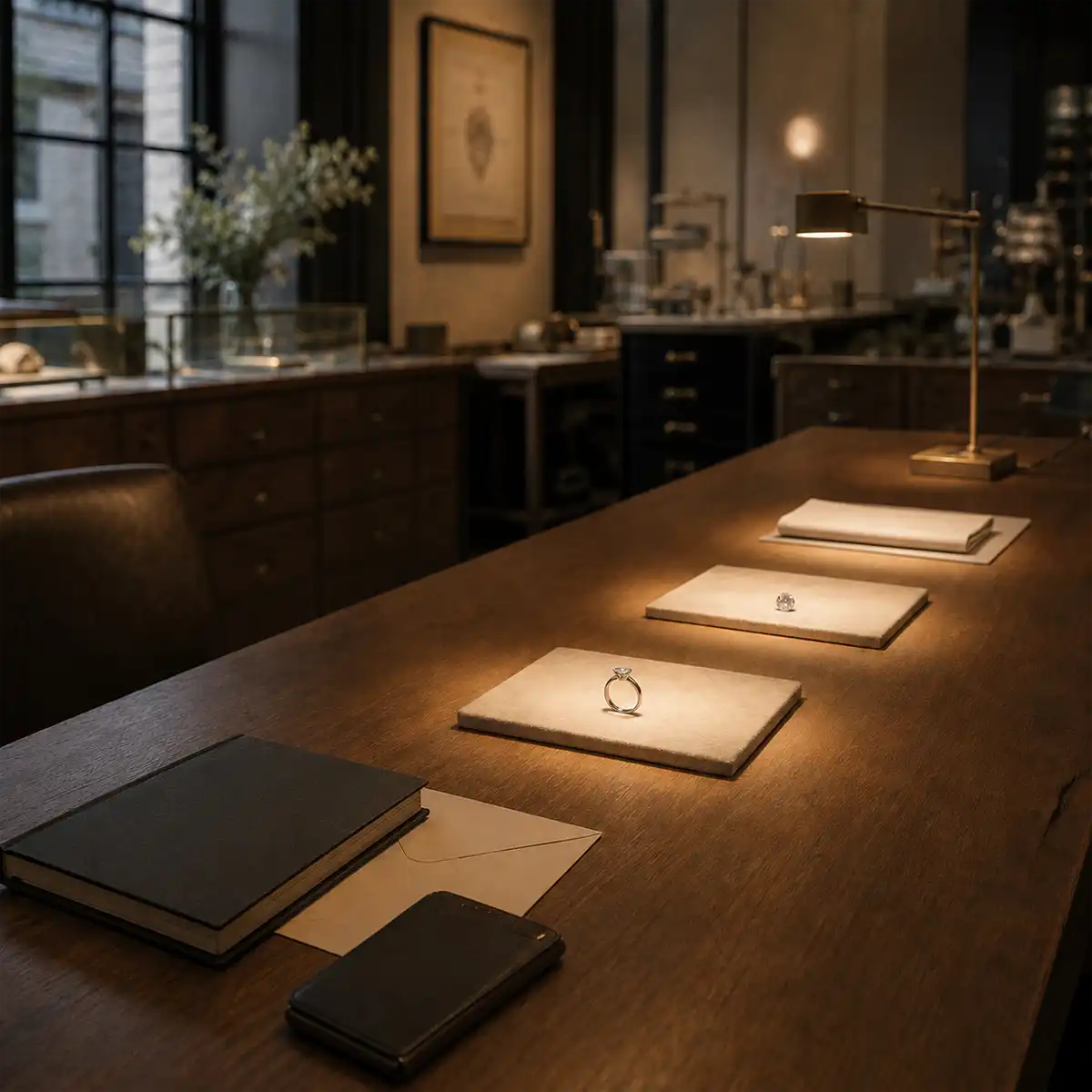
The lift doors open on the first floor, and you are already rehearsing what to say. Most people arrive at a first engagement ring consultation with a phone full of screenshots, a budget they are slightly embarrassed about, and a low hum of worry that they are about to be found out. Found out as someone who does not know what a claw setting is. Someone who cannot tell a good stone from an expensive one.
There is nothing to worry about. Here is exactly what happens next.
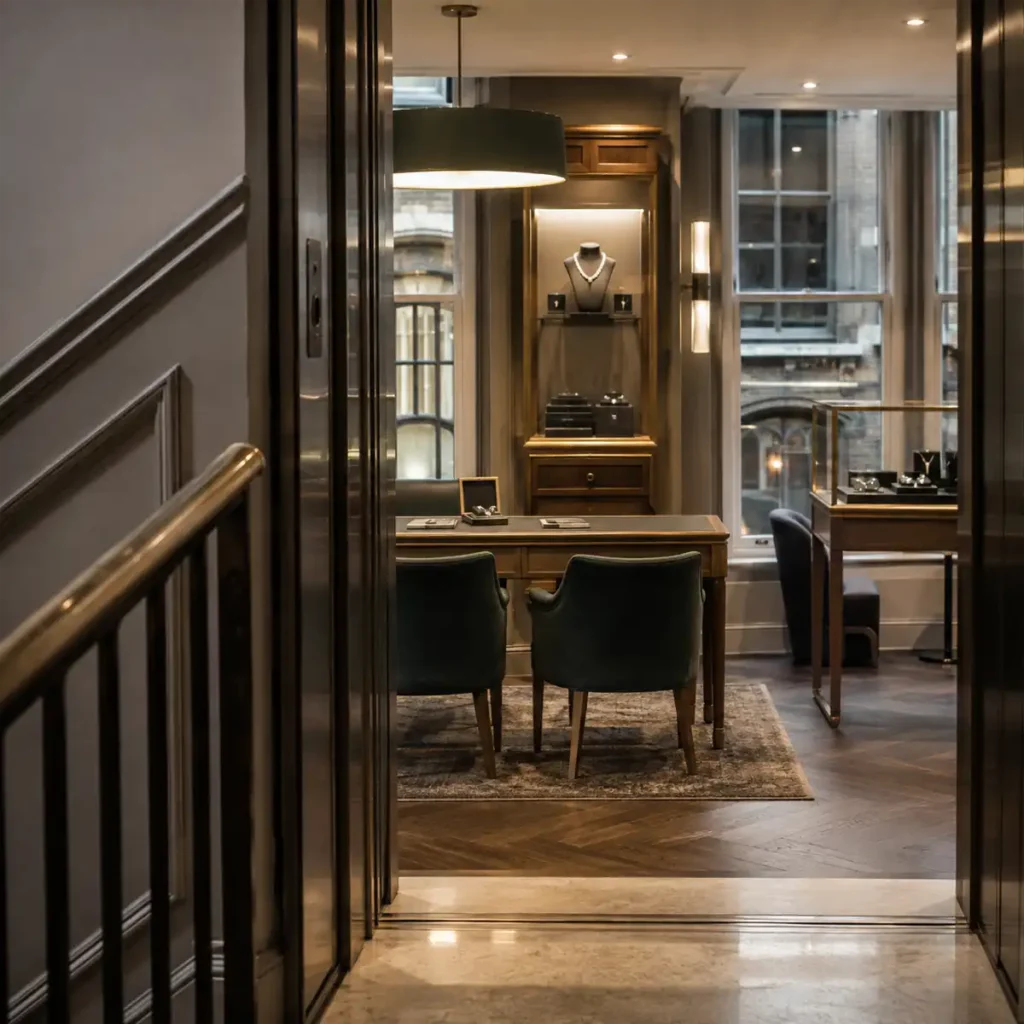
Smith & Green sit at 9 Hatton Garden, EC1N 8AH, 4 minutes on foot from Chancery Lane station and a short walk from the Farringdon Elizabeth line exit. The consultation desks upstairs have seen every version of the nervous first-timer since Chris Smith and Josh Green started the business in 2011. The ones who arrive with a spreadsheet. The ones who arrive with nothing but a partner’s name and a date in June. Nobody is graded on arrival. The whole point of the appointment is that you turn up not knowing things, and leave knowing them.
A first engagement ring consultation is a seated conversation, usually 45 to 60 minutes, in which a jeweller establishes what the wearer’s taste actually is, what your budget realistically buys, and which stones and settings meet both. You look at loose diamonds under natural light, handle sample settings, and leave with a written specification. Nothing is purchased on the day.
That last sentence is the one worth reading twice. You are not there to buy. You are there to find out what buying would involve, and a good consultation ends with you better informed and no lighter in the pocket. If someone tries to close you inside an hour of meeting you, that is information about them, not about the ring.
Book. Smith & Green take appointments through the site and by phone, and the showroom operates Tuesday to Saturday, 09.30 to 18.00, closed Sunday and Monday. Walking in is possible, but it means competing for attention with people who booked, and it usually means the specific stones you would want to compare have not been pulled from the safe in advance.
The booked appointment buys you three things. A named person who has read your enquiry before you arrive. A prepared selection of stones that fit what you said you wanted. And an hour where nobody is watching the door. On Greville Street and along the length of Hatton Garden you will see staff standing outside, encouraging passers-by in. That is a different model of business, and it produces a different kind of hour.
Bring your partner if they know. Come alone if they do not. Bring a friend if you want a second opinion in the room. Nobody minds. Roughly half of first consultations at any serious Hatton Garden workshop happen with one person and a phone full of saved images, and that is a completely normal way to start.
Four things, and only one of them is essential.
Screenshots. Whatever your partner has saved, sent, lingered over, or mentioned once in passing. Images do more work in the first 10 minutes than any amount of description, because “something classic but not boring” means 40 different rings, and a photograph means one.
A ring size, if you can get one without detonating the surprise. A ring borrowed from the correct finger is ideal. If you cannot manage it, say so. Sizing is solvable later, and no consultation has ever collapsed over it.
A budget figure, spoken out loud. This is the part people dread most, and it is the part that helps most. A jeweller who knows your number can show you the best possible ring at that number in the first 20 minutes. A jeweller who does not know it is guessing, and guessing wastes your hour. Nobody in this trade is impressed or unimpressed by a number. They are working with a constraint, the way an architect works with a plot size.
A date, if there is one. A proposal booked for a specific weekend changes what is possible. Bespoke commissions at Smith & Green run 6 to 10 weeks from approved design to finished ring, and knowing the deadline on day 1 is the difference between a plan and a scramble.
You sit down. Someone offers you a drink. You show them the screenshots, and this is the moment the nervousness usually breaks, because the conversation immediately becomes concrete. Round or oval. Yellow gold or platinum. Solitaire or something with more going on at the shoulders.
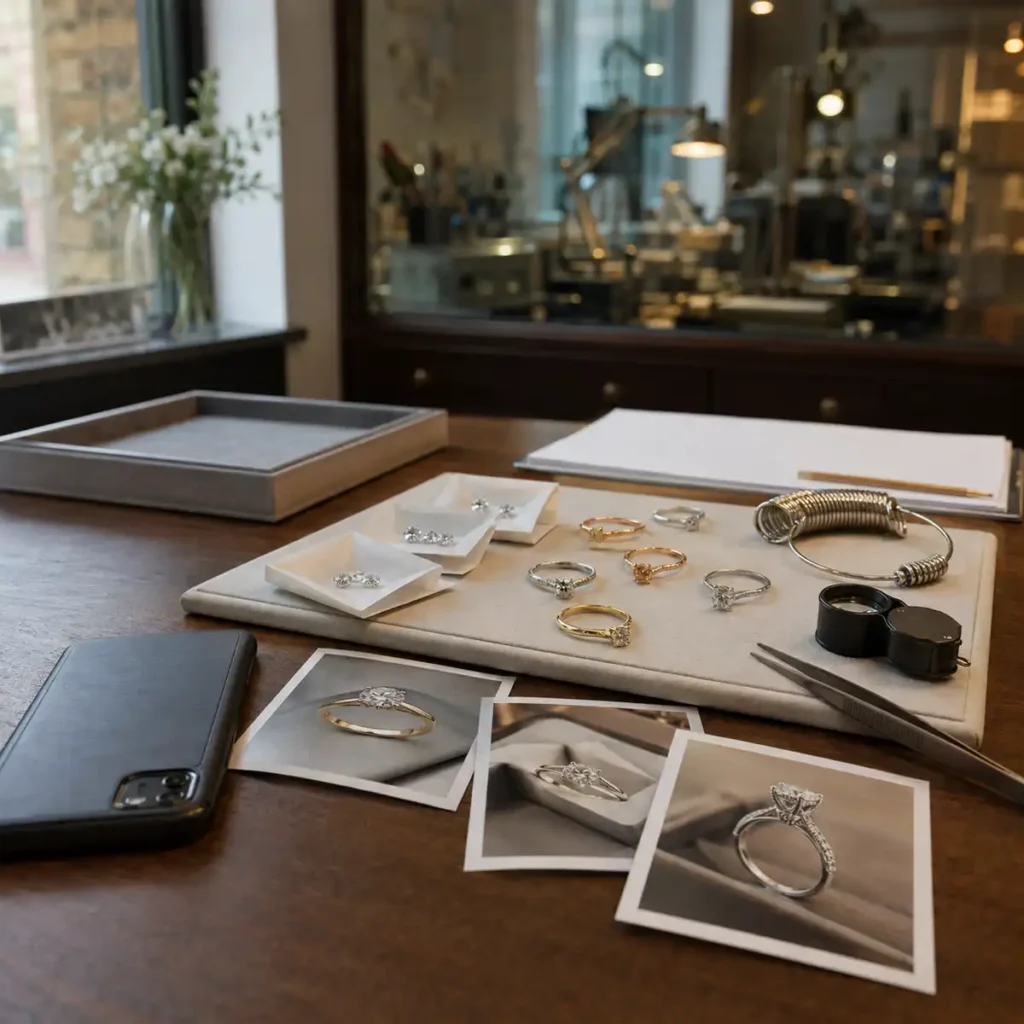
Then the tray comes out. Loose stones on a white pad, and a loupe, and someone showing you how to hold it. Looking at your first diamond through a 10x loupe is genuinely one of the better small experiences available in London. The stone stops being a price and becomes an object with a structure. You start noticing that 2 diamonds with identical paperwork can look meaningfully different on the pad, and that the difference is visible even to you, 4 minutes in.
Somewhere in here the certificate conversation happens. Every stone Smith & Green work with carries a report from a recognised laboratory, GIA or IGI for diamonds, and you will be shown the report alongside the stone rather than after you have decided. Some of what is on that report is intuitive. Carat, colour, clarity, cut. Some of it is not, and fluorescence is the field that confuses more first-time buyers than any other.
Fun fact: Hatton Garden has been London’s jewellery quarter since the 19th century and still holds the highest concentration of jewellery businesses anywhere in the United Kingdom, with the bench workshops that make the rings sitting directly above and behind the shopfronts that sell them.
You will not be asked to decide, not on the day, and not on the phone 3 days later.
This is the anxiety that brings most people through the door braced for a fight, and it is worth naming plainly. A consultation that ends in a deposit taken from someone who arrived undecided has failed, because that person will spend the next 6 weeks quietly wondering whether they were handled. The workshop upstairs does not want that ring in the world any more than you do.
You will also not be asked to justify your budget, apologise for the size of it, or explain why you are not spending 3 months’ salary. That rule was an advertising campaign, not a tradition, and nobody at the bench thinks about it. What you will be asked is how the ring will be worn. Whether your partner works with their hands, trains, gardens, cooks constantly, those answers change the setting recommendation far more than the budget does.
You leave with a written specification. Stone parameters, setting style, metal, approximate timeline, and a price. Not a bracket, not a guide figure, a price for the ring described on the page. Pricing at Smith & Green is provided on consultation because it is genuinely specific to the stone and the labour involved, and a number produced before those are known would be a number produced for the sake of having one.
Take it away. Sleep on it. Compare it against anything else you are holding, which is exactly what the specification is designed to let you do.
If you come back, the second appointment is shorter and better, because the hard part is already done. If you do not come back, nothing happens. There is no follow-up campaign engineered to wear you down. The showroom is a 4-minute walk from Chancery Lane and it will still be there in March.
Book the appointment before you feel ready, because feeling ready is not a prerequisite and waiting for it costs you weeks you may need. Tuesday to Saturday, 09.30 to 18.00, at 9 Hatton Garden. Bring screenshots, a budget spoken out loud, and a date if you have one.
Ask 3 things while you are in the chair. Ask to see the laboratory report next to the stone, not after. Ask what the setting recommendation would change to if the ring were worn by someone who never takes it off. Ask what the timeline looks like from approved design, and work backwards from your date rather than forwards from today.
A little homework helps too, and our guide to choosing the perfect engagement ring makes the hour far more productive.
If the proposal is more than 10 weeks away, you have room. If it is closer, say so in the first 5 minutes. A first engagement ring consultation is not a test, and you are allowed to arrive knowing nothing at all.