
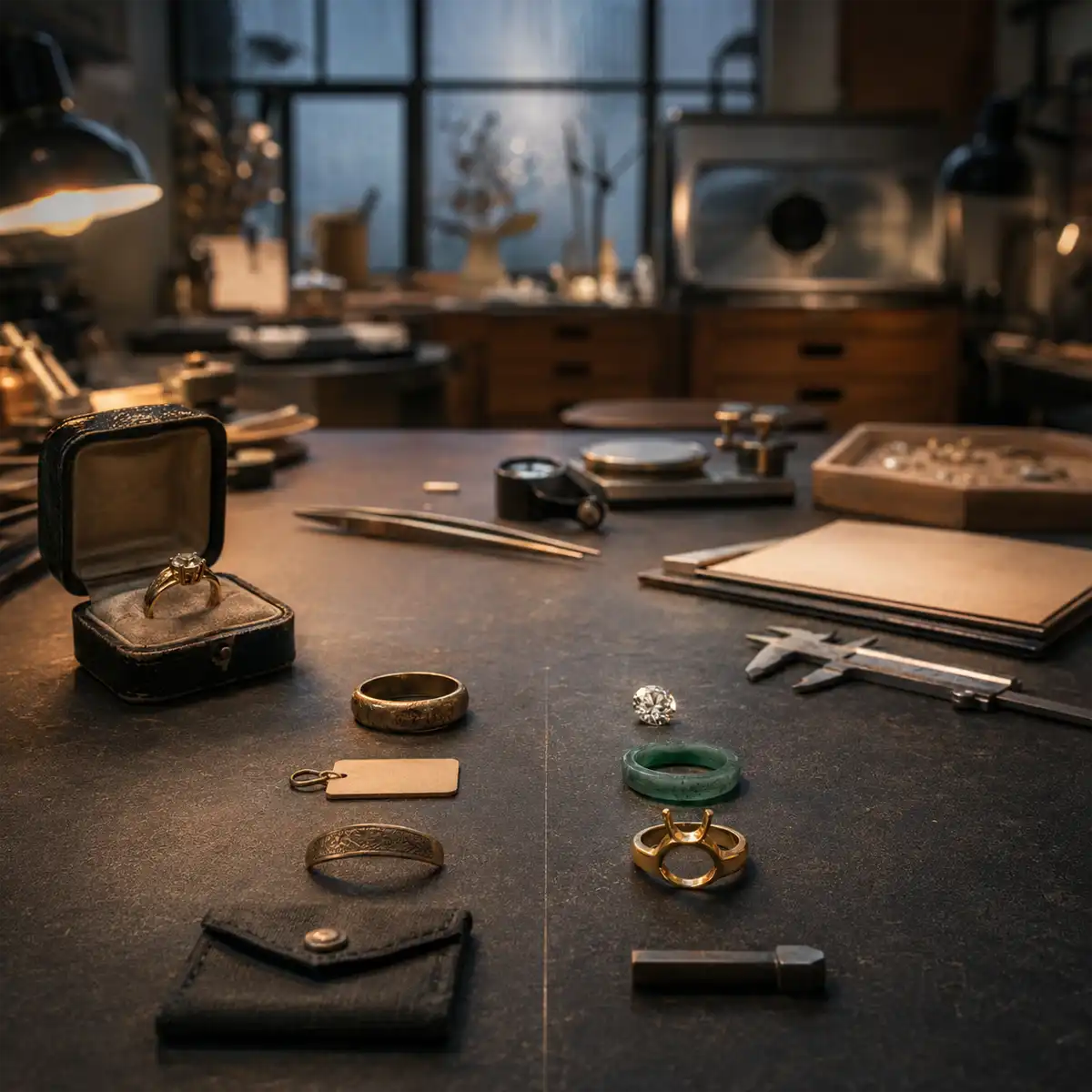
The box has been in a drawer for 4 years. You have opened it perhaps twice. The ring inside belonged to someone you loved, and it is not a ring you would ever have chosen, and both of those things are true at once and have been quietly bothering you since the day it arrived.
Remodelling an inherited ring is the decision people put off longest, and the reason is rarely practical. It is that the ring feels like the last physical instruction left by someone who can no longer be consulted. Changing it feels like overruling them.
I want to address that directly rather than talk around it, because the fear is the actual obstacle and no amount of discussion about setting styles will move it. A ring in a drawer is not being honoured. It is being stored. The question worth asking is not whether you have permission to change it. It is what, specifically, carries the memory, and whether that thing survives the change.
Usually it does. Sometimes it does not, and knowing which is which before you commit is the entire point of the first conversation.
Remodelling means unsetting the original stones, assessing them loose, and designing a new piece around what the stones will support. The original mount is usually not reused. The metal may be refined, credited, or partly incorporated. The finished piece is legally new ware and requires its own hallmark. The process runs on a similar timeline to any bespoke commission.
That last point surprises people who assume remodelling is a modification. It is not. It is a commission that happens to start with materials you already own.
This is the only step that cannot be delegated, and it takes 5 minutes of honest thought.
For most people, the memory lives in the stone. The diamond her mother wore is the diamond, and the claws around it are simply the mechanism that held it there for 50 years. Change the mount, keep the stone, and nothing has been lost. This is the majority case and it is why remodelling works.
For a minority, the memory lives in the metal or the form. A hand-engraved band. A shank worn into a particular shape by a particular finger. An inscription. Where that is true, melting the band destroys the thing you were trying to keep, and no amount of beautiful new design compensates.
And sometimes the answer is that nothing in the ring carries it, and the object is simply an object you have been dutifully guarding. That is a legitimate finding. It usually arrives with relief.
Say the answer out loud at the consultation. It changes every recommendation that follows.
An inherited stone is a fixed constraint, and this is the fundamental difference between remodelling and ordinary commissioning. Elsewhere the stone is chosen to suit the design. Here the design accommodates the stone, and the stone does not negotiate.
The first thing to establish is condition, which requires unsetting. A diamond worn daily for decades frequently carries damage at the girdle, small chips and abraded facet edges, precisely where the claws have been sitting and precisely where nobody has looked since 1974. That damage is not usually visible in the mount. It matters, because a chipped girdle influences which settings are safe and whether a bezel is advisable over claws.
The second is the cut. Old European and old mine cuts were shaped by hand before the modern round brilliant standardised proportions, with high crowns, small tables and large culets. They were cut for candlelight and lamplight rather than for a showroom spotlight, and they perform differently. They flash in broad, slow bursts instead of the fine scintillation of a modern stone. That is not a defect and it is not inferior. It is a different aesthetic, and it is one you cannot buy new.
You can have such a stone recut to modern proportions. I would counsel against it in most cases. Recutting removes material, which removes carat weight, and it removes the character that made the stone worth keeping. You end up with a smaller, more ordinary diamond and a story you can no longer see.
The third is documentation. Inherited stones rarely carry a grading report. One can be obtained from GIA once the stone is loose, and it is worth doing for insurance purposes. Be prepared for the possibility that the stone grades below what the family has always said. This happens more often than anyone likes. It changes nothing about the ring and everything about the valuation, and it is better discovered now than during a claim.
Here I have to contradict something the trade says constantly, because it is more romantic than accurate.
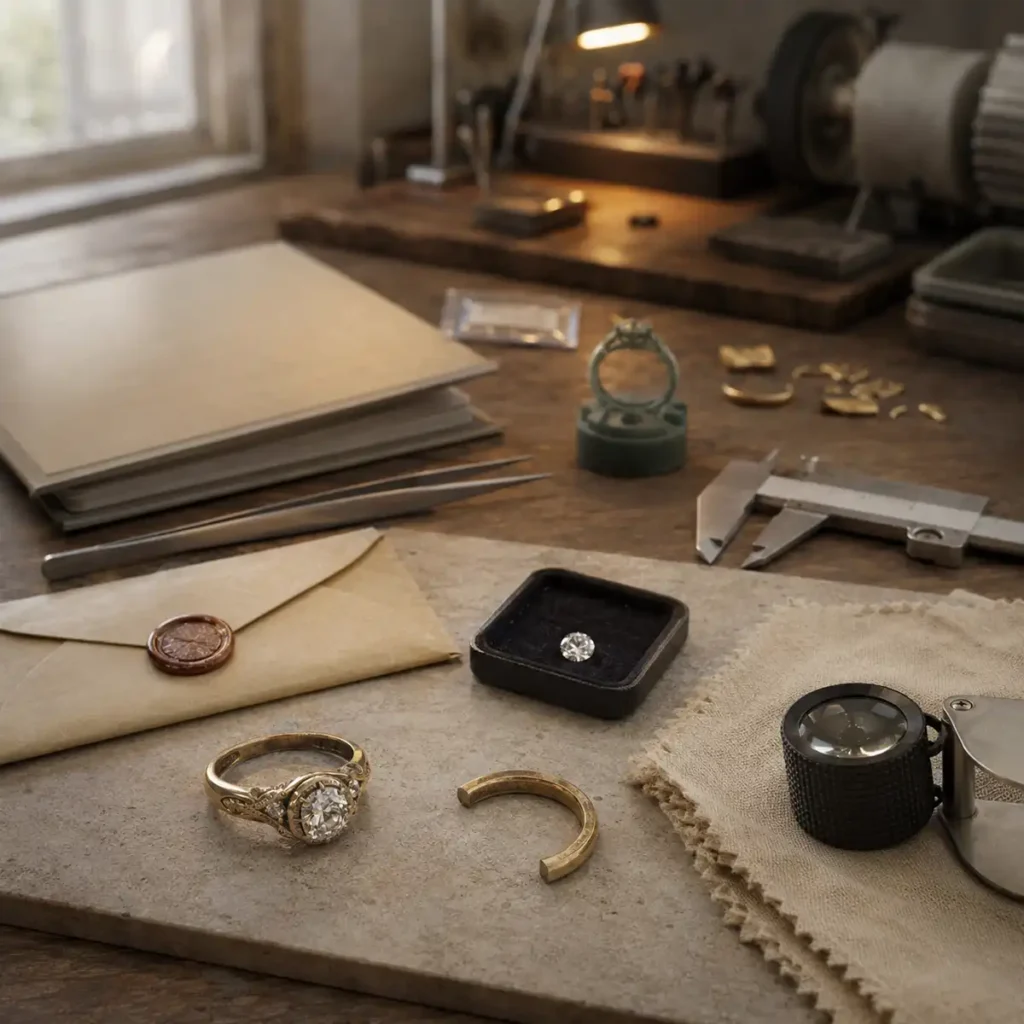
The promise is that your grandmother’s gold becomes your new ring. The same metal, transformed. It is a lovely idea, and the practice is considerably more difficult than the sentence suggests.
Old gold is not a known quantity. 18ct gold is 75% gold and 25% something else, and that 25% is a recipe that varied by workshop, by decade and by country. Nobody melting an unmarked 1950s band knows precisely what is in it. Worse, the piece has almost certainly been repaired, and repair solder is a different alloy with a different melting point. Some historic jewellery solders contained cadmium, which is toxic and must be removed entirely rather than melted in.
Melt all of that together and the result is unpredictable. Porosity. Pitting. Cracking. A casting that is structurally weaker than properly prepared metal, in an object whose entire job is to hold a stone securely for the next 50 years. Workshops that do direct reuse commonly add a substantial proportion of new metal precisely to manage this, and some require the majority of the melt to be freshly refined.
The honest routes are 2. Refine the old gold, which strips it back to pure metal that can then be realloyed to any carat and colour you want, at the cost of losing a little in the process. Or take a metal credit at market value against new metal. Both preserve the value. Neither preserves the specific atoms, and if the specific atoms are what you came for, you should be told that plainly rather than reassured.
A good workshop will test the metal first, non-destructively, before committing to any melt. If nobody proposes testing it, that is worth noticing.
Fun fact: Some historic jewellery repair solders contained cadmium, a toxic metal, which is one of the reasons an inherited ring cannot simply be dropped into a crucible and poured into a new one without being assessed first.
A remodelled ring is new ware, and new ware needs its own hallmark. The original marks are on the original band, and the original band is not coming with you.
That is not a loss. It is a transfer of guarantee. The new piece will carry a new sponsor’s mark, a new fineness mark and a new assay office mark, and it will be independently tested rather than inheriting a claim made about different metal in a different decade.
You will also need a new insurance valuation. The old one, if it exists at all, describes an object that no longer exists. Get the valuation done against the finished piece and against the new grading report if you obtained one, and keep both somewhere other than the ring box.
Allow the same time you would for any commission. Bespoke work at Smith & Green runs 6 to 10 weeks from approved design, and remodelling frequently runs longer, because the assessment stage happens before the design stage rather than alongside it.
Three cases, and a good jeweller will raise them before you do.
If the piece is genuinely antique and intact, remodelling may destroy more value than it creates. An original period ring in good condition is worth more as itself than as raw material. Have it assessed before you decide?
If more than one person has a claim on it, resolve that first. A remodelled ring cannot be un-remodelled, and family disagreements about jewellery are rarely about jewellery.
And if the memory lives in the form rather than the stone, consider keeping the original untouched and commissioning something new alongside it. This is the option nobody offers because it sells less work. It is frequently the right answer.
Whatever emerges will need looking after, and a remodelled ring with an old stone in a new setting wants its first check sooner rather than later.
Bring the ring to an appointment before you have decided anything. Smith & Green take appointments Tuesday to Saturday, 09.30 to 18.00, at 9 Hatton Garden, EC1N, 4 minutes from Chancery Lane station and a short walk from the Farringdon Elizabeth line exit. Nothing is set on the first visit.
Ask 3 things. Ask for the stone to be assessed for girdle damage before any design is discussed. Ask whether the metal will be refined, credited or directly reused, and ask why. Ask what the piece would be worth left exactly as it is. Then take the answers home. Remodelling an inherited ring is not a decision that improves under pressure, and a ring that has waited 4 years in a drawer can comfortably wait another fortnight while you are sure.