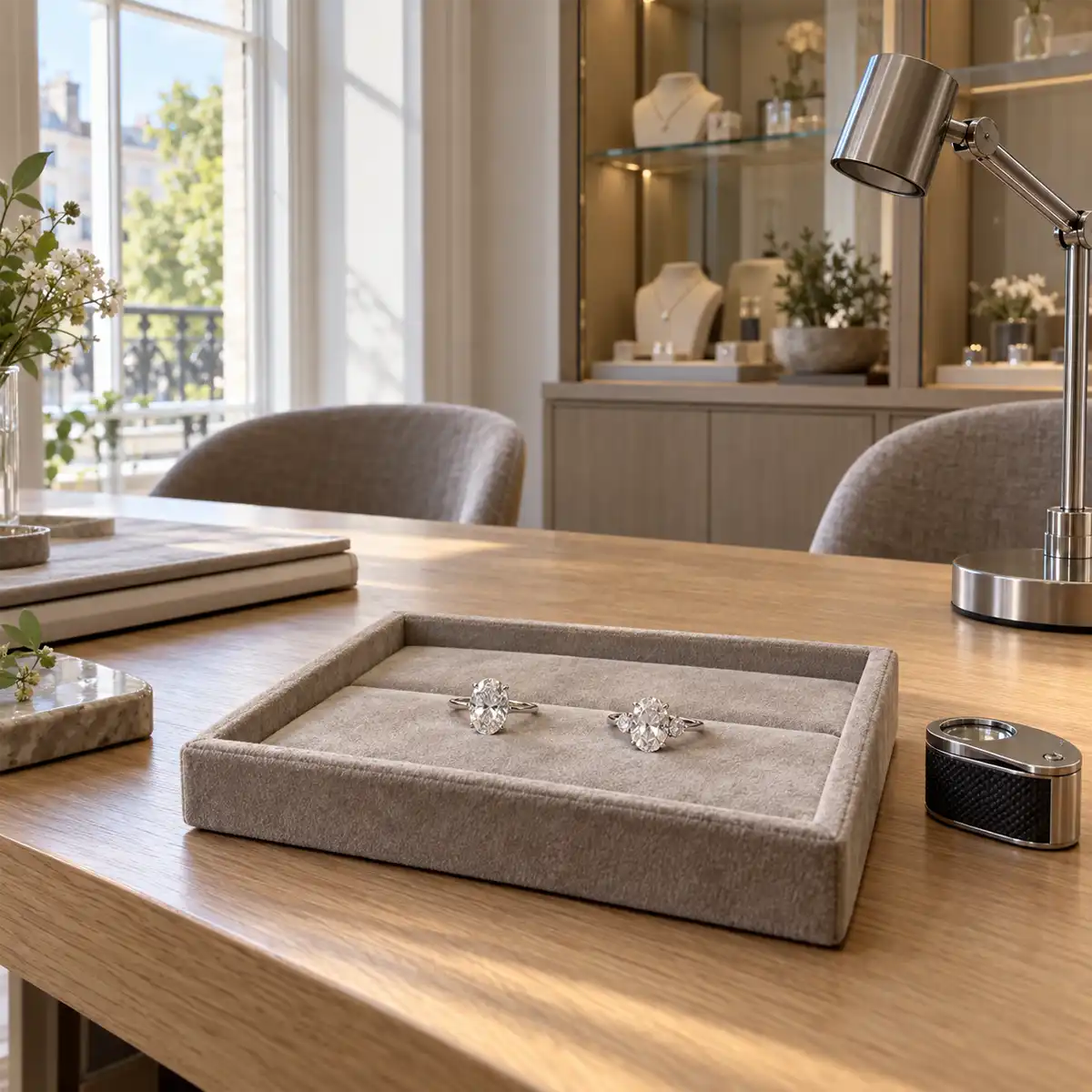
Oval engagement rings have become one of the most requested shapes of the decade, and the reasons are practical as much as fashionable. An oval diamond spreads its weight across a longer outline, so it faces up larger than a round brilliant of the same carat weight, and its length draws the eye along the finger in a way that flatters most hands. It keeps almost all of the brilliance of a round stone because it is cut with the same brilliant facet pattern, simply stretched.
The shape also has two characteristics that a certificate does not grade and a photograph often hides: its proportions and its bow tie. This article explains both, how the setting changes the look, and what oval rings cost at Smith & Green in September 2026, using real pieces from the oval collection.
An oval diamond looks good when its length-to-width ratio suits the hand and its bow tie is faint. Most buyers prefer a ratio between about 1.35 and 1.50, long enough to read clearly as an oval but not so long that it looks narrow. Below about 1.30 the stone starts to look round, above about 1.60 it looks slender.
The ratio is simply the length divided by the width, and it is easy to calculate from the measurements printed on any grading report. A stone measuring 8.0 by 5.7mm has a ratio of 1.40. There is no correct figure, only a preference, and the only reliable way to settle it is to try two or three ovals of different ratios on the same finger. On a longer, slimmer finger a more elongated stone often looks balanced, while a shorter oval can suit a smaller hand.
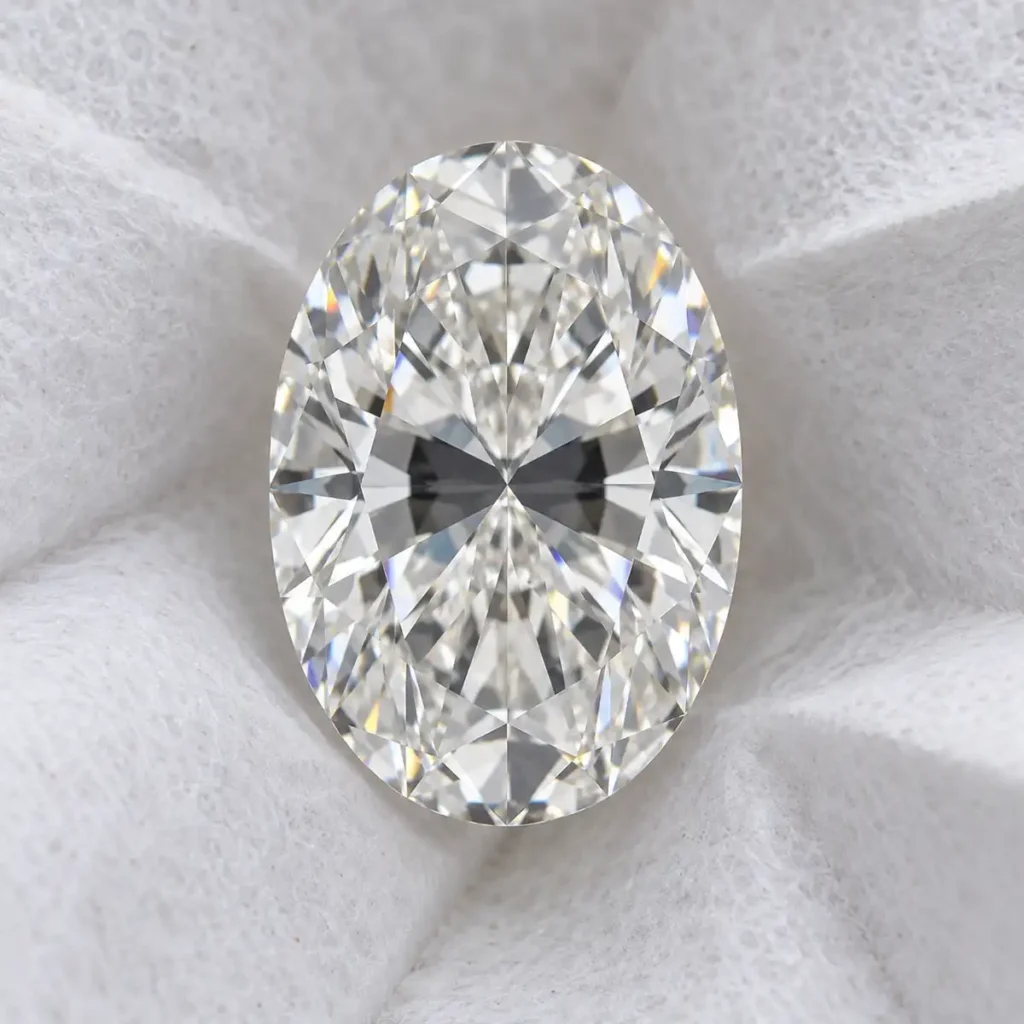
Almost every oval diamond shows a bow tie, a darker band across the middle of the stone shaped like a bow tie, caused by facets that reflect less light back to the eye from that angle. In a well-cut oval it is faint and shifts as the stone moves. In a poorly cut one it is a dark, fixed shadow across the centre of the ring, the first thing anyone notices.
The common assumption is that a good grading report protects the buyer. For round brilliants it largely does, because GIA gives them an overall cut grade. For ovals and other fancy shapes GIA issues no overall cut grade at all, only grades for polish and symmetry. A diamond described as very good polish and very good symmetry can still have a heavy bow tie. The oval diamond bow tie has to be judged with your own eyes, on video or in person, by tilting the stone slowly under ordinary light.
Our article on GIA, IGI and HRD certificates explains what each laboratory does grade, which is the right place to start before comparing stones.
The setting decides how large the oval looks, how well it is protected and how it sits beside a wedding band.
Our comparison of engagement ring settings covers the wider trade-offs between claws, bezels and halos for any shape.
Elongated shapes show body colour differently from a round brilliant. Colour tends to gather at the two ends of an oval, where the stone is narrowest, so a faint warmth that disappears in a round stone of the same grade can be visible at the tips of an oval. For a platinum or white gold setting, many buyers therefore stay in the colourless to near-colourless range, around D to G, while an 18K yellow or rose gold setting forgives a warmer grade, because the metal reflects its own tone into the stone.
Clarity is more forgiving. The brilliant facet pattern of an oval hides small inclusions well, so a VS2 or a clean SI1 stone can look identical to a far higher grade once it is set. That is why the Franklin, with GIA grades of E colour and VS2 clarity, is a sensible balance. The money saved on clarity is better spent on a larger stone or a better-proportioned one, because proportions and the bow tie decide how the ring looks from across a table, and clarity at this level does not.
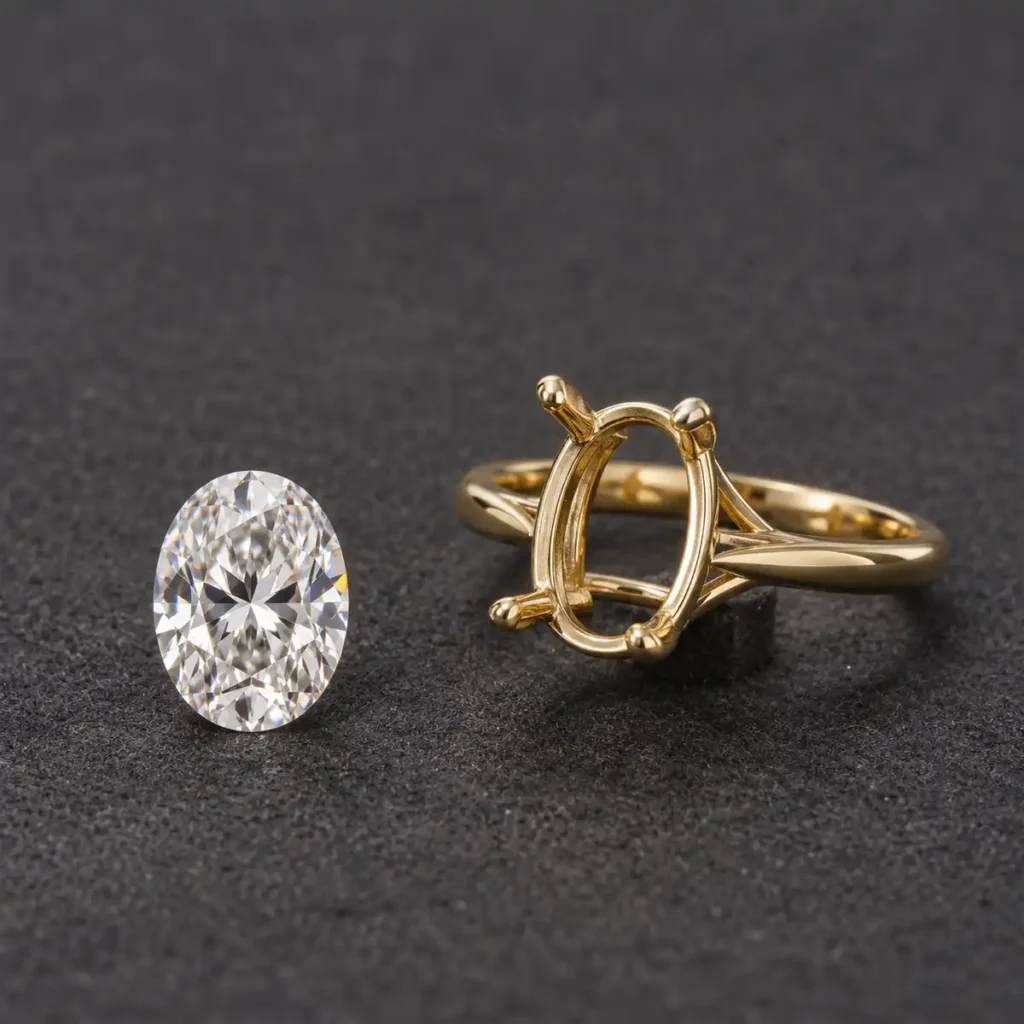
Prices below are Smith & Green retail prices as listed in September 2026, and each one reflects a specific stone, so they show how the variables move the price rather than a formula.
The jump from Franklin to Petra is not only carat weight. Larger ovals of good proportions and a faint bow tie are genuinely scarce, and scarcity is priced in. Anyone starting from a budget rather than a stone can use design your own engagement ring to filter certificated natural and lab-grown ovals by carat, colour, clarity and price, then pair the stone with a setting from the Hatton Garden workshop, where settings start from £1,200.
An oval set low on the finger can leave little room for a straight band to sit flush, so decide on the wedding band at the same time as the engagement ring, not a year later. The options are a straight band with a slightly raised setting above it, a gently curved band that follows the outline of the head, or an oval diamond wedding band that repeats the shape along the finger. The Rihanna band sets 2.66 carats of oval brilliant diamonds in platinum, at £9,600 in September 2026, and shows how the shape works as a line rather than a single stone.
Before choosing an oval, look at three or four stones in person and tilt each one slowly. Ask for the length and width in millimetres and work out the ratio, check the bow tie with your own eyes rather than the report, and try the ring on beside a wedding band. Smith & Green includes free resizing and a free insurance valuation, and every stone can be seen by appointment at 9 Hatton Garden.
Yes. An oval spreads its weight over a longer outline, so it usually faces up larger than a round brilliant of the same carat weight, and its length makes the finger look slimmer. It keeps most of the brilliance of a round stone because it uses the same brilliant facet pattern, stretched into an oval.
Most buyers prefer a length-to-width ratio between about 1.35 and 1.50. Below about 1.30 the stone looks close to round, and above about 1.60 it looks slender. There is no correct figure, so compare two or three ovals of different ratios on the same finger before deciding.
The bow tie is a darker band across the middle of an oval diamond, caused by facets that return less light from that angle. Almost every oval has one. In a well-cut stone it is faint and shifts as you move, while in a poorly cut stone it is a fixed dark shadow across the centre.
No. GIA gives an overall cut grade only for round brilliant diamonds. For ovals and other fancy shapes the report grades polish and symmetry but not the overall cut, and it does not describe the bow tie. That is why an oval should always be judged by eye, in person or on video.